
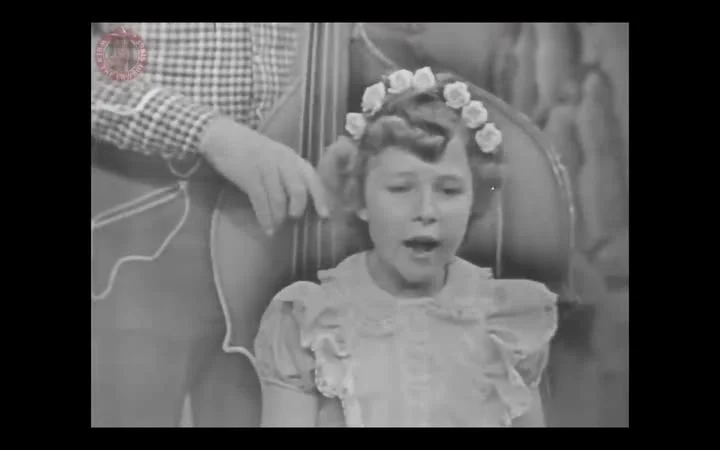
She was barely tall enough to reach the microphone. The year was 1956 and the world of popular music was being torn apart by a raw, unbridled force called rock and roll. Into that storm stepped an eleven-year-old girl from Georgia, a child prodigy with a voice that could shake walls. Her name was Brenda Lee and she was about to take one of the most explosive songs of the era and make it her own.
The song was Little Richard‘s “Tutti Frutti,” a manic howl of liberation built on a pounding piano line and the immortal nonsense cry “A-wop-bop-a-loo-mop-a-lomp-bom-bom.” It was too wild, too sexual for mainstream radio. Pat Boone had already released a watered-down version that somehow charted, but Brenda Lee’s approach was different. She wasn’t going to sanitize the track. She was going to channel its fire through a tiny, four-foot-nine frame that critics had already nicknamed “Little Miss Dynamite.”
How does an eleven-year-old confront a song built on adult desire? By focusing on pure, unstoppable musical excitement.
The recording session itself was a meeting of worlds. Lee had been signed to Decca Records after appearing on Red Foley’s Ozark Jubilee, a country music television show. The session was supervised by producer Paul Cohen, with a young Owen Bradley assisting. Bradley would later become Lee’s legendary collaborator, guiding her through the massive pop hits of the late fifties and early sixties. But on that day in 1956, the goal was simpler: capture the raw energy of a child who sang like a seasoned blues shouter.
To understand the recording, you have to hear the arrangement. Little Richard’s version was a frantic, gospel-infused scream. Brenda Lee’s version is a controlled explosion, filtered through a country-rockabilly lens. The brass is gone. The drums are crisp and relentless, hammering a backbeat into the 12-bar blues structure. The guitar plays simple, chugging chords—no solos, just a hard pulse. The bass line is thick and round, locked tight to the kick drum. It sounds clean, sharp, and barely contained. This was the sound of early Nashville rock and roll at its finest.
But the centerpiece is the voice. Brenda Lee had a preternatural depth and a raw, metallic edge that cut through the mix. She didn’t sing the lyrics—she snapped them out like a whip. Her phrasing was short, punchy, delivered with staggering breath control. The famous nonsense intro is softened slightly, but the velocity remains. She lands on every downbeat like a percussive attack. Her vibrato is fast and tight, a controlled shake that adds to the sense of barely contained frenzy.
This version of “Tutti Frutti” was not released on an album but as a single. It didn’t chart as high as Lee’s later smash hits like “I’m Sorry” or “Sweet Nothin’s,” but it established her credentials as a rockabilly powerhouse. It proved that a little girl could master a genre dominated by men, scrubbing the song clean enough for general consumption while leaving the heat intact. Unlike Pat Boone’s cover, which neutered the track, Brenda Lee’s rendition respected the energy of Little Richard’s original. She replaced the scandalous connotations with pure, raw musical dynamism.
It is the sound of a prodigy asserting her mastery over the raw, volatile power of a new art form.
Think about the context. In 1956, families were buying their first home audio systems, shifting from radio to records. This track was one of the thrilling artifacts they brought home, a sonic dare played through new Hi-Fi speakers. It was a shared generational moment of boundary-pushing. Decades later, that tiny girl’s performance would secure her place in the Rock and Roll Hall of Fame, a testament to the enduring power of a voice that could fill a room from a body that barely filled the frame.
I once watched a contemporary musician in a Nashville club try to replicate the simple, driving piano riff from this era. He struggled with the precise swing rhythm, and I realized that mastering this kind of rock and roll isn’t about reading sheet music—it’s about channeling a cultural spirit, a specific brand of American grit. That eleven-year-old girl simply had that spirit.
Listening Recommendations
Little Richard – “Long Tall Sally” captures the untamed vocal mania that inspired Lee.
Wanda Jackson – “Let’s Have A Party” shares the aggressive, female-led rockabilly energy.
Jerry Lee Lewis – “Great Balls of Fire” presents frantic piano-driven rock and roll.
Connie Francis – “Stupid Cupid” exhibits youthful pop-meets-rock energy.
Elvis Presley – “Jailhouse Rock” is a tightly produced high-impact rockabilly classic.
Gene Vincent – “Be-Bop-A-Lula” offers a grittier, blues-inflected view of the genre.
Brenda Lee’s “Tutti Frutti” remains an essential text in the rockabilly canon, a reminder that true dynamite comes in small packages. It is the sound of a prodigy asserting her mastery over the raw, volatile power of a new art form, condensed into two furious minutes that still ignite the soul.