
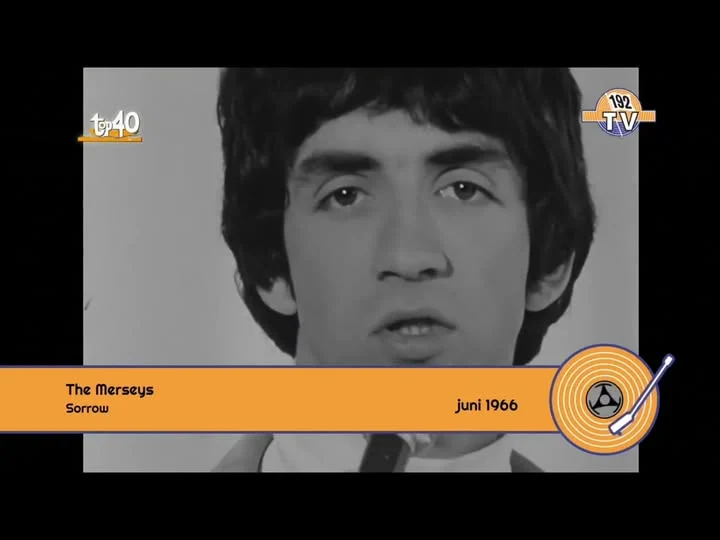
The moment the bowed bass line enters “Sorrow,” the world shifts. A low, cello-like moan cuts through the clamor, transforming a raw burst of British beat into something haunting and baroque. It is a two-minute firecracker of pop architecture that still ignites the imagination more than half a century later.
That sound belonged to The Merseys, a vocal duo formed from the ashes of the Merseybeats. In early 1966, as Liverpool’s glorious beat scene faded, Tony Crane and Billy Kinsley took one final gamble. Their debut single under this new name was a cover of an American B‑side by The McCoys. Released in April 1966, it peaked at number four on the UK Singles Chart and became the pair’s sole major hit. Yet that single, backed with “Some Other Day,” was never part of an album. It was a standalone lightning strike, a perfect gamble that reshaped the very idea of how a cover could be reimagined.
The transformation was guided by producer Kit Lambert, famous for his work with The Who. Lambert rejected an early, stripped‑back take and demanded weight and punch. He brought in session giants: Clem Cattini on drums, a young Jimmy Page on guitar, and John Paul Jones on bass. The result crackles with tension, a perfect example of a UK act taking an American blueprint and cladding it in Savile Row tailoring mixed with back‑street grit. The original folk‑rock melody became a declaration of raw, desperate energy.
The song opens with an immediate hook, a startling declaration that plunges directly into the drama. Cattini’s aggressive drumming pushes the tempo with restless fury. Then comes the famous eight‑bar instrumental break: the bowed bass line, likely played by Jones, delivers a haunting, orchestral depth that feels both ancient and futuristic. Immediately after, a brass section screams the melody back at the listener, using horns as weapons instead of subtle strings. The arrangement turns the song into a mini‑epic, a tight bundle of energy fighting against its own brevity.
The greatest pop songs don’t just express an emotion; they create a perfect, tiny, self‑contained world for that emotion to live in.
Crane and Kinsley deliver the lyrics with a pleading desperation that sells every line. Their tight, choked harmony in the chorus amplifies the sense of yearning. The mix foregrounds the rhythm section and those unexpected orchestral colours, leaving the vocal grit raw. The underlying pulse is relentlessly up‑tempo, creating a beautiful tension with the titular anguish. This push‑pull dynamic is a masterclass in mid‑sixties production: the driving rhythm section provides the grit, the brass and bowed bass provide the sudden, elevated sheen.
The song’s legacy is inseparable from David Bowie’s 1973 cover on the Pin Ups album. Bowie’s slower, glam‑infused version is magnificent and arguably more famous, but it relies entirely on The Merseys’ arrangement. Bowie smoothed the edges; the 1966 original leaves the frantic, rough energy intact, merely augmented with sophisticated textures. Listening to the single on a premium audio setup reveals the immediacy and separation of a complex arrangement packed into one single groove.
To appreciate the transformative power of this piece, start with The McCoys’ 1965 original, a stripped‑down folk‑rock version. Then move to The Merseys’ recording. Follow with David Bowie’s 1973 take for a lesson in re‑interpretation. Other essential companion tracks include The Creation’s “Painter Man,” which shares the same producer‑manager circle and dramatic art‑pop tension; The Walker Brothers’ “The Sun Ain’t Gonna Shine Anymore,” with its huge, theatrical orchestral layers; The Move’s “I Can Hear The Grass Grow,” a British pop‑rock gem with psychedelic textures; and The Easybeats’ “Friday On My Mind,” a tightly arranged, relentlessly driving hit from the same era.
This is not merely a one‑off hit. “Sorrow” is a pivotal cultural artifact that showcases the fluid boundaries between pop, rock, and emerging psychedelia. It proves that a vocal duo could deliver high‑impact rock just as effectively as a four‑piece band. It remains a blueprint for covers, a lesson in radical re‑imagination of emotional core and sonic palette. Bright, brief, and utterly unforgettable.