
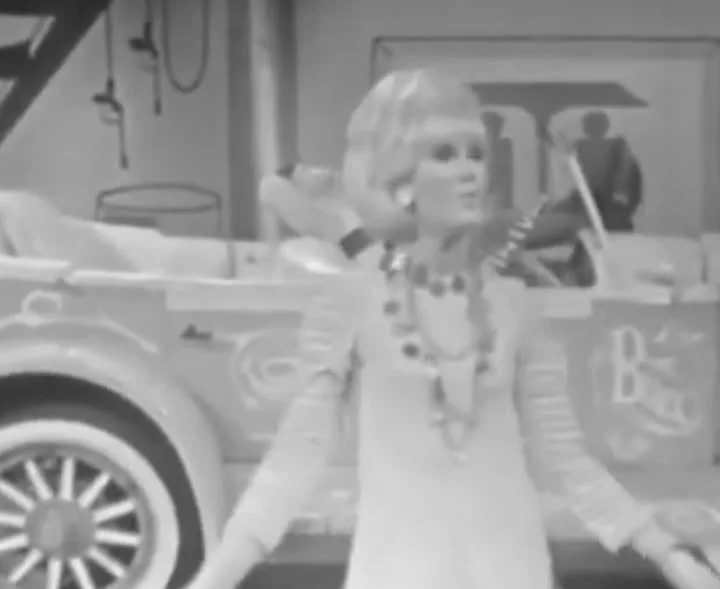
Sixty years have passed since that first thrilling spin of a 45 rpm record introduced the world to a new sound and a new voice. The song begins with a relentless drumbeat, a ticking hi-hat, and a swell of strings that seems to promise something both intimate and colossal. Within seconds, a voice emerges that is pure, confident, and achingly human. It is the sound of Dusty Springfield, and the song is “I Only Want To Be With You.”
That voice belonged to Mary O’Brien, a young woman who had spent her early career in the folk-pop trio The Springfields. By 1963 she had made a dramatic decision to step away from her past and reinvent herself as a blonde, beehived powerhouse named Dusty. She had a singular vision in mind, to capture the raw emotional depth of American soul music and combine it with the grand production sweep of the girl groups. She wanted to sound unlike anyone else in Britain, and she was willing to gamble everything on that ambition.
The gamble paid off when her debut solo single arrived in November of that year on the Philips label. “I Only Want To Be With You” soared up the British charts and then crossed the Atlantic with remarkable ease. At a time when the British Invasion was just beginning, Dusty became one of the very first UK acts, alongside The Beatles, to make a real dent in the American Billboard Hot 100. The song established her as the queen of sophisticated, emotionally charged pop, a title she would hold for decades. It also became a global phenomenon, with millions of listeners instantly falling under its spell.
What made that single so striking was the sheer wall of sound that surrounded the vocal. Producer Johnny Franz understood exactly what Dusty wanted, a sound that felt as big and dramatic as anything coming from Detroit or Memphis. Arranger and conductor Ivor Raymonde delivered precisely that, layering relentless percussion, warm walking bass, chiming guitar, and stabbing piano into a dense, pulsating foundation. The drums were mixed high, with that famous ticking hi-hat that never relents, creating a sense of breathless romantic momentum. Strings swelled beneath the chorus, adding a cinematic grandeur that felt both luxurious and urgent. Backing vocalists, led by Jean Ryder of The Breakaways, transformed what might have been a private confession into a communal celebration, calling out and echoing Dusty’s declarations with joyful intensity.
At the heart of it all was Dusty’s voice, a remarkable instrument that straddled the line between pop polish and soulful grit. Her phrasing was impeccable, often hovering just behind the beat in the verses, lending a sultry, teasing quality to lines like “I only want to be with you.” Then she would snap onto the pulse for the chorus, delivering the words with thrilling conviction. The vibrato on her sustained notes was controlled yet passionate, a visible tremor of emotion rather than mere technique. The recording gave her voice a special treatment, with a layer of compression and room reverb that made her feel present and immediate. She didn’t just sing the melody, she inhabited it, making every word feel like a truth she had discovered herself.
The contrast between Dusty’s immaculate, glamorous public image and the gritty authenticity of her voice was what made her so compelling. She wore high fashion and perfect blonde hair, the epitome of untouchable stardom, yet her singing was pure gut-level soul. This was no accident. She taught herself to interpret R&B with a genuine understanding that went far beyond imitation. You can hear that depth in every note, a self-taught sensibility that gave her music an unmistakable credibility.
I remember the first time I truly listened to this song in a way that changed me. It was a rainy afternoon in a tiny independent record store, the owner had it spinning on a battered turntable. The sound cut through the vinyl crackle and the smell of old paper, and I realized this was not just a nostalgic echo from the past but a timeless example of superb craftsmanship. For me, that moment became a revelation. The bridge of the song offers a brief respite, a moment of reflection before the full orchestra crashes back in with an emotional catharsis that leaves you breathless. It is a masterclass in dynamic arranging, building tension and then releasing it in a wave of sound that makes the final chorus feel absolutely earned.
The true power of this song lies in its ability to translate a whisper of personal devotion into the roar of a public declaration.
Dusty Springfield, through this single, didn’t just launch a solo career, she fundamentally broadened the scope of what British pop could achieve. She challenged her listeners to take her seriously, and they did. The song remains a blueprint for crafting a perfect transatlantic single, balancing commercial polish with deep emotional sincerity. It is a testament to the enduring magic of a voice and a vision that refused to be confined.
If you find yourself drawn to the sound of “I Only Want To Be With You,” you might also appreciate the following tracks that share a similar energy and emotional scope. The Ronettes’ “Be My Baby” from 1963 delivers the quintessential Wall of Sound production and colossal romantic drama. The Shirelles’ “Will You Love Me Tomorrow” from 1960 has that same foundational girl group feel and vulnerable longing. Petula Clark’s “Downtown” from 1964 offers an equally grand orchestral arrangement from a British contemporary. The Walker Brothers’ “The Sun Ain’t Gonna Shine Anymore” from 1966 captures a similar dramatic flair and moody vocal performance. Skeeter Davis’s “The End of the World” from 1962 shares a delicate, layered arrangement and heartbreaking vocal purity. Finally, Lesley Gore’s “It’s My Party” from 1963 embodies the teen drama and high production values that Dusty admired and brought to the UK. Together, these songs paint a vivid picture of an era where music was both a personal confession and a massive communal celebration.