
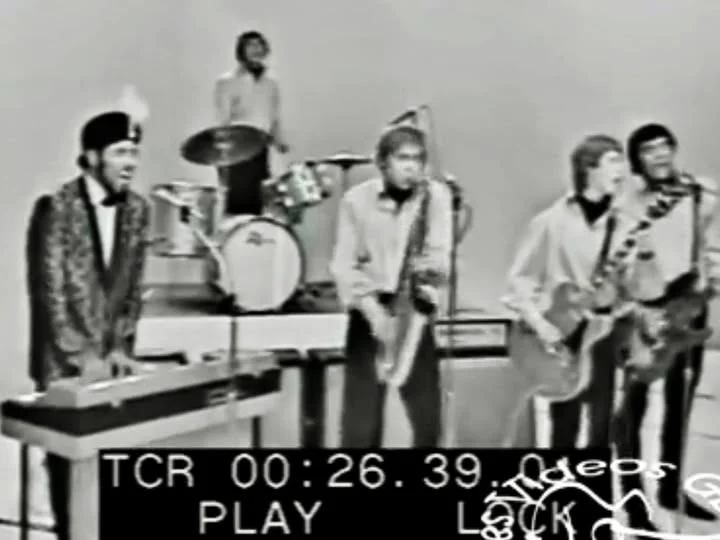
Before the polished pop of the mid sixties could fully take hold a two minute twenty second grenade rolled across the airwaves This was a chaotic blast of Farfisa organ and gleefully slurred Spanglish that rewrote the rules of rock and roll It was less a song and more a joyful riot breaking out in a Memphis garage
At the center of this beautiful mess was Domingo Sam Samudio a Texas born showman of Mexican heritage He fronted his band The Pharaohs like a carnival barker who stumbled into a Sun Records session Samudio was an anomaly in the era of matching suits and meticulously arranged harmonies He was a swaggering outsider He wore a turban He drove a hearse And he shouted commands in a language all his own Uno dos one two tres cuatro
Wooly Bully wasn t crafted It erupted Captured at the legendary Sam C Phillips Recording Studio under the guidance of producer Stan Kesler the song had the raw feel of a basement jam accidentally caught on tape The rhythm section drummer Jerry Patterson and bassist David A Martin laid down a simple and irresistible 12 bar blues foundation that pulsed with the energy of a house party on the verge of being broken up by the cops
The true star of this sonic upheaval was Samudio s cheap buzzing Farfisa organ Its sound cut through the mix like a cheap switchblade This was the sound of budget gear creating a timeless texture Butch Gibson honking sax solo added a frantic rhythm and blues urgency Ray Stinnett guitar contributed minimalistic genius The whole thing clocked in at two minutes and twenty seconds The track hit hard demanded immediate movement and vanished before you could ask what a Wooly Bully actually was
That lyrical question was part of the magic The words were famously ambiguous a garbled stream of consciousness about Matty and Hatty The intentional unintelligibility led to a radio ban in some markets which only fueled its mystique It became a Rorschach test for teen rebellion Everyone heard something different
This wasn t just a great single It was a cultural counterpunch As the British Invasion threatened to sweep American pop culture away Wooly Bully was a defiant homegrown response It reached number two on the Billboard Hot 100 Yet in a rare display of staying power Billboard named it the Number One single of the entire year for 1965 It wasn t a flash in the pan It was the soundtrack to a summer
The greatest hits often aren t perfect recordings they are simply perfect moments captured on tape
Decades later the track remains a masterclass in lo fi high impact rock and roll It is the template for garage rock It proves that attitude energy and a three chord hook can topple any polished production The beauty of Wooly Bully is its imperfection It is joyous reckless and deeply authentic It is a living breathing piece of art that still commands you to stand up and move
Further Listening
- 96 Tears by Question Mark and the Mysterians 1966 Shares the driving trebly sound of the Farfisa organ as the central hook defining the genre
- Hang On Sloopy by The McCoys 1965 Another mid sixties garage rock anthem featuring a simple infectious melody and an unpolished vocal delivery
- I Fought the Law by The Bobby Fuller Four 1966 Features similar raw production and a three chord rock and roll structure rooted in Sam Phillips Memphis lineage
- Do Wah Diddy Diddy by Manfred Mann 1964 An early high energy single that captures the simplicity and vocal interjections that make Wooly Bully so engaging
- Louie Louie by The Kingsmen 1963 The ultimate predecessor sharing the deliberate lyrical ambiguity and raw cheap production that became hallmarks of garage rock