
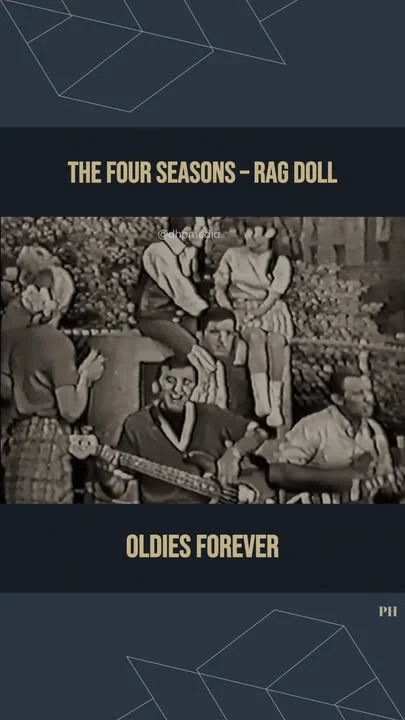
On a gritty New York City street corner, a young girl wiped windshields for pocket change. Her cheeks were smudged and her clothes were worn out. From the driver seat of his car, songwriter Bob Gaudio paused at a red light. Moved by the sight, he handed her a large bill far more than she expected. This fleeting act of kindness sparked the narrative for one of the most poignant anthems of the 1960s. The Four Seasons took that inspiration and turned it into Rag Doll, a song that would define an era.
Rag Doll is far more than a simple story of charity. It is a sweeping ballad chronicling the ache of a love hindered by economic disparity. Sung through the golden falsetto of Frankie Valli, the song captures a young man whose devotion is met with scorn by his own family. Valli croons a heartbreaking admission.
My folks won’t let me cause they say she’s no good
This line speaks directly to the heart of class prejudice. This was The Four Seasons at their best, weaving complex harmonies into the fabric of everyday struggle.
The genius of the track lies in its lyrical bravery and its sonic architecture. The arrangement begins with delicate strings. It swells into a lush orchestral sound that mirrors the narrator desperate hope. Doo wop flourishes ground the song in a familiar soundscape while the soaring falsetto pushes it into something timeless. Rag Doll does not just tell a story. It wraps the listener in an atmosphere of longing and tenderness. The lyrics yearn to change a life from hardship to happiness.
I would change her sad rags into glad rags if I could
This sentiment feels deeply personal and universally understood.
When Rag Doll was released in 1964, it quickly climbed the Billboard Hot 100 to claim the top spot. It became an unlikely anthem for a generation starting to question the rigid structures of society. In an era where the American Dream felt like a lottery, the song articulated the silent struggle of the forgotten. It was a musical landmark that refused to shy away from the harsh realities of economic imbalance.
Decades later, the song found new life through the Broadway phenomenon Jersey Boys. This introduced its emotionally charged story to a brand new audience. Today, when income inequality remains a headline topic, the message of Rag Doll rings with a renewed sense of empathy. The song serves as a bridge between the 1960s and the present, proving that a genuine melody wrapped in a true story never loses its power.
In the age of streaming, a simple search for Rag Doll on any platform unlocks a doorway to this era of masterful storytelling. It stands as a testament to the artistry of The Four Seasons, a group that refused to let pop music be just bubblegum fluff. Whether you are a lifelong fan or a recent convert, hearing that opening falsetto is like opening a novel about a time not so different from our own. It is a tender reminder that a love story worth telling is often a love story worth fighting for.
Rag Doll is not just a song. It is a touching meditation on class, love, and the resilience of the human spirit. For those looking to explore the roots of classic pop and rock, it remains a must listen. It offers a window into the complexities of 1960s America while speaking directly to the universal experiences that bind us all together.