
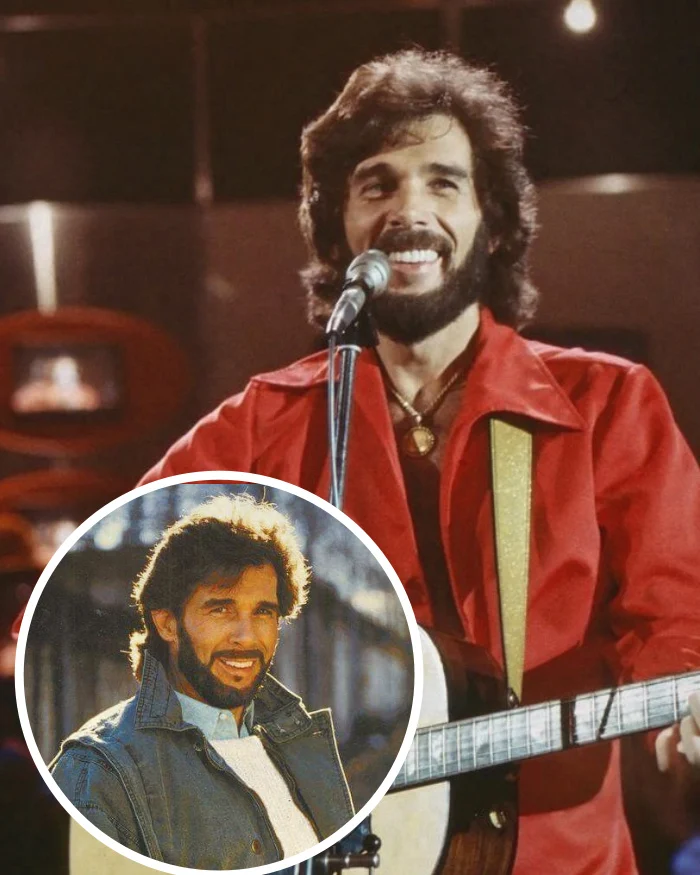
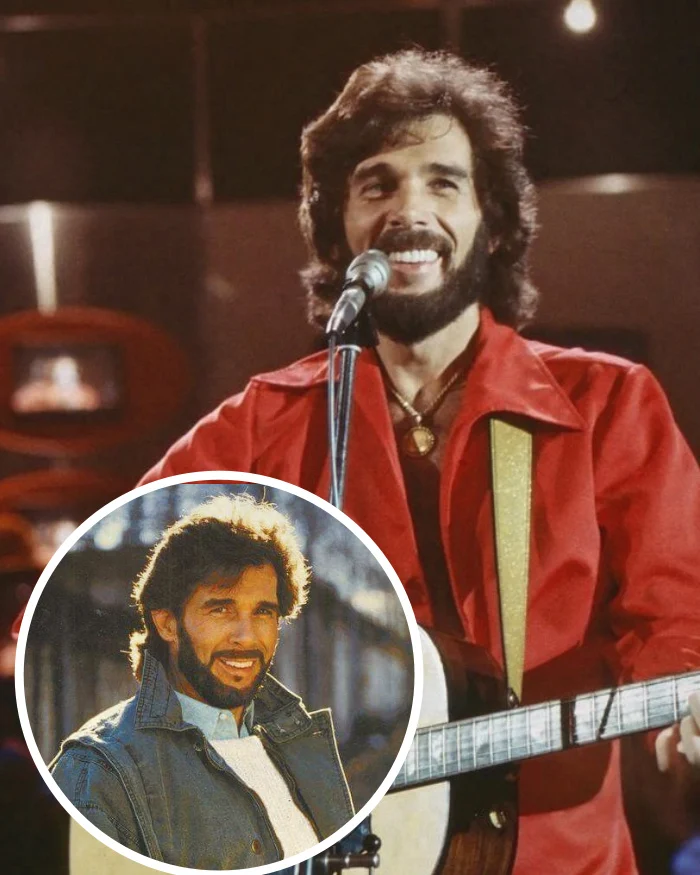
One cold Nashville morning became the quiet beginning of a country music legend.
Eddie Rabbitt arrived in 1968 with one thousand dollars, no industry friends, and an acoustic guitar. A freezing rain pushed him into a curbside glass phone booth. Wind moved through the door cracks. Water beat against the narrow metal roof. He had no one to call. The heavy coin receiver hung untouched on the wall.
His wooden guitar was his only real possession. With numb fingers and a soaked coat, he pulled it tight against his chest. He used his body heat to keep the wood and strings dry until morning.
The warm studio lights of Music Row stayed on in the distance. They did not shine on the young stranger shivering on the pavement. That night did not break him.
The next day, Rabbitt counted his remaining coins and walked down Sixteenth Avenue looking for work. He rented a modest basement room for forty dollars a month. He took odd labor in the neighborhood. Night watchman shifts and washing soda bottles helped stretch his meager funds. Between those jobs, the twenty-six-year-old New Jersey native spent his daylight hours knocking on doors across Music Row.
Nashville in the late 1960s was an insular community. It rarely gambled on northern songwriters raised on pop radio and East Coast folk clubs. Rabbitt finally caught the attention of Hill and Range Publishing. He secured a staff writing contract that paid a modest draw of thirty-seven dollars and fifty cents a week.
That small weekly check barely covered groceries. It bought him time to sit at an upright piano and write every afternoon. In 1969, his song about a desperate search through cold downpours landed in the hands of Elvis Presley. Presley cut the track and turned it into an international hit early the following year.
Suddenly, publishers stopped turning him away at the reception desk. Presley recorded another of his compositions. In 1974, Ronnie Milsap took Rabbitt’s sunny arrangement of Pure Love straight to the top of the country charts. The former outsider had an unmatched instinct for commercial radio melodies.
Yet Rabbitt never intended to remain hidden behind the control room glass. In 1975, Elektra Records offered him his own artist contract. Early self-penned singles began earning steady rotation in regional dance halls and on small-town radio stations.
Teaming up with producer David Malloy and fellow songwriter Even Stevens, he pioneered a rhythm-heavy sound that stood apart from traditional Nashville arrangements. They blended acoustic guitar rhythms with driving backbeats. Their energetic style reflected Rabbitt’s blue-collar work ethic and introduced fresh crossover energy to modern country music.
That creative momentum erupted into mainstream stardom by 1978. When he recorded the title track for Clint Eastwood’s box-office hit Every Which Way but Loose, the song reached number one on the country charts and climbed into the pop top thirty. It established him as a true headlining act.
By 1980, Rabbitt reached the commercial pinnacle of his career. Signature releases like Drivin’ My Life Away and I Love a Rainy Night crossed all genre boundaries. They topped both the country and pop Billboard charts simultaneously. They filled cavernous arenas with fans who loved his signature mix of driving tempo and honest storytelling.
Longtime friends often noticed the quiet significance in his biggest hit celebrating stormy weather. For Rabbitt, raindrops falling on a rooftop were never a generic lyric idea. They were a vivid memory of the cold pavement where he once shivered while holding his wooden instrument against his chest to protect it from the damp chill.
The career that reshaped modern country music began on a cold street corner where a stranger refused to let go of his guitar.
At the height of that arena touring success, personal hardship tested him far more than early career rejection. In 1983, his infant son Timmy was born with a critical liver condition. Rabbitt abruptly halted his lucrative touring schedule to spend months inside hospital rooms supporting his family through surgeries and treatment.
He returned to recording years later. He earned additional number-one singles and memorable duets while maintaining his reputation as one of the most generous and grounded figures in the business. Through every stage of his success until his passing in 1998, he avoided celebrity posturing and kept his family at the center of his life.
The town that once left him stranded in a glass box eventually embraced him as one of its finest craftsmen. Eddie Rabbitt proved that a cold coat and an empty pocket could not stop a determined voice.