
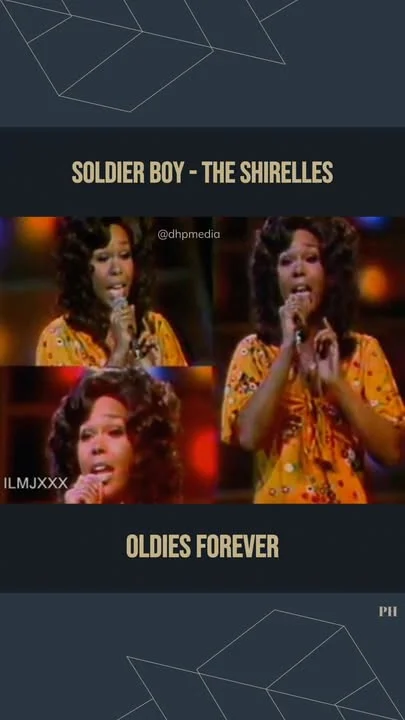
There is a moment in every great love story where distance becomes the ultimate test of devotion. In 1962, The Shirelles captured that fragile, aching hope in a song that still stops listeners in their tracks. “Soldier Boy” is not merely a ballad. It is a quiet vow whispered into the wind, a promise that love can survive the miles and the months of waiting. The track climbed to the top of the Billboard Hot 100, but its real power lies in the way it makes you feel the longing of a young woman who will not waver, no matter how far her soldier roams.
The song lives on Baby It’s You, the third studio album from the pioneering girl group The Shirelles. Released on the Scepter Records label, the album stands as a bridge between the innocent harmonies of doo-wop and the emerging soul sound that would define a decade. While the title track “Baby It’s You” also earned its place in pop history, “Soldier Boy” became the emotional anchor of the collection. The Shirelles understood that music did not need to shout to be heard. Their gentle blend of voices and understated instrumentation created a space where every word mattered.
The composition itself is a masterclass in restraint. Written by Luther Dixon and Florence Greenberg, the arrangement relies on a softly strummed guitar, a piano that hums like a hymn, and a simple drumbeat that never rushes. The real magic is in the voices. The lead vocal weaves around the background harmonies, creating an intimacy that feels like a conversation between friends. The lyrics are direct yet profound: “I’ll be true to you” repeated as a mantra. It is the kind of simplicity that only comes from deep emotional honesty.
During the early 1960s, with the Cold War casting long shadows, many families knew the pain of separation caused by military service. “Soldier Boy” became more than a pop hit. It became a symbol of loyalty for couples separated by duty. The song’s theme of waiting and faithfulness resonated across generations, and its message remains timeless. Today, it still appears on retrospectives and compilations, a testament to the enduring power of its unadorned beauty.
The influence of The Shirelles on later female groups is immeasurable. Groups like The Supremes, Martha and the Vandellas, and even modern acts owe a debt to the emotional storytelling and harmonic precision that defined The Shirelles’ sound. “Soldier Boy” in particular showcases how a song can be both a personal confession and a universal anthem.
If the purity of this track moves you, there are other classics worth exploring. “Will You Love Me Tomorrow” by The Shirelles carries a similar vulnerability. “Please Mr. Postman” by The Marvelettes echoes the same longing. “Dedicated to the One I Love” as performed by The Mamas & The Papas adds a folk-rock warmth to the original Shirelles version. “One Fine Day” by The Chiffons mixes optimism with yearning, and “My Guy” by Mary Wells celebrates devotion with a Motown groove.
In the end, “Soldier Boy” is not a relic of a bygone era. It is a reminder that love, like the best music, does not fade. It waits. The Shirelles gave us a song that holds its breath until the final note, and then lets it out as a sigh of hope.
Soldier boy
Oh my little soldier boy
I’ll be true to you