
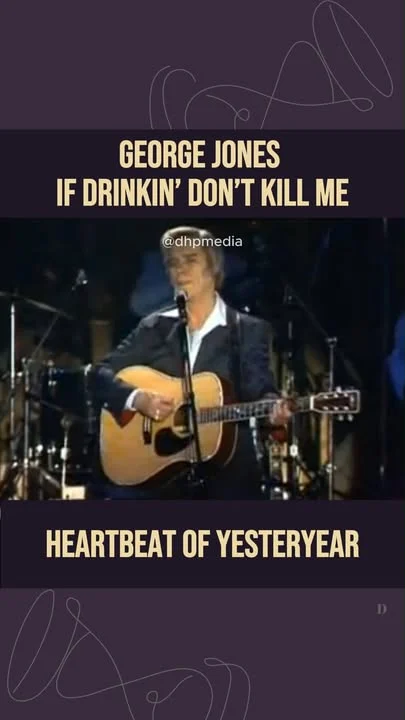
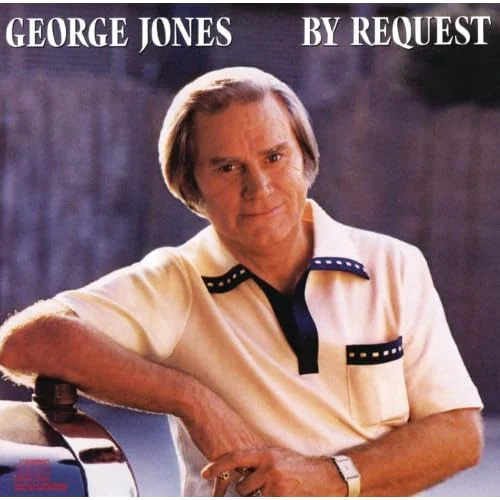
He stumbles through the door at dawn, the sour sting of whiskey still on his breath. The bottle didn’t finish the job, but the ghost of a lost love always waits inside. This is the world of George Jones, a voice that turned pain into poetry, and never more devastatingly than in his 1981 masterpiece, “If Drinkin’ Don’t Kill Me (Her Memory Will)”.
The song arrives like a confession from a man who has given up the fight. Jones, often called “The Possum” for his uncanny ability to inhabit the sorrow of everyday life, delivers a performance so raw it feels less like listening and more like witnessing a soul unravel. It is a ballad not just of heartbreak, but of a deliberate, slow-motion surrender to grief.
“If drinkin’ don’t kill me, her memory will.”
That refrain cuts deeper with each repetition. The narrator’s night of heavy drinking is not a celebration; it is a frantic attempt to outrun the memories that chase him from barstool to bedroom. The verses paint a portrait of a man haunted by the ordinary – a familiar scent, a half-remembered laugh, the shape of an empty chair. He knows the alcohol can only numb him for so long. The real poison, he realizes, is the past itself.
Released in 1981, the song stands as one of the most honest explorations of denial ever set to a country melody. Jones’s voice cracks and wavers with a vulnerability that feels almost uncomfortable in its intimacy. He does not sing about moving on or finding strength; he simply admits that he is losing, and that the enemy lives inside his own head.
But there is a strange beauty in this surrender. George Jones transforms a story of personal destruction into a universal anthem for anyone who has ever loved and lost. The song’s power lies not in offering hope, but in validating despair. It tells the listener that you are not alone in your darkest hours – that even the greatest voices have cracked under the weight of memory.
Decades later, “If Drinkin’ Don’t Kill Me (Her Memory Will)” remains a cornerstone of country music’s ability to elevate pain to art. It is not just a song about drinking; it is a song about the inescapable echo of love. And in that echo, we hear the enduring, fragile humanity of a man who gave voice to our own silent tragedies.