
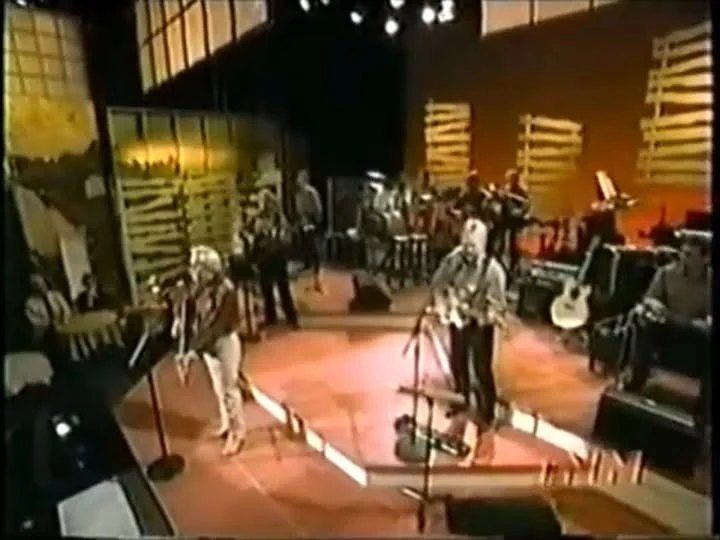
A lone old man with tired eyes and white hair sits at a table nursing a beer. He smiles at a stranger who joins him, and by night’s end, he has shared a lifetime of memories. This is the heart of George Jones‘s immortal ballad “These Old Eyes Have Seen It All” — a song that does not just tell a story but becomes the listener’s own reflection on joy, loss, and the quiet acceptance of a life fully lived.
Released in 1981, the track stands as a landmark in Jones’s storied career. Written by Troy Seals and Donnie Fritts and produced by the legendary Billy Sherrill — the architect of the polished “countrypolitan” sound — the song quickly climbed to number one on the Billboard Hot Country Singles chart. It also crossed over to the pop charts, reaching number 44 on the Hot 100, a rare feat that underscores its universal appeal.
Sherrill had guided Jones through a string of 1970s hits, and here he matched the singer’s raw, nuanced vocals with a lush arrangement that never overwhelms the story. The first-person narrative is delivered by an elderly man recounting milestones both historic and personal. He saw Jimmie Rodgers yodel, witnessed Hank Williams laid to rest, and watched Elvis Presley reshape the world. He fought in foreign wars, saw Hitler’s rise and fall, and with a trembling hand recalls fifty years of love with his sweet Mary.
The song’s power lies in its ability to evoke a sense of weary wisdom. Jones, known as the master of heartache, pours every ounce of his own life experience into the performance. The lyrics are filled with vivid imagery — a man walking on the moon, the hands of time writing on the wall, the quiet certainty of an impending call from Jesus. Each verse wraps the listener in a warm, melancholic embrace.
These old eyes have seen it all
Now the hands of time are writing on the wall
Telling me I won’t have long to wait until my Jesus to call
“These Old Eyes Have Seen It All” became a cornerstone of Jones’s live shows and a staple on countless compilation albums. Decades later, it continues to resonate with new generations, proving that country music’s storytelling tradition endures. The song’s poignant message of reflection and acceptance speaks to anyone who has ever looked back on their own journey — reminding us that in every glance backward, there is a story worth sharing.