
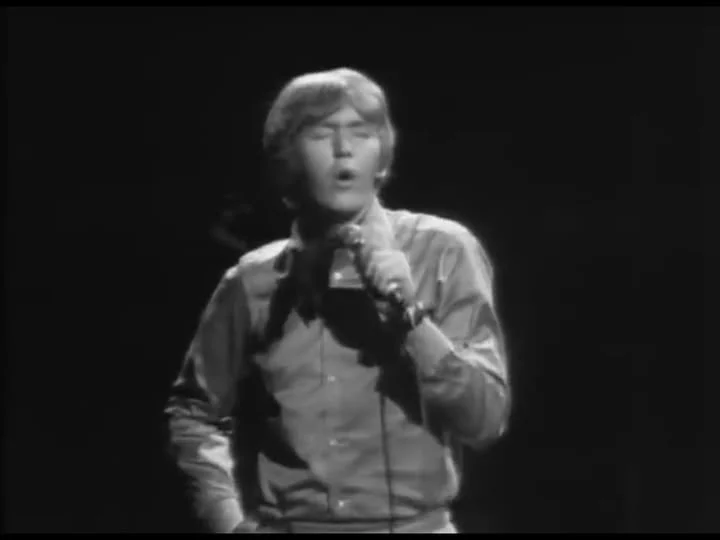
Late one night in a cheap, neon-lit diner off an anonymous freeway, the jukebox hummed and the coffee tasted burnt. And then, a voice sliced through the low drone—clear as a bell, agile as a bird in flight. It was Harry Nilsson singing “Everybody’s Talkin’.” I had heard it before, of course, as the theme from Midnight Cowboy. But in that moment, it became something else entirely: a private confession played at public volume, the sound of a man packing a bag he knows he shouldn’t be packing. The familiarity was instant, visceral. It felt less like a new song and more like the memory of a cross-country bus trip I had never taken.
Certain pieces of music possess the spectral quality of memory itself. They don’t recall a specific event but the feeling of an entire era distilled into three minutes. Harry Nilsson’s 1969 hit is exactly that—a ghost in the machine of pop culture, the sound of dust motes swimming in the hard light of a tiny rented room. It is less a record and more the echo of a solitary road, the ache of wanderlust captured in a single sustained string chord.
To appreciate Nilsson’s rendition, you have to place it within his idiosyncratic career. He was not a folk singer or a traditional balladeer. He was an auteur who refused to adhere to any signature style. Before “Everybody’s Talkin’” found its epochal success, Nilsson was already recording for RCA Victor, praised by critics and championed by The Beatles, yet still searching for a commercial breakthrough. The song was written by the reclusive folk legend Fred Neil and first released on Nilsson’s 1968 album, Aerial Ballet.
When director John Schlesinger chose it as the theme for Midnight Cowboy—replacing Nilsson’s own composition, “I Guess the Lord Must Be in New York City”—the song became forever linked to Joe Buck and Ratso Rizzo, two lost souls chasing an impossible dream in the concrete canyons of New York. The single was re-released to capitalize on the film’s success, propelling Nilsson into the Top 10 and earning him a Grammy. The irony, which Nilsson himself appreciated, was that his first massive hit was a cover—a perfect piece of melancholic poetry he did not write, but which he made irrevocably his own. The track was produced by Rick Jarrard, who helped bridge Nilsson’s studio ambition with a surprisingly accessible, folk-tinged sound.
Fred Neil’s original had a grittier, more resigned feel, a simple acoustic strum and a world-weary baritone. Nilsson’s version is an exercise in controlled, exquisite lift. The acoustic guitar sets a primary rhythmic pulse with a delicate, fingerpicked arpeggio pattern—the steady click of a turning odometer. A restrained drum kit provides a jazzy rhythm, often using brushes or playing on the rim, suggesting forward motion without aggression.
Then there is the arrangement by George Tipton. The use of strings is masterful, a clinic in restraint. As Nilsson sings of finding a place “where the sun keeps shining through the pouring rain,” a sustained, ethereal string chord enters, holding a single impossibly long note through almost the entire first verse. It is not an embellishment. It is the atmospheric pressure of the song, the sustained ache of wanderlust. When the chorus arrives, the strings finally stir, moving in a graceful, ascending motif that mirrors the emotional arc of the lyric. It is a swell, a breath, a catharsis that underscores the yearning in Nilsson’s vocal performance. The arrangement avoids the heavy-handed syrup of many orchestral pop songs from that era, opting instead for a luminous texture that is both deeply moving and perfectly understated.
Nilsson’s vocal is the most essential instrument. He possessed a nearly four-octave range, but here he uses his upper register to convey vulnerability rather than virtuosity. His voice is double-tracked, creating an intimate, almost conspiratorial sound in the verses. When he hits those sustained notes in the chorus, the vibrato is controlled, not indulgent. It gives the impression of a man trying to keep his composure while being swept away by emotion. There is virtually no reverb on his voice in the final mix, centering him with an unnerving, immediate presence. This dry, upfront mixing choice, coupled with the wide, echoing stereo spread of the strings, creates a beautiful contrast—the intensely personal drama of the singer against a vast, indifferent world.
The song is a perfect counterpoint of simplicity and orchestration, a map drawn with pencil and then colored in with the finest oils.
The piano plays a largely textural role, a gentle sustained chord providing cushion for the vocal or an occasional high-register filigree. It adds warmth and depth without ever seizing the melodic lead. The bass line walks with quiet purpose, anchoring the folk-rock structure to the ground while everything else—the voice, the strings, the dream of freedom—begins to float free. For those seeking the most detailed experience, listening through a high-fidelity premium audio system allows one to appreciate the discrete layers of Tipton’s arrangement. The precise attack of the acoustic guitar and the way the strings bloom and fade are often lost in lesser formats.
What makes this a timeless piece of music is its universality. The song taps into the essential human desire to escape the noise, the pressure, the sheer volume of “everybody’s talkin’.” It is a fantasy of anonymity and self-determination. Think of the young college graduate paralyzed by the weight of expectations, who hears the line about hopping on a bus “bound for nowhere” and suddenly sees a path that was not there before. Or the long-distance truck driver, alone in the cab at three in the morning, the song playing faintly on satellite radio, finding companionship in Nilsson’s yearning. The song’s enduring power is its refusal to resolve the tension between the glamour of escape and the loneliness of the open road. The melancholy is inherent in the hope itself.
It is an important reminder that musical education goes far beyond sheet music. It is about connecting with the emotional truth of a performance. Nilsson’s cover is not just technically brilliant but profoundly felt. It is the sound of the late 1960s shedding its skin—moving past the initial psychedelic dream into a more complex, bittersweet reality where freedom is something you have to buy a bus ticket to find. The next time you queue it up, listen not just to the melody but to the space between the notes. Listen to the long, singular note held by the strings. It is the sound of a breath held tight, waiting for the courage to finally skip out like a stone.
Listening Recommendations
“Hallelujah” – Leonard Cohen (1984): Shares the same blend of spiritual searching and worldly melancholy, built around a sparse arrangement.
“The Dock of the Bay” – Otis Redding (1968): A comparable mood of quiet contemplation and temporary retreat, waiting for a life to change.
“A Case of You” – Joni Mitchell (1971): Intimate, vocally brilliant folk-pop showcasing a deeply personal narrative over intricate piano and guitar work.
“Cathy’s Clown” – The Everly Brothers (1960): Features a distinctive, double-tracked vocal harmony similar to Nilsson’s method, creating an immediate, close sound.
“I Can See Clearly Now” – Johnny Nash (1972): A hopeful, post-melancholy anthem about overcoming adversity, echoing Nilsson’s eventual optimism.