
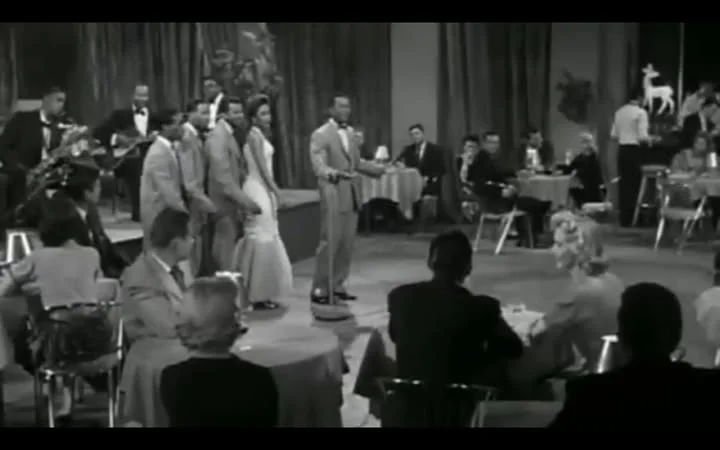
The confession arrives not with a scream, but a whisper. In the dim light of a 1957 recording studio, a voice cracks through the silence with devastating tenderness: I’m sorry for the things I’ve done. It is a sound that freezes time, a moment of raw human vulnerability wrapped in velvet production. The Platters had done it again—transformed a simple apology into an enduring masterpiece.
There is a particular magic that happens when a group reaches the apex of their creative powers. For The Platters, that moment arrived under the meticulous guidance of manager and producer Buck Ram, a visionary who understood that doo-wop could be more than street corner harmonies. It could be high art. Following their monumental successes with Only You (And You Alone) and The Great Pretender, the group had already proven themselves architects of a new sound—one that married the grit of rhythm and blues with the polish of a Broadway stage.
I’m Sorry emerged during a prolific period for the group, settling gracefully into the US Top 20. But chart positions tell only part of the story. What makes this recording extraordinary is how it distilled the essence of The Platters’ signature style into three minutes of near-perfect emotional architecture. Ram, collaborating with Peter Tinturin and William W. “Billy” White, crafted a composition that felt both universal and intensely personal.
The arrangement unfolds like a carefully staged drama. There is no grand entrance, no theatrical flourish—just the gentle pulse of an upright bass and the hushed dignity of brush-stroked drums. A piano enters with understated chords, offering support rather than spectacle. The guitar, clean and restrained, weaves through the texture like a quiet thought. This is not the rebellious energy of emerging rock and roll; this is something more refined, more deliberate.
Then the strings arrive—and everything transforms. Buck Ram’s orchestral arrangements, often dismissed by purists as overly sweet, reveal their genius here. The strings do not merely accompany; they breathe alongside the vocalist, swelling with each admission of regret, retreating like a held breath. This cinematic quality elevated The Platters from a vocal group to something approaching an emotional orchestra, equally at home in a dance hall or on a state-of-the-art hi-fi system.
The seamless integration of the orchestral backing with the vocal harmonies made The Platters the perfect sound for a changing America, a sophisticated echo in a world suddenly dominated by electric noise.
At the center of this exquisite soundscape stands Tony Williams, arguably the most distinctive voice of his era. His tenor does not simply sing the lyrics—it inhabits them. Every vowel is stretched with deliberate care, every phrase weighted with genuine remorse. When he delivers the bridge—Please be kind and I know you’ll find / It’s so easy to forgive—there is a pleading quality that transcends performance. The background vocalists—Herb Reed’s anchoring bass, Paul Robi’s warm baritone, David Lynch’s tenor, and Zola Taylor’s elegant alto—blend into a seamless choir of support, their soft oohs and aahs creating a cushion of ethereal harmony.
The song’s dynamic architecture is masterful. Williams maintains a controlled intensity throughout, making the rare moments of vocal elevation feel genuinely cathartic. This is not a casual apology for a minor transgression. It is the desperate plea of someone who understands the full weight of their failure, who knows that forgiveness is not guaranteed but must be earned through vulnerability.
What makes I’m Sorry endure is not merely its technical brilliance but its emotional truth. In an era when musicians were still deciphering the language of rock and roll, this recording demonstrated that classic songwriting principles—applied with modern production sensibility—could create something timeless. Decades later, musicians still study Buck Ram’s elegant chord voicings, and fans still seek the sheet music to understand the song’s melodic architecture.
This is music for the quiet moments of human connection. It is the soundtrack to reconciliation, to the humility of admitting fault, to the fragile hope that love can survive our worst mistakes. In a world increasingly defined by noise, I’m Sorry reminds us that the most powerful statement a person can make is sometimes the simplest one: I was wrong.
Listening Recommendations
The Flamingos – I Only Have Eyes for You
An orchestrated doo-wop ballad where vocal texture becomes a misty romantic landscape.
Little Anthony and the Imperials – Tears on My Pillow
Shares the same blend of R&B emotion and dramatic lead tenor performance.
Sam Cooke – You Send Me
A touchstone recording from the same era, using elegant simplicity to highlight iconic vocals.
The Skyliners – Since I Don’t Have You
A powerful lead set against sweeping orchestral and group-vocal arrangements.
Frankie Lymon & The Teenagers – Why Do Fools Fall in Love
Represents the earlier, more innocent side of vocal group harmony.
The Drifters – Save the Last Dance for Me
Latin-inflected rhythm with luxurious arrangement and sophisticated vocal delivery.