
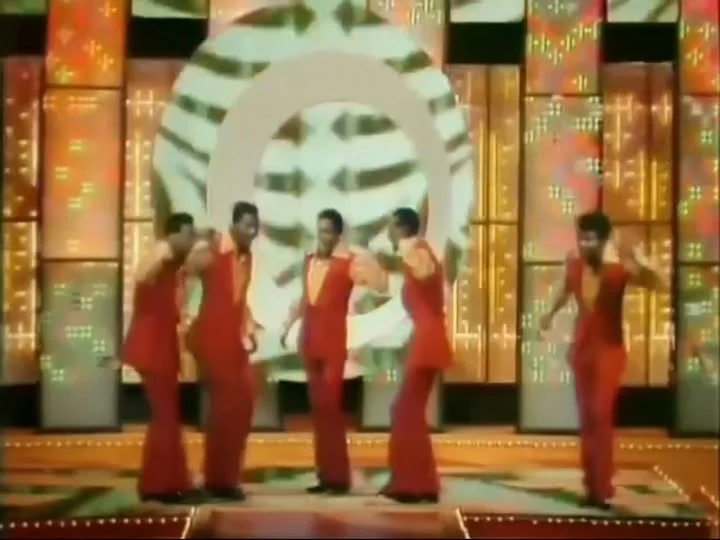
The needle drops and the world tilts on its axis. A frantic collage of sirens, distorted guitar stabs, and a relentless bassline erupts from the speakers, shattering the polished veneer of a generation. This was not a song meant for slow dances or sweet nothings. This was The Temptations setting fire to their own legacy. In 1970, the kings of Motown elegance traded their matching suits for streetwise grit and delivered Ball of Confusion (That’s What the World Is Today), a four-minute panic attack that remains as relevant now as it was half a century ago.
The song’s power lies in its perfect contradiction. It is a deeply unsettling listen that somehow compels you to move. The producer and co-writer Norman Whitfield, working alongside Barrett Strong, stripped away the symphonic gloss that defined the label’s golden era. Instead of heavenly strings, they unleashed a jagged, wah-wah soaked guitar riff that owed more to Jimi Hendrix than to Berry Gordy’s hit factory. The familiar “Classic Five” harmonies were replaced by a dizzying round-robin of frantic vocal trades. Each Temptation stepped up to the mic to deliver a rapid-fire line about a world spiraling out of control. It was exhilarating. It was terrifying. It was unlike anything Motown had ever dared to release.
The track felt less like a song and more like a frenetic news bulletin set to a funk groove.
When the single landed, it carried a bold prophecy. It did not appear on a traditional studio album at first, instead anchoring the compilation Greatest Hits II as a definitive statement of purpose. Against all odds, this stream-of-consciousness list of societal ills climbed into the top five on the U.S. pop charts. The lyrics were not subtle poetry. They were a raw checklist of anguish, touching on revolution, gun control, and segregation with the urgency of a breaking news ticker. The fact that white America danced to this record while grappling with the very real turmoil it described speaks to the song’s undeniable groove. The message was heavy, but the rhythm made it impossible to stand still.
Much of the song’s enduring genius rests on the shoulders of Motown’s legendary session musicians, the Funk Brothers. The elastic bassline, credited to Bob Babbitt, is the song’s heartbeat, a pulsing, hypnotic force that drives everything forward. The drums are complex and busy, yet impossibly tight, creating a sense of nervous energy that never boils over. There is a deliberate looseness to the performance, a controlled chaos that feels almost dangerous. Stevie Wonder reportedly added a haunting, uncredited harmonica solo that wails like a distant siren, weaving through the dense mix like a ghost. This was not a polished production. This was a raw, unvarnished snapshot of a world in flames.
What makes this track truly timeless is how its warnings have only grown louder with time. The song lists problems that still dominate our headlines today, from institutional mistrust to the overwhelming flood of information. The “ball of confusion” that Whitfield and Strong imagined is now a hyper-connected global phenomenon. Listening to it today, through high-quality headphones or a proper sound system, reveals new layers of sonic detail. The subtle horn stabs, the shimmering tambourine, and the eerie background vocals all combine to create an immersive experience that demands your full attention. It is a dense, complex masterpiece that rewards those who dive deep.
For those looking to explore this revolutionary corner of soul music, several tracks offer a similar blend of social conscience and raw funk. Marvin Gaye‘s Inner City Blues captures the same sense of economic despair. Sly and the Family Stone pushed boundaries with Thank You (Falettinme Be Mice Elf Agin), a track that clearly influenced Whitfield’s approach. Edwin Starr‘s War is a more direct protest anthem with the same powerhouse backing. And The Undisputed Truth‘s Smiling Faces Sometimes showcases Whitfield’s darker, more theatrical tendencies. Each of these songs lives in the same universe as Ball of Confusion, a world where soul music stops being mere entertainment and becomes a mirror reflecting the painful truths of its time.
The Temptations risked everything to make this record. They had built their reputation on silk and sophistication, but they understood that the world around them had changed. The assassination of leaders, the escalation of war, and the fight for civil rights demanded a response that a love ballad could never provide. By embracing the chaos, they created something far more important than a hit single. They created a time capsule that refuses to gather dust, a warning from the past that still feels dangerously fresh. The world is still a ball of confusion, but thanks to this extraordinary piece of music, we have the perfect soundtrack to confront it.