
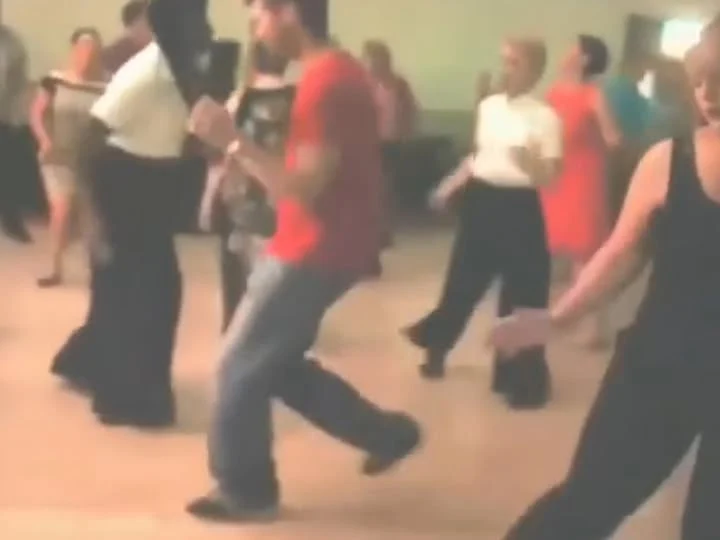
The needle drop transforms a room in an instant. From the first beat of Breakin’ Down The Walls of Heartache, the air crackles and then erupts. This is not the slow, reflective soul of the American South. It is New York precision engineered for pure, kinetic escape. A three minute masterclass in musical urgency, this track captures the ecstatic, almost frantic energy of the UK’s Northern Soul movement better than almost any other record.
Johnny Johnson’s vocal performance is legendary. His high tenor rasp carries an almost manic intensity. He does not just sing the lyrics. He pleads them, his voice occasionally cracking with the sheer effort of emotional excavation. He sells the transition from being trapped by sorrow to bursting free with a cathartic, no holds barred approach. The backing vocalists are equally vital, providing tight, anthemic harmony responses that sound like a rallying cry. The repeated chorus transforms from a declaration into an affirmation and then a command.
The arrangement, masterfully orchestrated by Charles Calello, is the core of its power. The tempo is relentless. A double time rhythm section pushes forward with an unstoppable four on the floor beat, anchored by a fiercely propulsive bassline. This rhythm section does not merely keep time. It drives the narrative, a frantic escape from heartbreak. Against this raw engine sits the high sheen glamour of the orchestral elements. Sweeping strings enter early, rising in majestic swells that suggest both grand drama and unburdened release. They cut through the grit, providing a soaring counterpoint to the street level urgency of the groove.
It is the sound of a heart fighting its way back to life, armed with nothing but raw vocal power and an orchestra ready for war.
The brass section delivers short, stabbing phrases that punctuate Johnny Johnson’s impassioned vocal delivery. They are the heralds of his emotional breakthrough. The interplay between the rhythmic, percussive elements and the lyrical, soaring strings is the sonic blueprint of classic Northern Soul. It is a dialogue between struggle and ecstasy. The piano plays a critical role, not as a soloist, but as a textural rhythm instrument, contributing sharp, chordal stabs that blend with the rhythm guitar’s syncopated accents. The guitar, buried slightly in the mix, provides a tight, funky riff that locks in with the bass, creating the hypnotic foundation over which the dramatic elements unfold. This careful layering of instruments is a hallmark of sophisticated, high budget soul production from the late 1960s. For anyone using premium audio equipment, this track is a spectacular test, revealing layers of sonic detail often compressed out of lesser playback.
The record’s origin story is a tale of transatlantic irony. Recorded by the American group The Bandwagon, soon to be Johnny Johnson and The Bandwagon, this track was written and produced by the formidable team of Sandy Linzer and Denny Randell. It was released in the United States in June 1968. It barely registered, peaking at a humble number 115 on the Billboard chart. But its failure stateside was the prelude to its legend across the pond. A few months later, released on the UK’s Direction label, the single rocketed up the charts, eventually peaking at number four. This runaway success cemented the group’s career arc in Britain, where their frantic, high octane sound found its rightful spiritual home. It is a testament to the discerning, passionate, and often contrary tastes of the British working class youth who created the Northern Soul scene, a subculture built on lifting overlooked American R&B singles to legendary status.
This song lives first and foremost as a single, a seven inch shot of adrenaline built for the sweat soaked floors of places like the Wigan Casino. Its emotional charge is immediate, leaving no room for preamble. The track later featured on the group’s debut album, Johnny Johnson and the Bandwagon (1968), released after their British breakthrough. But its cultural resonance goes far beyond the vinyl. For Northern Soul dancers in the industrial North of England, this record was pure, vivid color. It was escapism forged from American ambition and British fervor. The song’s rarity and the physical object of the single became sacred, symbolizing a shared, exclusive knowledge of musical brilliance overlooked by the mainstream. This track represents the ultimate glamour found in the grit of the Northern all nighters, a powerful contrast that defines the entire subculture. The track proves that a good song will always find its audience, even if it has to cross an ocean and change subcultures to do so.
The final crescendo is a glorious, organized chaos. A whirlwind of brass, strings, and the relentless rhythm pushes the listener over the emotional finish line. It fades out not because the music has stopped, but because the emotion is too big to contain, receding only because the tape runs out. This explosive energy, the combination of orchestral sweep and raw, pleading vocal, ensures that Breakin’ Down The Walls Of Heartache will forever occupy a sacred place on the Northern Soul roster, a perennial reminder that the most powerful music forces you to move, physically and emotionally.
For the aspiring musician, studying this record is an education. The melodic complexity and sheer momentum packed into a brief runtime is staggering. While the complete arrangement is dense, the foundation is simple. Understanding the harmonic movement is key. Fortunately, many resources for guitar lessons or piano instruction often touch upon the chord progressions common to this era of soul music.
Listening recommendations include tracks that share similar energy and production. The Flirtations offer Nothing But A Heartache with driving female vocals and transatlantic sheen. Dobie Gray delivers Out On The Floor, an absolute Northern Soul cornerstone with frantic pace and soaring anthemic quality. Frankie Valli and the Four Seasons present The Night, a later period track adopted by the scene with high tenor vocals and dramatic orchestration. The Chairmen of the Board offer Give Me Just a Little More Time, a plea turned anthem with tight group vocals and brisk tempo. Tobi Legend provides Time Will Pass You By, a less well known but equally majestic classic with a stunning expansive soundscape driven by a huge string section.