
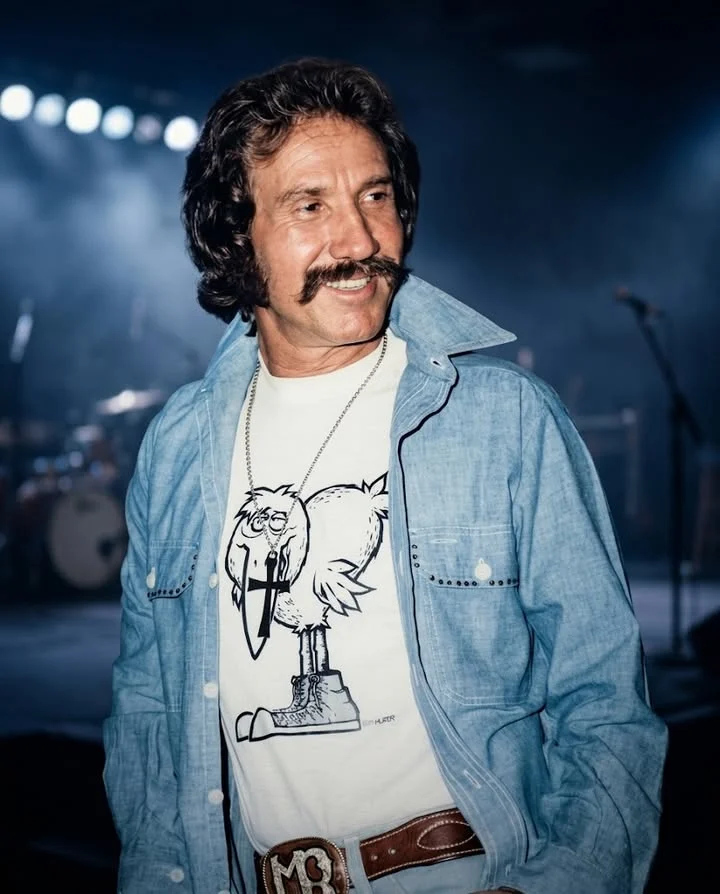

January 1970 brought a hospital room where a country star and NASCAR driver faced a choice no family should make. Marty Robbins had survived a massive heart attack in August 1969, yet five months of decline had taken the stage lights and the racetrack away from him. His wife, Marizona, stood at the edge of an experimental triple coronary bypass, knowing the operation could save him or end him on the table.
At that moment, Marty Robbins would become only the 15th patient in the entire world to undergo the surgery. The consent form carried a terrible gamble, a trade between certain fading and uncertain survival. Marizona signed it, and the operation succeeded, but the road back began in pain and weakness.
Recovery forced a man built for speed to rebuild from zero. Every step down the corridor and every breath tested his body while Marizona carried the quiet fear around him. Less than a year later, he returned under stage lights and behind the wheel of a race car. The long scar down his chest became a permanent record of borrowed time.
That survival reshaped his music. He wrote My Woman, My Woman, My Wife as a deeply personal tribute to the woman who faced the unknown for him. The song speaks to lifelong devotion, spiritual reverence, and the heavy burdens often carried in silence by a wife who protects the life and dreams of the man she loves.
Lord, give her my share of heaven if I have earned any here in this life because God, I believe she deserves it, my woman, my woman, my wife.
Marty Robbins later gave that lyric to Marizona, and every song he sang after that winter remained a testament to her gamble, his recovery, and the fragile second chance that brought him back.
Listeners can find the full lyrics by searching for the song online.