
Great pop doesn’t escape life. It changes the room you’re standing in.
You hear it first in the space between verses. The snare flicks, the bass walks forward in smart shoes, and the strings lift like a curtain catching a breeze. Then Petula Clark opens her mouth and the city becomes a place you can touch. Not a postcard. Not a skyline from a post office calendar. A living street where the lights flicker just for you. That is the secret of “Downtown.” Six decades later, it still works.
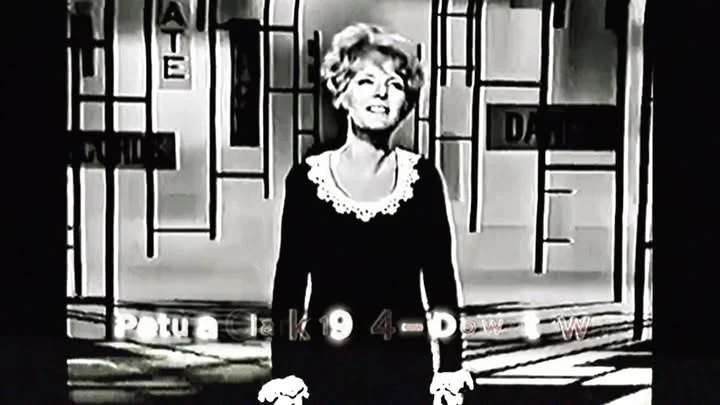
Petula Clark was no newcomer when she recorded the song in 1964. She had been a child star in Britain, moving through radio, film, and continental pop with ease. But “Downtown” was the hinge. Written and produced by Tony Hatch, released on Pye Records in late 1964, the single climbed charts around the world. In early 1965, it reached number one in the United States. It recast Clark as a cosmopolitan voice for a generation that was discovering cities everywhere.
The record earns its sophistication. Hatch’s arrangement approaches the city with affection. Not a jungle. Not a hustle. A glittering thoroughfare seen from a café table after dusk. Listen to the first bars. The rhythm section enters with crisp brio. A buoyant bass walks alongside a snare that springs forward. Woodwinds trace brief counterphrases, like neon still warming up. Brass accents behave like taxi horns from one street over, heard through an open window. Every instrument holds a corner of the city.
Clark’s vocal sits in a sweet spot between theater and pop. She shapes syllables with clear diction, yet there is a conversational warmth, a half smile tucked into her phrasing. The timing of her consonants matches the rhythmic lift. The microphone seems close but not intimate. There is a tasteful chamber echo that suggests space rather than secrecy. You can imagine the room. Tidy. Well dressed. Modern.
The song’s central conceit—the city center as sanctuary—could have become a postcard cliché. But the melody gives it legs. The verse moves in purposeful steps, climbing without haste. The pre-chorus loosens the tie and raises the voice. The chorus arrives like a marquee after rain, letters shining through mist. Harmonically, nothing is flaunted. Yet the modulation of mood is masterful. By the time Clark invites you downtown, the destination is already audible in the orchestration.
The city doesn’t ask you to witness a glamorous life. It invites you to take a walk.
What makes the record feel so alive after all these years is its balance of glamour and grit. The strings shimmer, but the drumming is taut, with a dry snap that hints at real pavement. The handclaps, if your pressing brings them forward, tuck inside the arrangement as civic punctuation. No instrument is there just to gild the picture. Each part holds a corner of the city.
There is also a structural intelligence to the dynamic contour. Verses pull in, choruses flare out. Not by crude fader rides but by arranging choices. Woodwinds answer lines. Brass marks the chorus with confident interjections. Low strings add a gentle undertow that keeps the tempo from floating away. The space feels measured. Enough to paint glow. Not so much to wash away detail.
Consider the roles of piano and guitar. The piano functions like well-placed streetlights, keeping intervals bright and pulses articulate. It is not gamboling across the keys. It is a steady companion, chiming where the vocal needs a hinge. The guitar is supportive, not showy. Chunks of rhythm, a few tasty strums that edge the groove forward. Neither is the headliner, and that is exactly right. The voice and the city are the principal characters. Everything else is cinematography.
Hatch reportedly conceived the melody after walking through a city center and watching the life of the streets. He writes like a director blocking scenes. He gives Clark dialogue that invites movement and arranges scenes that turn the city from noun to verb. If you have ever exited a dim train into a lit concourse just as friends appear, you know the sensation of chorus two.
I often think of three contemporary vignettes where the song still lands.
First, the late-night drive. The office emptied you out. The apartment walls echo. You put on the track almost out of habit. The snare flicks, the strings rise, and suddenly your eyes are reading the city again. The crosswalk signs. The rooftop patios. The couple laughing over cheap noodles. The chorus does not erase fatigue. It reframes it. You can be alone and still feel accompanied.
Second, the early-morning runner passing storefronts before opening hours. Headphones on, rhythm set, the record becomes cadence. When the chorus blooms, the city’s shutters roll up in your mind. You are not running from anything. You are jogging into company. The trumpet accents match your breath.
Third, the traveling parent FaceTiming from a hotel window. The call ends. Silence arrives. You cue “Downtown” on a modest speaker. The arrangement reinflates the room as if the wallpaper loosens and the curtain lifts. For three minutes, the hotel is a balcony over a cheerful street.
These stories are not sentimental extras. They connect to the recording’s architecture. The song works because it stages community as sound. Call and response between sections. A choir of instruments that never turns into clutter. Even the brief breaks in the arrangement—where the band tucks down to let Clark step forward—carry a sense of pedestrian rhythm. Pause at the curb, then cross with the chorus.
Historically, the success of “Downtown” mattered for the larger shape of mid-sixties pop. While guitar-forward groups were rewriting the rules, Hatch and Clark proved that orchestral pop could be just as modern, just as international. This was not a throwback to pre-rock crooning. It was a brisk merger of showcraft and radio snap. It suggested that the city had room for more than one skyline.
The recording quality holds up strikingly well. On a decent system, the strings maintain body, not just gloss. The vocals stay centered without sibilant smear. The percussion has enough bite to keep the mix spry. If you audition it on studio headphones, the stereo image gives a polite but defined stage. Nothing exaggerated. Just well-placed figures that let you follow the flutes through the chorus and the brass punches as they queue in. The room is big enough for a crowd. Not big enough to lose anyone.
Because the song became so widely known, it risks flattening into mere nostalgia. But listen to the rhythmic details. There is a mild swing under the even pulse. A snap on the backbeat that sweetens without sugarcoating. Clark never oversells a line. She rounds vowels as if pointing to sights along the way. The way the chorus phrases “downtown” uses melodic ascent less as a shout than as a gesture. An arm waving you over from across the street.
The single’s success catalyzed a series of collaborations between Clark and Hatch that defined the next stretch of her career. Follow-up hits kept the itinerary varied, yet “Downtown” remained the iconic stop. For those tracking the physical releases, the song anchors the period’s compilations and, in markets where the label issued an album by the same name, serves as thematic center. If you want to study the nexus of orchestral pop and mid-sixties radio craft, start here.
What about the song’s adaptability? It translates surprisingly well across contexts. Solo piano versions preserve the architecture and reveal the harmonic clarity. Bigger band arrangements simply make the skyline taller. Small wonder it is a staple for arrangements and, for players, often an entry point when flipping through sheet music collections for standards that still feel like real streets rather than museum halls.
There is also a subtle modernity in its lyric stance. Rather than casting the city as spectacle, it casts the listener as participant. You are not asked to witness a glamorous life. You are invited to take a walk. The chorus promises energy without judgment. In an age when public space can feel contested or transactional, this gently civic vision reads as both quaint and radical.
“Downtown” has a way of erasing the line between public and private listening. Put it on at a party and everyone knows a piece to hum. Put it on alone and the arrangement becomes a companionable stranger. That duality is no small part of its durability.
If there is an urban myth element to its origin story—Hatch inspired while visiting a city center—we should not let that overshadow the real work. Inspiration catches the hook. The craft builds the bridge and paves the avenue. Clark’s ability to sing optimistically without sounding naïve is the final coat of paint. She makes you believe that the city’s lights are there for you not because fortune smiles, but because people made them and keep them lit.
Revisiting “Downtown” now, I am struck by how contemporary its emotional mechanics feel. We still seek places that redo our mood. Not to forget ourselves, but to find a better angle on the day. We still need songs that act like public squares, built out of melody and brass and shared air. And we still marvel when a record this meticulously constructed manages to feel effortless.
When the last chorus recedes, the street does not empty. It quiets. You might find yourself letting the reverb tail hang for a beat, as if the door you just opened closes softly behind you. The next time you walk into a lit street after dusk, you will hear it again. The way small sounds become a shared brightness.
Play it again. Not because it is classic, but because it still works. Let the arrangement put you in a better place. Let the voice point to the warm corner. Let the city—real or imagined—meet you halfway.
Listening Recommendations
Dusty Springfield — “I Only Want to Be with You”
Brassy, buoyant early-sixties pop that pairs orchestral sparkle with a confident lead.
Dionne Warwick — “Walk On By”
Bacharach-David sophistication. Woodwinds and strings frame urban melancholy with poise.
The Ronettes — “Be My Baby”
Phil Spector’s widescreen drum-and-strings drama. A template for romantic cityscapes.
Jackie DeShannon — “When You Walk in the Room”
Jangling rhythm and melodic lift that echoes bright lights and forward motion.
The Supremes — “Where Did Our Love Go”
Minimalist groove meets Motown polish. An object lesson in radio-ready stride.
The Kinks — “Waterloo Sunset”
A later, gentler city portrait where guitar and harmony turn London into memory.