
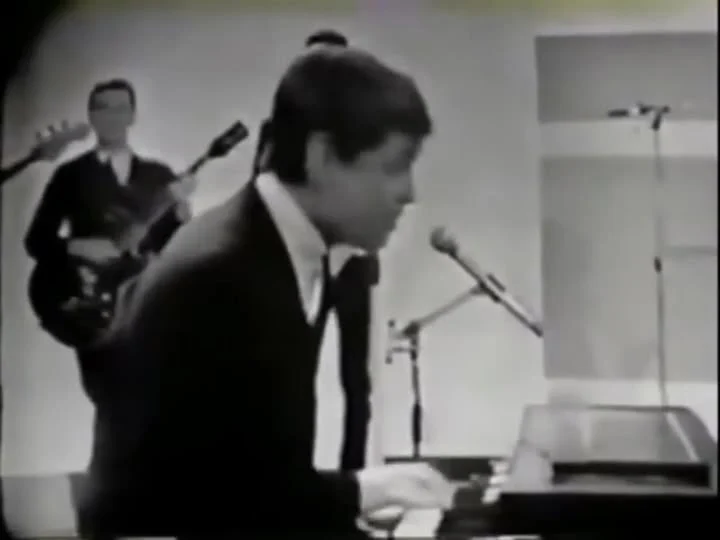
It is a cold London night in early 1965. Inside a basement club off Wardour Street, the air hangs thick with smoke and the sour smell of ale. A crowd of sharp-suited mods and jazz purists presses against a low stage, their anticipation crackling like static. This is not a Rolling Stones show, nor a Who gig. The band stepping into the light is something different: smarter, sleeker, and steeped in a Latin-jazz groove that feels both foreign and utterly intoxicating. When Georgie Fame and the Blue Flames strike the first notes of Yeh Yeh, the room explodes.
Within weeks, that single would topple the Beatles from the number one spot on the UK charts, a five-week reign broken by a sound that owed more to Havana than to Liverpool. Yeh Yeh was not just a pop hit. It was a transfusion of pure soul into the heart of British youth culture, a sophisticated dance floor missile that still feels fresh six decades later.
The track is a sonic snapshot of a moment when the jazz basement met the pop charts, and both sides fell in love.
To understand the alchemy of Yeh Yeh, you must know where Georgie Fame came from. Born Clive Powell, he had paid his dues at the Flamingo Club in Soho, a sweaty crucible where American R&B met British grit. By 1964, his band the Blue Flames had already released the live album Rhythm and Blues at the Flamingo, capturing that raw, after‑midnight energy. A follow‑up, Fame at Last, gave them their first chart entry. But the breakthrough arrived when Fame picked up a song that had begun life as an instrumental by Mongo Santamaría’s band, composed by Rodgers Grant and Pat Patrick. The legendary vocalese master Jon Hendricks had added sharply syncopated, joyful lyrics. Fame, produced by Tony Palmer, recorded the track as a standalone single on the Columbia label in late 1964, and by early 1965 it was unstoppable.
The sound itself is a masterclass in arrangement. From the opening bars, a tight rhythm section drives forward with a bright, insistent cowbell that seems to bypass the ears and land straight in the hips. The Latin‑soul pulse is immediate. But the true star is Fame on piano. His playing is percussive, fleet‑fingered, and central—a swirling voice that echoes the brass lines from the original instrumental. He drops in bluesy block chords and dizzying runs that weave around his cool, conversational tenor. There is no guitar to speak of, which sets the Blue Flames apart from their Mod peers. Instead, the band relies on the rich texture of piano, bass, drums, and a formidable horn section. Peter Coe’s tenor saxophone solo tears through the track like a lightning bolt, a flash of pure jazz improvisation that never loses the song’s pop momentum.
The call‑and‑response hook—“And that’s what I say”—is deceptively simple, yet it anchors the complex rhythmic structure with a shout‑along joy that transcends age and genre. The production, captured live in the studio, retains the immediacy of the Flamingo without sacrificing clarity. You can almost feel the wooden floorboards and the sweat in the air. The dynamics are exquisite: the band simmers under the verses, then swells for the chorus with controlled catharsis.
Yeh Yeh endures because it refuses to take itself too seriously. It is smart music that dances. It stands as a cultural marker for a moment when British youth music grew up, absorbing influences from Latin, jazz, and soul without losing its hunger for a good time. Whether played on a worn 45 or through modern premium audio, the kinetic energy is undiminished. Press play, close your eyes, and you are back in that Soho basement, ready to move.
Listening Recommendations:
Booker T. & The M.G.’s – Green Onions: That organ‑heavy R&B groove and cinematic club feel.
Ray Charles – What’d I Say: Electric call‑and‑response energy and foundational piano work.
The Spencer Davis Group – Keep On Running: A British R&B sibling with similar Hammond‑driven punch.
Matt Bianco – Yeh Yeh (1985 Version): A sophisticated cover that highlights the song’s timeless Latin‑jazz core.
Doris Troy – Just One Look: Bright, brassy arrangement and infectious optimism from 1963.
Willie Bobo – Bossa Nova U.S.A.: The Latin‑jazz percussive complexity that inspired the original instrumental.