
The summer of 1969 was loud, chaotic, and drenched in feedback. Stadiums were growing, albums were sprawling, and everyone seemed to be chasing a twenty-minute guitar solo. But on the outskirts of that noise, a different kind of fire was burning. It came from four men in El Cerrito, California, who had learned that the most powerful rock and roll often needs nothing more than a corner, a nickel, and a beat.
That fire was Creedence Clearwater Revival. They had no interest in psychedelic excess or studio trickery. Their sound was built on rhythm, grit, and stories that felt as old as the Delta. No song captured that rugged simplicity better than Down on the Corner. It arrived on the opening track of their 1969 album Willy and the Poor Boys, the third full-length record they released that astonishing year.
The 1969 output from CCR was nothing short of miraculous. Under the tireless guidance of songwriter and producer John Fogerty, the band released Bayou Country, Green River, and Willy and the Poor Boys within twelve months. All three records carried his singular vision. Yet while the band was a global phenomenon on the Fantasy label, Fogerty still made the music feel intimately personal. For Willy and the Poor Boys, he reportedly imagined a loose street-corner jug band concept. The personas were meant to extend to the band members themselves, but that theatrical idea was mercifully simplified. What remained was a joyful, almost cartoonish anthem to busking culture.
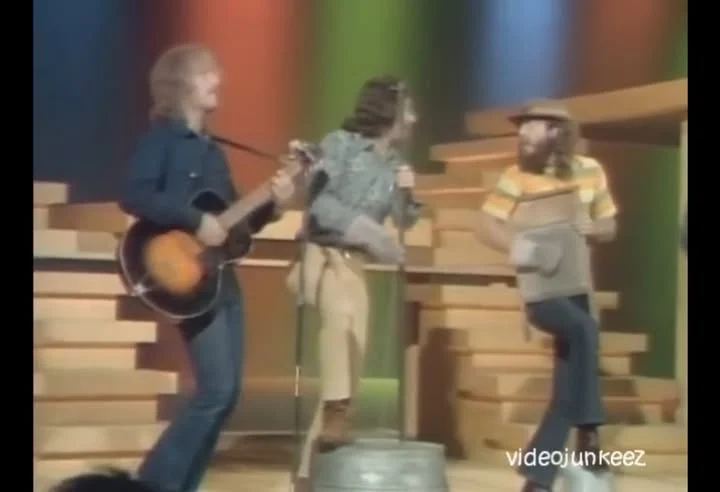
In the song, Fogerty created a cast of street musicians and named them after his bandmates. Rooster, played by Doug Clifford, took the washboard. Blinky, played by Stu Cook, thumped on a gut bucket. And Willy himself led the ragged ensemble. The lyrics invited listeners to bring a nickel and tap their shoes. It was a strange and beautiful move for a band that would soon play Woodstock. Here they were, filling arenas, yet writing love letters to the most humble corners of American music.
The sonic identity of the track is immediately striking. It arrives not with a wall of reverb but with a dry, punchy arrangement that feels close to the listener. The production, guided by Fogerty, gives every instrument room to breathe. Nothing is lost in an echo chamber. It sounds like a garage band that cleaned up but kept its fingerprints.
The rhythm section is a masterclass in minimalism. Doug Clifford’s drums snap and roll with a taut, propulsive groove. Stu Cook’s bass walks with a confident, circular swagger. There is no flash, only a relentless foundation. Above them, Fogerty’s guitar delivers the song’s signature hook. It is low, funky, and almost rubbery, with a clean-but-gritty tone. The notes feel bent and punched out, giving the electric guitar the percussive character of a larger instrument. The metaphorical instruments from the lyrics were brilliantly simulated. The washboard creates a sizzling metallic friction just under the drums. The gut bucket informs the thumping low end. There is no piano or smooth studio sheen anywhere in the mix. The result is a deliberate, backwoods authenticity.
The arrangement is quietly genius because it references itself. On high-fidelity equipment, the details emerge. The call-and-response vocals, the slightly distorted lead voice pushing forward, the overall sense of joyous release. This is music that demands movement. A foot tap. A finger snap. A smile.
The lyrical story is a series of fleeting vignettes. Willy, Rooster, and Blinky play for nickels and dimes on street corners. It stands in stark contrast to the massive record sales CCR were racking up. But that contrast is the point. The song celebrates the primal reason anyone makes music in the first place. Survival. Community. Joy.
I once saw a trio playing on a sidewalk outside a coffee shop. A cajon, an acoustic guitar, and a singer who had clearly been at it for hours. They were not polished. They were urgent. They reminded me that the spirit of Down on the Corner has never disappeared. It lives wherever someone plays for the pure love of the sound, even if the hat holds only spare change.
This song is not just a soundtrack to a simpler time. It is a testament to the enduring, universal power of rhythm and camaraderie.
At just two minutes and forty-seven seconds, Down on the Corner achieves more than many ten-minute rock odysseys. It establishes a scene, introduces characters, and defines a mood. The shout-along chorus is a communal call. It invites you to abandon cynicism and simply feel the beat. Even a first-time guitar student can immediately grasp its infectious structure. That accessibility is its strength.
Yet the single carried a double edge. It was released as a double A-side with Fortunate Son. The flip side was a burning indictment of class, privilege, and war. Down on the Corner offered the sweet, grounded fantasy. Together, they showcased the full spectrum of John Fogerty’s songwriting. One song was the fire-breathing prophet. The other was the nostalgic folk chronicler. Fortunate Son shot up the American charts and cemented CCR’s cultural moment. Down on the Corner provided the irresistible, feel-good counterweight that guaranteed its longevity.
The enduring relevance of Down on the Corner lies not in technical complexity. It is almost willfully simple. It cuts through decades of overproduction and studio gloss. It sounds exactly like four guys playing their hearts out for the sheer love of it. That is why it still echoes today. Great rock and roll can be found at any grand stage, sure. But sometimes it lives right down on the corner.
Listening recommendations for anyone drawn to this earthy corner of rock and roll.
The Band — Up on Cripple Creek uses simple instruments and a loose feel to create a piece of earthy American folklore.
The Rolling Stones — Honky Tonk Women captures the same primal country-rock swagger with a dry, punchy rhythm section.
Dr. John — Right Place Wrong Time shares a funky, New Orleans-infused drive that feels both slick and slightly magical.
Canned Heat — Going Up the Country combines folk simplicity and optimistic counterculture energy from the same unforgettable era.
Little Feat — Dixie Chicken is a masterwork of swamp rock, built on tight, funky musicianship and a deep love of storytelling.