
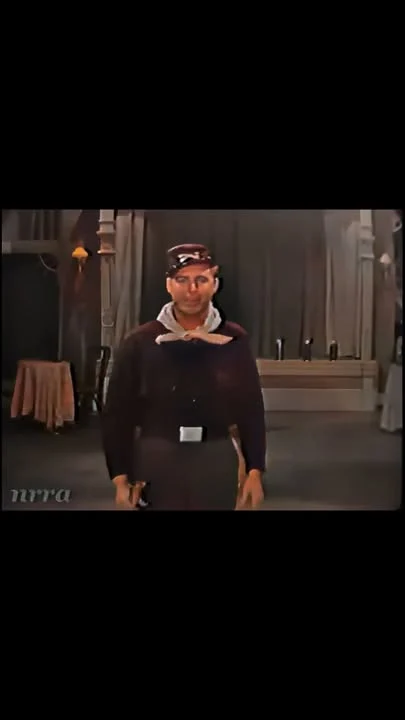
It happened in a cramped bar outside Nashville. The air smelled of spilled beer and sawdust. A young musician with an acoustic guitar played the opening riff of an old song. Within seconds, a cluster of retirees, a row of biker types, and a young couple all started smiling and tapping their feet. The song cut across generations with surgical precision. That song was Johnny Horton’s The Battle of New Orleans.
This is a shared national memory, however mythologized it might be.
Written by Arkansas schoolteacher Jimmy Driftwood and released in April 1959, the track became an immediate phenomenon. It climbed to number one on both the Billboard Hot 100 and the Country Singles chart. The song turned a complex battle from the War of 1812 into a three-minute adventure tale. It felt less like a recording and more like a cultural moment, a collective cheer that swept the continent on a wave of rhythm.
Johnny Horton was already a force in country music before this hit. He built a reputation with gritty honky-tonk tracks like Honky Tonk Man and I’m A One Woman Man. He performed regularly on the Louisiana Hayride. Under producer Don Law at Columbia Records, Horton shifted into the realm of saga songs, historical narratives set to rousing folk country arrangements. This became his signature style. The Battle of New Orleans was its crowning achievement.
The song’s arrangement is a masterclass in economy. An insistent marching drum never wavers, giving the track a military parade precision. A frantic acoustic guitar provides a breathless pulse. A bright banjo weaves melodic fills that emphasize the playful exaggeration in the lyrics. The fiddle adds lively call and response lines against Horton’s vocal. Horton delivered Driftwood’s witty tall tales with a straight face and palpable energy. The dynamics stay full throttle from start to finish.
The recording quality captures the immediacy of a late 1950s Nashville session. It feels intimate, as if you are standing just behind the drum kit. The song does not use soaring strings or elaborate horn charts. Instead, it relies on the sheer density of the core rhythm section. This clean, dry sonic signature has been preserved on numerous compact disc compilations and modern audiophile pressings.
The song won Horton a Grammy and cemented his crossover star power. His career was tragically cut short by a car accident in February 1960. He left behind a legacy defined by his ability to inject rockabilly energy and honky tonk soul into American narrative ballads. The Battle of New Orleans remains the definitive example of that ability, a three minute miracle that demands listeners join the march.
For fans of similar narrative driven folk and country music, these tracks share the same spirit
- Tex Ritter High Noon (Do Not Forsake Me) A clear eyed story of a decisive American moment
- Marty Robbins Big Iron A taut dramatic tale with a compelling rhythm
- Lonnie Donegan Does Your Chewing Gum Lose Its Flavor (On the Bedpost Overnight) An energetic tongue in cheek skiffle hit
- Jimmy Dean Big Bad John A spoken word saga in the tradition Horton pioneered
- The Kingston Trio Tom Dooley A folk revival hit using acoustic instrumentation for dark history
- Johnny Cash Don’t Take Your Guns to Town A stark narrative with simple effective guitar and rhythm