
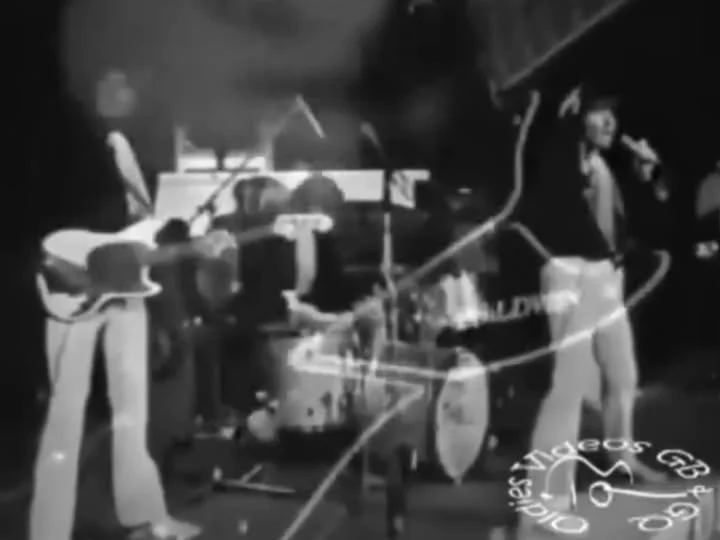
Some songs have a way of arriving exactly when the heart needs them. A few guitar notes and a tender voice can transport a listener back to a first dance, a long drive, or a quiet morning by the window. That is the magic of Love Is All Around, a song that has refused to fade for more than half a century. It begins with a simple confession about feeling love in the fingers and the toes, and somehow that small, unguarded moment became a universal hymn for hopeful hearts.
The song may sound timeless, but it was born in a moment of cultural upheaval. The Troggs released it in October 1967, just months after the Summer of Love had painted a vision of peace and unity across the world. In that season of change, the track arrived like a handwritten letter from the center of the era, offering the kind of certainty that could steady a restless generation.
To understand how such a gentle song came from the same band that growled through Wild Thing, you have to travel back to Andover, Hampshire, England, where The Troggs formed in the mid-1960s. They were part of the British Invasion, a wave of British acts that conquered American radio and redefined the sound of rock and roll. While Wild Thing made them famous and marked them as garage-rock pioneers, they were never content to be remembered for a single hit. Their sound was raw and unpolished, carried by melodies that went straight to the core of whatever their listeners were feeling.
At the heart of the band was Reg Presley. As frontman and songwriter, he had a rare gift for turning ordinary language into deep feeling. With Love Is All Around, he stripped away the loud guitars and brash energy of the band’s earlier work. What remained was a warm arrangement built around acoustic guitar, soft percussion, and subtle strings. The music felt like a deep breath, an invitation to sit still and believe in something good.
The lyric sheet reads like a promise rather than a poem. The opening lines declare that love is felt in the fingers and the toes, that it exists in the wind and everywhere a person moves. Rather than complicate matters with clever metaphors, Presley let repetition do the heavy lifting. The phrase love is all around returns again and again, a gentle insistence that love is not a fleeting mood but a constant presence. That clarity is why the song reached across age groups, cultures, and musical tastes.
It also radiated hope. At a time when the counterculture was dreaming of a better world, this song gave voice to that dream in a deeply personal way. It was not only about romantic love but also about a larger sense of belonging. Whether someone was holding a lover’s hand or standing alone in a crowded room, the song offered a feeling that they were connected to something greater than themselves.
Upon its release, the song climbed to number five on the United Kingdom singles chart and traveled far beyond British shores. Yet its first life was only the beginning. The song kept moving through popular culture, appearing in films, television shows, and commercials, often in moments when characters reached for tenderness. It became a shortcut for storytellers to say, with a few notes, what words sometimes cannot express.
The most powerful second act came in 1994, when Scottish band Wet Wet Wet turned Love Is All Around into one of the biggest singles of a new generation. The cover was featured in the romantic comedy Four Weddings and a Funeral and spent 15 weeks at number one on the United Kingdom charts. That extraordinary run introduced the song to listeners who had not even been born when The Troggs first recorded it. In that way, the song became a bridge, connecting parents and children through a shared hum and a shared belief in love.
More than five decades after its release, Love Is All Around still carries the same emotional weight. The world has changed dramatically since 1967, and yet the song’s message has not aged a day. It keeps finding new audiences through weddings, first dances, tribute playlists, and quiet evenings at home. It is a reminder that some certainties are worth holding onto, even when everything else feels uncertain.
Maybe the best way to honor the song is to let its words speak. In a few simple lines, The Troggs captured the essence of trust and tenderness:
I feel it in my fingers, I feel it in my toes
Well, love is all around me
And so the feeling grows
It’s written on the wind, it’s everywhere I go
So if you really love me
Come on and let it show
At its heart, Love Is All Around is not a complicated artifact. It is a song that reminds us of what we already know, that love is everywhere once we allow ourselves to feel it. The Troggs made history with a quiet, unguarded statement. And because of that statement, future generations will keep humming, swaying, and believing that love is all around.