
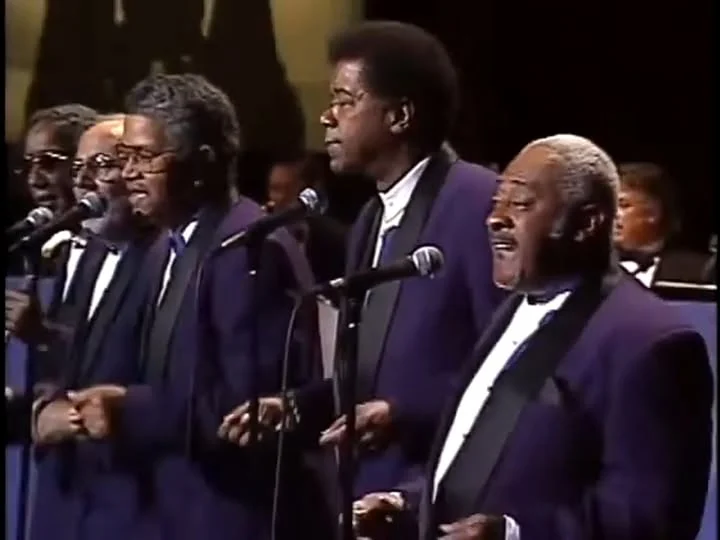
That unmistakable bassline
Bom ba-ba bom ba-bom ba-ba bom bom-ba-ba-bom
Long before a single note of that legendary doo‑wop opening was ever sung the song already had a rich history. Born in 1934 from the pens of Richard Rodgers and Lorenz Hart as a tender Hollywood ballad “Blue Moon” had been whispered by jazz giants like Ella Fitzgerald and Frank Sinatra. But it took a group of five young men from Pittsburgh to turn that gentle moonlight into a joyous explosion of rhythm and harmony.
The Marcels named after the marcel hairstyle had been perfecting their vocal blend around town when they signed with Colpix Records. In early 1961 facing a recording session that needed one more song they took a risk on an old standard. Their arrangement threw away the slow ballad tempo and replaced it with a punchy doo‑wop structure built around a bass vocal hook that would become instantly iconic.
The transformation was electric
Cornelius “Nini” Harp led the harmonies with Fred Johnson Gene Bricker Ron Mundy and Richard Knauss weaving around him. The call‑and‑response energy the playful syllables and the driving rhythm turned a wistful tune into something that belonged on dance floors. Critics might have scoffed at the audacity but young listeners embraced it without hesitation.
When the single dropped in March 1961 “Blue Moon” shot to number one on the Billboard Hot 100 and stayed there for three weeks. It also topped the UK Singles Chart proving that doo‑wop could cross oceans and generations. The Marcell’s version became a defining sound of the early sixties a soundtrack for teenagers finding their own voice in a changing world.
Blue Moon you saw me standing alone
Without a dream in my heart
Without a love of my own
That lyric now carries a double meaning. It speaks both to the original ballad’s lonely longing and to the joyous surprise of finding unexpected love. The Marcels turned a prayer into a celebration.
Even today the song remains a staple of oldies radio movie soundtracks and nostalgic playlists. Its bassline is as recognisable as a handshake. The group never quite recaptured that lightning in a bottle again though “Heartaches” came close. But for one perfect moment they proved that a classic could be completely reborn without losing its soul.
The legacy of The Marcels “Blue Moon” is not just a footnote in doo‑wop history. It is a masterclass in reinvention. It shows how youthful energy and creative daring can breathe new life into something old. Every time that opening “bom ba‑ba bom” plays it reminds us that music is never finished. It can always be sung again.