
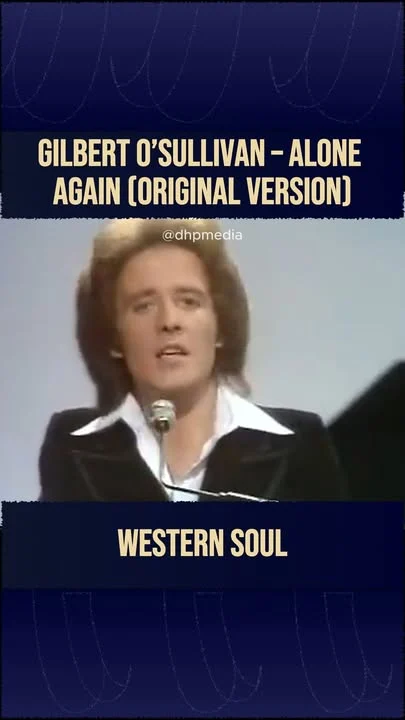
The year is 1972 and the radio hums with a melody that sounds like sunshine breaking through clouds. That melody belongs to Gilbert O’Sullivan’s Alone Again (Naturally), a song that spent six non‑consecutive weeks at number one in the United States and became the second biggest hit of the entire year. But this is no simple pop confection. Beneath its jaunty piano line and soft string swells lies one of the most quietly devastating meditations on loneliness and despair ever to reach the top of the charts. It is a song that teaches us how a cheerful tune can carry the weight of existential dread.
The greatest trick ‘Alone Again (Naturally)’ ever pulled was packaging existential devastation in a comforting, melodic shawl.
The story begins not with an album but with a standalone single released early in 1972. O’Sullivan, an Irish singer‑songwriter known for his deliberate ragamuffin appearance, was managed by Gordon Mills, the same man behind Tom Jones and Engelbert Humperdinck. Working on the MAM label, O’Sullivan and Mills created a sound that feels both polished and intimately personal. The arrangement, credited to Johnnie Spence and Frank Barber, is a masterclass in restraint. O’Sullivan’s own piano drives the track with a jaunty, almost music‑hall rhythm that belies the tragic narrative to come. This rhythmic foundation keeps the song buoyant, preventing the lyrics from sinking into unbearable sorrow.
Beneath that cheerful surface lies a delicate architecture built by session musicians. Herbie Flowers provides subtle, melodic bass lines that lock with the drums, creating a gentle forward motion. The orchestra adds soft, swelling strings and woodwinds, giving the production a cinematic scope. This orchestral cushion offers an emotional counterpoint to the narrator’s blunt confessions. It is the reason a song about contemplating suicide can still feel like a cozy radio staple. The dynamic range is carefully controlled, avoiding bombast in favor of a clean, conversational feel. On premium audio equipment, the shimmer of Chris Spedding’s acoustic guitar becomes clear, adding delicate texture during the instrumental bridge.
The structure is unusual for a pop hit. There is no chorus. Instead, the song moves through three narrative‑dense verses and a bridge, each verse ending with the refrain Alone again naturally. This repetition mirrors the narrator’s spiraling grief, each iteration solidifying his fate as an unchangeable truth. The first verse delivers a stunning opening: left at the altar, the protagonist contemplates leaping from a tower. A British chart‑topper opening with the idea of suicide is cushioned by the musical lilt, turning it into a dark comedy of fate. The bridge shifts key from F‑sharp major to A major, offering a fleeting moment of perspective as the narrator notes that others, too, must weep and wonder.
The final verse moves from romantic heartbreak to family loss: the death of the narrator’s father, followed by his mother’s broken heart. It is a three‑act tragedy of abandonment, doubt, and bereavement. That O’Sullivan wrote this complex exploration of grief in his early twenties underscores his remarkable talent. The harmony employs jazz‑influenced chords half‑diminished and flat ninth voicings that give the soft‑rock veneer a surprising depth, a richness often overlooked by casual listeners streaming through their subscription playlists. For anyone studying piano lessons, the chord progression offers a masterclass in how harmonic complexity can elevate a simple melody.
This combination of light, accessible tune and dark, uncompromising lyrics grants the song its longevity. It acts as a mirror, letting listeners project their own experiences of loss onto its framework. Decades later, the song has not aged into a novelty. It remains a time capsule of 1970s melancholia, but its themes are universal. The subtle snare drum rimshots, the clear acoustic guitar picking, and O’Sullivan’s unadorned vocal delivery ensure the track stays impactful. It is a quiet tragedy delivered with a wink of resignation, reminding us that life sometimes deals a tough hand and the only recourse is to accept it.
The song is not about wallowing. It is about acknowledging the inevitable return to self after trauma, to finding oneself alone again naturally. For those who appreciate the artistry of that era, similar works like Harry Nilsson’s Without You or Carole King’s It’s Too Late share the same dramatic orchestral arrangement and theme of overwhelming loss. Bread’s Make It With You, James Taylor’s Fire and Rain, and Cat Stevens’ Father and Son all explore introspective storytelling rooted in personal tragedy. Todd Rundgren’s Hello It’s Me rounds out the list with a confessional delivered by a deceptively cheerful R&B arrangement. Together, these songs form a soundtrack for quiet resilience, a reminder that even the heaviest emotions can be carried by a gentle melody.