
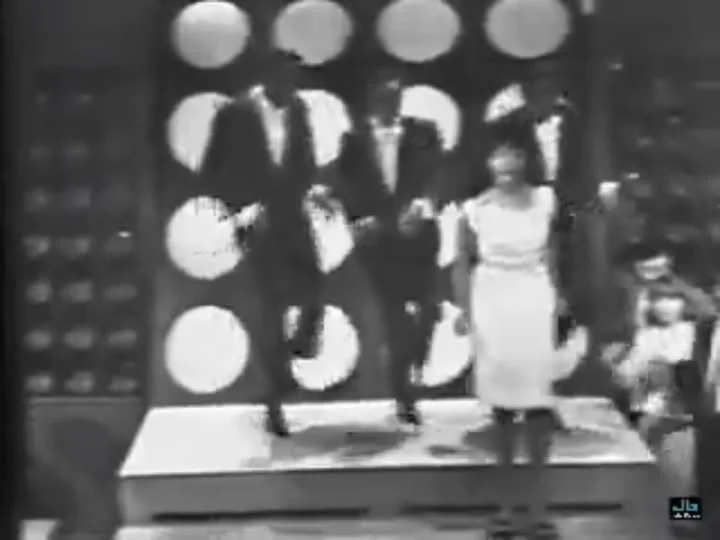
There is a moment, frozen in vinyl, when a song stops being a mere recording and becomes a lifeline. For thousands of dancers in the dimly lit, sweat-soaked clubs of Northern England in the early 1970s, Heaven Must Have Sent You by The Elgins became exactly that. A forgotten American single from 1966, it was resurrected by a subculture that craved speed, soul, and transcendence. And when the needle hit the groove, the world outside ceased to exist.
This is not the story of an instant hit. It is the story of a second chance. Originally recorded at Motown’s Hitsville U.S.A. by a group fronted by the electrifying Saundra Mallett Edwards, the track was a modest success in its homeland, peaking at No. 50 on the Billboard Hot 100 and reaching the R&B Top 10. Yet its true destiny was written across an ocean, where it would climb to No. 3 on the UK Singles Chart in 1971 and become an anthem for an entire generation of Northern Soul devotees.
The architects of this masterpiece were the legendary songwriting and production trio Holland-Dozier-Holland, then at the zenith of their powers. Brian Holland, Lamont Dozier, and Eddie Holland had initially earmarked the song for The Supremes, a fact that becomes instantly clear when you hear its impeccable structure. It shares the same elegant pop sensibility, the same seamless blend of melody and rhythmic propulsion that defined Diana Ross’s greatest moments. But the group that finally got it made it their own.
From the first bar, the track announces itself with an urgency that borders on desperation. The rhythm section, driven by the Funk Brothers, locks into a pulsating, walking bassline and a drumbeat that feels like a heartbeat on overdrive. Above this engine, the piano punches with sharp staccato accents, while the guitar chimes with high-E-string riffs that give the mix a glassy, shimmering clarity. The horns enter in short, stabbing declarations, and the strings swell with a tearful vibrato, creating a tension between earthy groove and ethereal reach that is the very essence of the Motown sound.
Saundra Mallett Edwards delivers a vocal performance that is nothing short of a catharsis. Her voice, supported by the flawless harmonies of The Andantes, is a controlled explosion. She begins in a breathless, conversational tone, but when the chorus arrives, she transforms into a force of nature. The word Heaven becomes a stretched, gospel-tinged plea, delivered with a raw urgency that cuts through the orchestral layers. The production places her voice slightly forward in the mix, introducing a hint of distortion on the loudest notes, a gritty edge that makes the joy feel hard-won.
This is not just a song about finding love. It is a performance of finding belief.
In the United States, The Elgins disbanded in 1967, leaving behind a handful of singles and their one cherished album, Darling Baby. But the story did not end there. As the years passed, copies of the original V.I.P. single found their way across the Atlantic, into the hands of collectors and DJs in the burgeoning Northern Soul scene. This underground movement, centered in clubs like the Wigan Casino and the Twisted Wheel, thrived on rare, high-energy Motown tracks. Heaven Must Have Sent You embodied that spirit with its fast tempo, joyous energy, and transcendent quality.
By 1971, demand had reached a fever pitch. Tamla Motown reissued the single in the UK, and it soared to the top three. The song became a badge of honor for enthusiasts who would pore over handwritten track lists, searching for the near-mythical original pressings. Its legacy was cemented not by the corporate machinery of Motown, but by the passionate, discerning ears of working-class dancers who found in its three-minute sprint a perfect escape from the grey realities of industrial Britain.
To listen to Heaven Must Have Sent You today is to step into that specific, exhilarating moment, whether in a Detroit studio in 1966 or a UK dance hall in 1971. It remains a testament to the power of a song to find its audience, no matter how long the journey. And it demands that you move, or at least appreciate the sheer, stunning craftsmanship that made it immortal.
Fans of this track will also treasure The Supremes’ “Where Did Our Love Go” for its similar H-D-H magic, The Marvelettes’ “Don’t Mess with Bill” for its infectious skip, The Chairmen of the Board’s “Give Me Just a Little More Time” for its orchestral sweep, Frank Wilson’s “Do I Love You (Indeed I Do)” for its Northern Soul holy-grail status, Four Tops’ “Reach Out I’ll Be There” for its escalating dramatics, and Kim Weston’s “Take Me in Your Arms” for its powerful vocal and tight groove.