
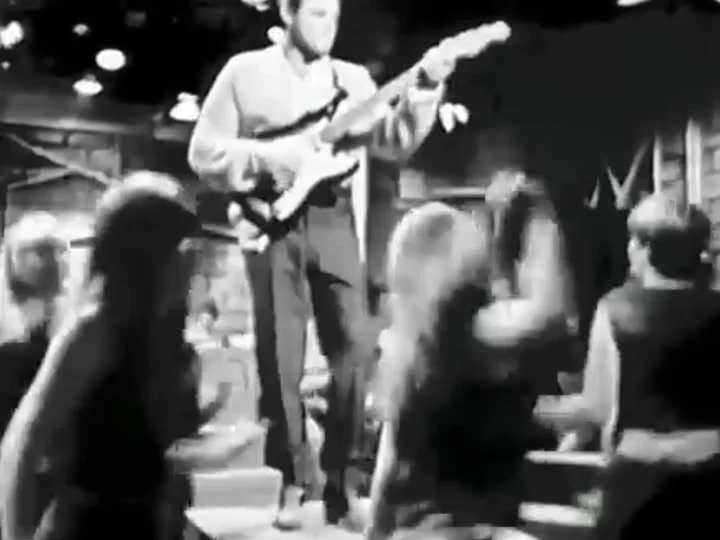
There is a moment in Del Shannon’s “Runaway” where everything shifts. A futuristic, warbling keyboard note cuts through the driving rhythm—the musitron, played by Max Crook, an early synthesizer that sounds like a cry from another world. In 1961, that single instrumental break announced something new: rock and roll could be both heartbroken and revolutionary. Released in the spring of that year, “Runaway” climbed straight to No. 1 on the Billboard Hot 100, and it has never really left the cultural bloodstream.
At its core, the song is a study in contrasts. Shannon’s vocal moves from a rich, steady ache into a desperate falsetto that spans the entire emotional spectrum of loss. The lyrics tell a simple, devastating tale—someone walking in the rain, wondering why love disappeared. It is the kind of pain that feels both immediate and timeless.
“I’m a-walkin’ in the rain, tears are fallin’ and I feel the pain… wishing you were here by me, to end this misery.” These lines, sung with a raw edge, have haunted listeners for over six decades.
The track anchored Shannon’s debut album, Runaway with Del Shannon, a collection that also included notable cuts like “Hats Off to Larry” and “Jody”. But none captured the same magic. The arrangement leaned on a fast-paced beat, a jagged guitar, and a piano that deepened the melancholic drama. The musitron, however, was the wild card—an invention that gave the record a strange, futuristic aura, setting it apart from anything else on the radio at the time.
“Runaway” did not just top the charts; it carved a groove into the foundation of early rock and roll. Its influence spread through decades: country stars, punk bands, and pop reimaginings all took a turn. It has appeared in films, television shows, and commercials, introducing new generations to Shannon’s haunting voice. More than sixty years later, the song still feels fresh—a testament to its emotional truth and its structural daring.
For those drawn to the ache and energy of “Runaway,” other classics echo its spirit. Del Shannon’s “Hats Off to Larry” offers a similar blend of storytelling and melody. Roy Orbison’s “Crying” matches its soaring vocal weight, while “Blue Bayou” and “Oh, Pretty Woman” bring their own luminous melancholy. And Dion’s “The Wanderer” captures the same rock-and-roll urgency with a rebellious twist.
In the end, “Runaway” is more than a hit. It is a cornerstone of a sound that defined an era. Del Shannon’s legacy—etched in that raw falsetto and that strange, beautiful keyboard solo—remains alive. Whether you are hearing it for the first time or the hundredth, the song invites you to feel the rain, to chase the ghost of a love that ran away.