
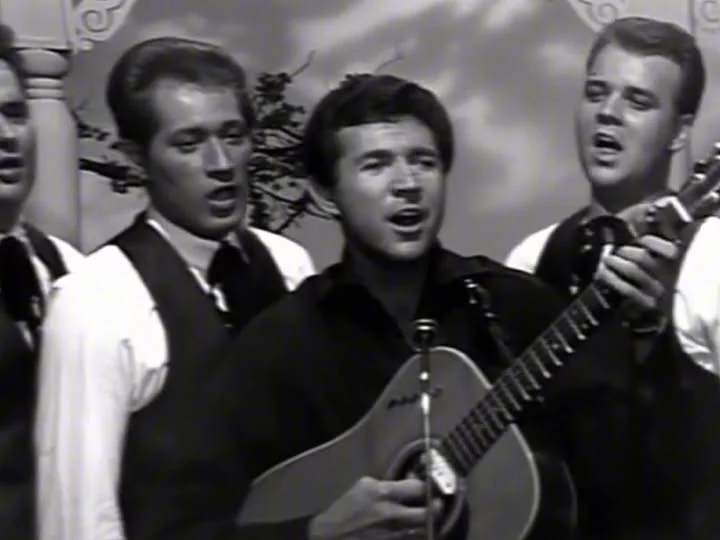
A special kind of quiet descends late at night. The world outside your window fades away. What remains is memory and music. In these hours a song like Young Love by Sonny James becomes more than a recording. It transforms into a pure emotional state. It sounds suspended in amber. The hustle of the modern world seems to dissolve. What is left is a simple truth about first love.
This single arrived in 1956. Rock and roll was supposed to dominate everything. Yet Sonny James offered a quiet counterpoint. He was born Jimmie Hugh Loden in Alabama. He was already a recording artist. But he had not yet found his true voice. That voice emerged in a Nashville studio. The producer Ken Nelson of Capitol Records understood the gamble. He brought a light touch. He worked with a song written by Ric Cartey and Carole Joyner. Joyner was just a high school student when she wrote it. The song captured a universal feeling. It bypassed the grit of the honky tonk. It reached for something yearning and sweet.
The arrangement is a lesson in restraint. Buddy Harman kept his drums remarkably quiet. His part was a gentle heartbeat on the snare and cymbal. Lightning Chance walked a warm bass line. Pete Wade played the guitar in a clean and melodic way. It served the song. It did not overpower it. The piano was barely audible. Together they created a soft bed of sound.
Sonny James sang in a pure tenor. He never strained. He delivered the lyrics with a sincere and devotional quality. The song tells a simple story of first romance. James elevated that simplicity into something profound and timeless.
They say for every boy and girl there is just one love in this whole world.
The secret weapon was the background vocal arrangement. The harmony group either the Jordanaires or the Eligibles added a gospel tinged sweetness. This blend of clean country instrumentation and pop ready harmonies created the Nashville Sound. It gave the record a creamy texture. It was both sophisticated and warmly familiar.
The single climbed the charts in early 1957. It reached the top of the country charts. It also soared high on the pop charts. This was a rare feat. It made Sonny James a crossover pioneer. His success paved the way for a polished sound. It proved that emotional sincerity could compete with loud guitars. It connected with the youth market. It did so without sacrificing its country soul. The record connected with a national audience hungry for simple melodic tunes in an increasingly complicated decade.
The recording quality speaks to its era. It sounds live and immediate. Listen with studio headphones. You can hear the natural bleed between instruments. The vocal has a close miked intimacy. It feels honest. It feels real.
In a chaotic culture of fast cars and electric noise Young Love offered tender vulnerability. It was the soundtrack for a slow dance. It was not a rebellion. It was a moment of gentle confession. That quality is exactly why it endures. We all understand the feeling of being young and in love. The song delivers that truth in under three minutes.
Listening Recommendations
Tab Hunter recorded a popular version of Young Love in 1957 with a Hollywood vocal polish.
Jim Reeves released Four Walls in 1957. It is a landmark of the Nashville Sound with orchestral smoothness.
Ferlin Husky had a crossover hit with Gone in 1957. It features a lush and sophisticated sound.
Marty Robbins offered A White Sport Coat and a Pink Carnation in 1957. It shares the theme of youthful romance and smooth production.
Elvis Presley released Love Me Tender in 1956. It is a direct predecessor in mood. It shows the power of a subdued ballad in the rock and roll landscape.