
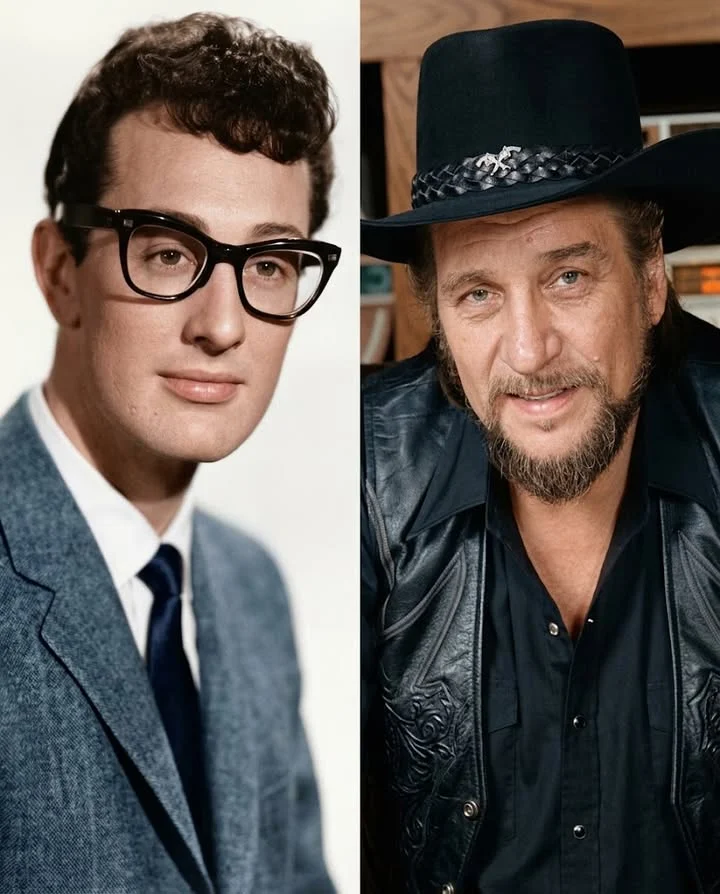
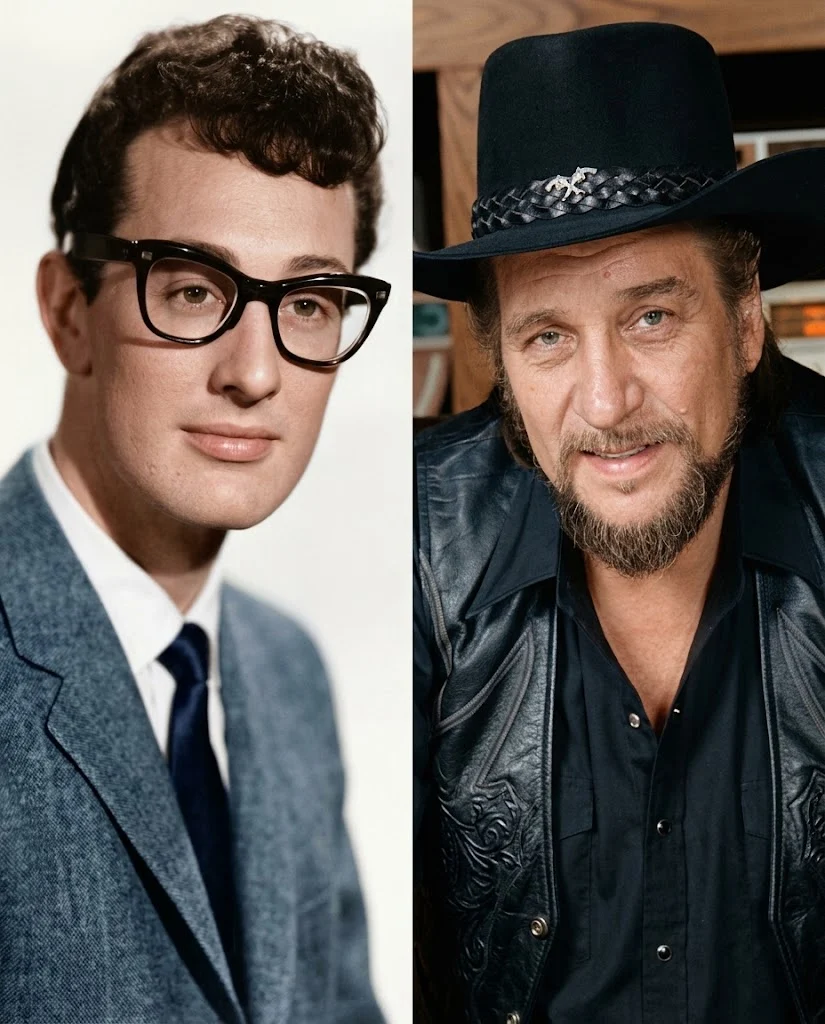
The news reached him on a bus rolling into Moorhead, Minnesota, and the joke he had tossed away backstage became a weight he carried for decades.
On February 2, 1959, the Winter Dance Party Tour pulled into the Surf Ballroom in Clear Lake, Iowa, after days of travel through blizzards and temperatures well below zero in unheated school buses. The cold had already hospitalized drummer Carl Bunch with frostbite, leaving the young musicians exhausted and desperate for real rest.
Twenty-two-year-old Buddy Holly had grown tired of the frozen road and chartered a small four-passenger Beechcraft Bonanza from the Dwyer Flying Service in Mason City. The plan was simple. Fly to Fargo after the Clear Lake show, then let the rhythm section wash, eat a hot meal, and sleep in warmth before the next date in Moorhead.
The aircraft had room for only three passengers beside twenty-one-year-old pilot Roger Peterson. Holly intended to bring guitarist Tommy Allsup and bass player Waylon Jennings, a young Texan he had personally hired and mentored out of West Texas radio station KLLL.
Before showtime, J.P. Richardson, known to fans as The Big Bopper, came down with a severe case of flu. Weak and shivering, he asked Jennings for his seat so he would not have to endure another freezing bus ride.
Jennings agreed without hesitation. He gave up the warmth of the plane and prepared himself for another long night on the frozen bus.
Ritchie Valens then won Tommy Allsup’s seat in a backstage coin toss, sealing the passenger list for the late-night departure.
Before Holly left for the airport, he found his young bass player backstage. Learning about the switch, Holly laughed and said he hoped the old bus would freeze up.
Jennings smiled and tossed out a casual line, “I hope your plane crashes.”
In the early morning hours of February 3, 1959, the aircraft took off into blinding winter weather and crashed into a snowy cornfield minutes outside Mason City. The lives of Holly, Richardson, Valens, and Peterson were taken in that cold darkness.
When the tour bus rolled into Moorhead hours later, Jennings learned the devastating news. The flippant retort immediately calcified into an agonizing emotional anchor.
He rarely spoke about the crash as he forged his path in Nashville. He poured his inner turmoil into the gravel-toned, fiercely independent outlaw movement that redefined country music in the 1970s. Behind the leather-bound Telecaster and stadium-sized acclaim, the memory remained an open wound. Years of exhaustion and substance abuse followed before he achieved sobriety in the mid-1980s.
To finally confront the lingering ache, Jennings took deliberate steps later in life to reconnect with Buddy Holly’s family in Lubbock, Texas. He visited Holly’s widowed mother, Ella Holley, and sat quietly with her. He offered enduring love, shared stories from their time on the road, and expressed profound reverence for the mentor who gave him his start.
The Holley family embraced Waylon with open arms. They assured him that no guilt belonged to him and offered tender forgiveness that allowed him to lay the ghost of 1959 to rest.
Jennings carried that quiet resolution until his death in 2002 at age sixty-four. His trailblazing sound helped save American country music from formulaic polish, but the grit in every note came from a man who understood the fragile line between a cold bus seat and a frozen cornfield.