
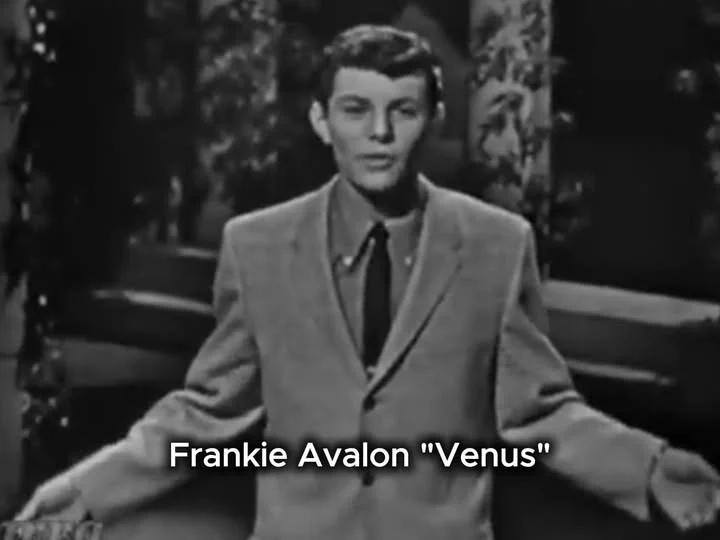
The year is 1959. A teenager leans close to a glowing radio speaker, the winter chill outside forgotten. On the dial, a battle rages between the wild, unpredictable energy of rock and roll and the polished ballads of an older generation. But then, a new sound cuts through the noise. A sparkling piano arpeggio rises, followed by a wash of strings that feel both grand and intimate. And then a voice, light and vulnerable, begins a plea to the Roman goddess of love. This is the moment Frankie Avalon stepped into the spotlight with “Venus,” a song that would define the teen idol archetype and change the pop landscape forever.
Fresh from Philadelphia, Avalon had already made a name as a trumpet prodigy turned singer. His label, Chancellor Records, and producer Bob Marcucci saw a gap in the market. Teenagers wanted romance, but parents needed reassurance. “Venus” was the answer. Released as a single, it shot to number one on the Billboard Hot 100, staying there for five weeks. It wasn’t just a hit. It was a cultural declaration that clean, orchestral romance could compete with the grit of Little Richard or the swagger of Elvis Presley.
The songwriting, credited to Ed Marshall with a possible co-credit for Peter De Angelis, is disarmingly simple. A direct prayer for love, it captures the uncomplicated desires of a generation. But the magic of the record lies not in the words alone. It lives in the arrangement. Arranger Peter De Angelis built a soundscape that pairs Avalon’s natural tremolo with a lush string section. The strings do not merely accompany. They swell, they recede, they push the listener toward an emotional peak. The piano opens with clean, echoing arpeggios. The drums keep a polite, brushed rhythm. The bass anchors everything quietly. This is not rock and roll. This is studio-era orchestral pop wearing a teen idol mask.
“It is a work of high-grade, studio-era orchestral pop masquerading as a teen anthem.”
Avalon’s vocal performance is a study in restraint. He sings with a close mic warmth, his light tone carrying a natural tremor that sounds vulnerable, not affected. He does not belt. He leans into the microphone, breathy and urgent. The effect is intimate, as if he is singing directly to the listener. The production balances this raw vulnerability against the scale of a Hollywood score, making “Venus” a test piece for any serious audio system. Every shimmering string, every quiet drum hit, is carefully placed to maximize emotional impact.
Culturally, “Venus” solidified the teen idol as a safe, romantic alternative to rock’s rebels. Avalon, alongside Bobby Rydell and Fabian, offered parents a palatable version of youth. Their rebellion was controlled, their love innocent. For aspiring musicians, “Venus” was a gateway. Its simple melody could be elevated to majesty by orchestration. Sheet music sales soared as young pianists and singers tried to recreate its romantic sweep in their living rooms.
Frankie Avalon himself reportedly preferred the original recording over a 1976 disco re-recording. At just over two minutes, “Venus” is concise perfection. It ends with a sustained high note, a final vocal plea melting into a fading string chord. The listener is left suspended in that moment of longing. Today, the song remains a time capsule. It reminds us that even in pop’s early volatility, there was a deep hunger for beauty, polish, and sincere romance. The heart-on-sleeve earnestness of “Venus” still resonates.
For a deeper dive into this era, explore these companion tracks:
“Mack the Knife” by Bobby Darin shares the jazz-inflected orchestral sweep that defined sophisticated pop in 1959.
“Put Your Head on My Shoulder” by Paul Anka uses lush strings to deliver an intense, romantic vocal.
“Only the Lonely” by Roy Orbison blends dramatic strings with passionate, operatic sorrow.
“Teen Angel” by Mark Dinning captures the cinematic storytelling and sentimental tone of the era.
“Where The Boys Are” by Connie Francis reflects the clean, polished pop sound of beach romance culture.