
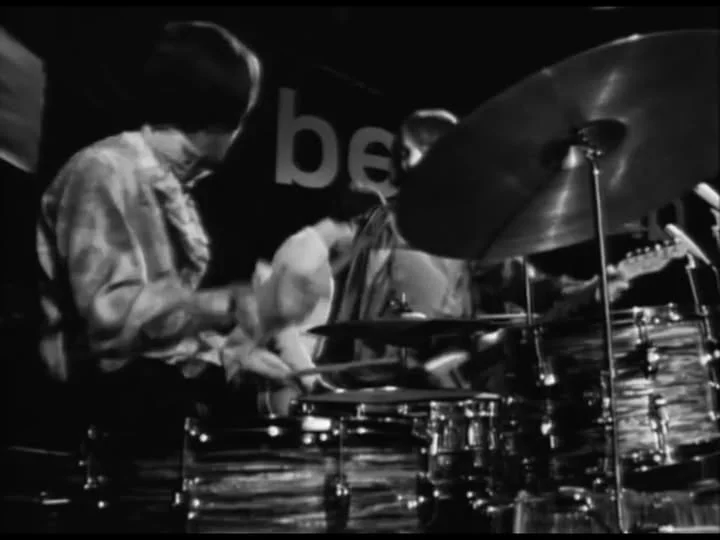
The first proper British summer Sunday arrives not with a bang but with a gentle, stubborn insistence. Windows are thrown open, radios tuned to static-filled stations, and the neighbourly peace is broken by the clatter of kettles and the drudgery of hangovers. This is the sacred, unkempt territory that The Small Faces captured like lightning in a bottle with their 1968 single “Lazy Sunday,” a song that remains one of the most affectionate and unruly portraits of London domestic life ever committed to tape.
It begins with a toilet flush. That rudest of sound effects, played without apology, sets the tone for a track that refuses to take itself seriously. But to dismiss it as mere novelty is to miss the genius at its core. This is a song that contains multitudes, a psychedelic pop gem wrapped in a music-hall shawl, a sonic photograph of a nation in transition.
The Small Faces were at the peak of their creative powers when they recorded “Lazy Sunday,” but also on the verge of collapse. The band—Steve Marriott, Ronnie Lane, Ian McLagan, and Kenney Jones—had just signed to Immediate Records, a label run by former Rolling Stones manager Andrew Loog Oldham. The freedom they received was intoxicating, resulting in the ambitious concept album Ogdens’ Nut Gone Flake, a psychedelic suite presented in a circular tobacco tin sleeve meant to be their serious artistic statement. Into this grand cosmic journey, they inserted a cheeky, street-level breather.
The song was written by Marriott and Lane, reportedly as a mocking response to critics who accused Marriott of putting on an American singing voice. The exaggerated Cockney accent that dominates the verses is pure character work—nasal, theatrical, dripping with genuine London vernacular. Lines like “They doing me crust in” are not just words; they are a declaration of authentic East End identity against the tide of transatlantic rock star posturing. The effect is cinematic, placing the listener in the middle of a neighbourly row inspired by Marriott’s own real-life disputes with the people next door.
The song isn’t about escaping reality. It’s about embracing the glorious, slightly irritating reality of British domestic life.
But here is the tragedy. The band hated its release as a single. Marriott, in particular, saw it as a trivialisation of their serious artistic work. They wanted to be a progressive rock band, not a novelty act. Yet the song’s infectious charm was undeniable, and it soared to number two on the UK Singles Chart in spring 1968. This commercial success, and the artistic compromise it represented, was a significant factor in Marriott’s departure and the band’s eventual dissolution. The biggest hit of their career was also the beginning of their end.
Musically, the arrangement is a masterclass in contrast. The core backing track is deceptively simple: a bouncy two-chord riff on clean guitar driven by Ronnie Lane’s wonderfully thumping bass. Kenney Jones’ drumming is sharp and propulsive, giving the track a light, music-hall skip that resists the heavy rock backbeat of their Mod past. Ian McLagan’s glorious, honky-tonk piano fills the space like a pub pianist working a Saturday night crowd—bright, slightly tinny, and full of playful barrelhouse runs that reveal their full complexity only through quality headphones.
Then there is the production itself. Self-produced by Marriott and Lane, the song is littered with tape effects and sound collages: crowd shouts, chirping birds, church bells, and of course that famous toilet flush. These elements transform the track into a three-minute audio-verité snapshot of urban life. The middle section provides the most telling contrast, where Marriott switches from his Cockney persona to his powerful, soulful rock voice for a soaring bridge: “Oh, wouldn’t it be nice to get on with me neighbours…” This moment of vocal clarity offers a brief glimpse back to the serious psychedelic artistry of the Ogdens’ album before it dissolves back into chaos.
The song’s longevity lies in its relatability. Everyone has an irritating neighbour, or has been one. Everyone has craved that lazy, unapologetic Sunday where the only goal is to do absolutely nothing. It functions as a celebration of mundane British downtime, a contrast to the grand, global statements expected from rock stars. Years ago, I recall putting on “Lazy Sunday” one humid afternoon, having utterly failed to be productive. The line “I got no mind to worry / I close my eyes and drift away” felt like an official license to abandon responsibility.
The closing minutes, with fading effects and distant, muffled brass, sound like a tipsy walk home at dusk—the city receding, the day finally surrendering. It is a sound that has outlasted the band that made it, ironising their artistic ambitions with a cheeky wink that continues to resonate across generations. For those new to the catalogue, “Lazy Sunday” remains the perfect entry point, a joyous, sophisticated, wonderfully eccentric monument to the band’s versatility and to Steve Marriott’s remarkable vocal range.
Listening companions for the sofa-bound afternoon
The Kinks – “Sunny Afternoon”: The same languid, world-weary British humour and music-hall structure, delivered with Ray Davies’ unmatched observational wit.
The Beatles – “Good Day Sunshine”: A similarly bright piano figure and joyful, celebratory mood from the Revolver sessions, capturing the same spirit of simple domestic pleasure.
Herman’s Hermits – “I’m Henry VIII, I Am”: An earlier example of turning a music-hall tune into a massive pop hit, demonstrating the deep roots of this tradition in British rock.
The Move – “I Can Hear The Grass Grow”: The same blend of hard-driving pop and playful psychedelic studio trickery from the same era, bursting with energy and invention.
Small Faces – “Itchycoo Park”: The band’s earlier psychedelic hit, showcasing their mastery of tape effects and reversed sounds, a precursor to the sophistication of “Lazy Sunday.”
The Faces – “Stay With Me”: The next chapter for Lane and Jones, rougher and bluesier, but retaining the working-class swagger that defined everything they touched.