
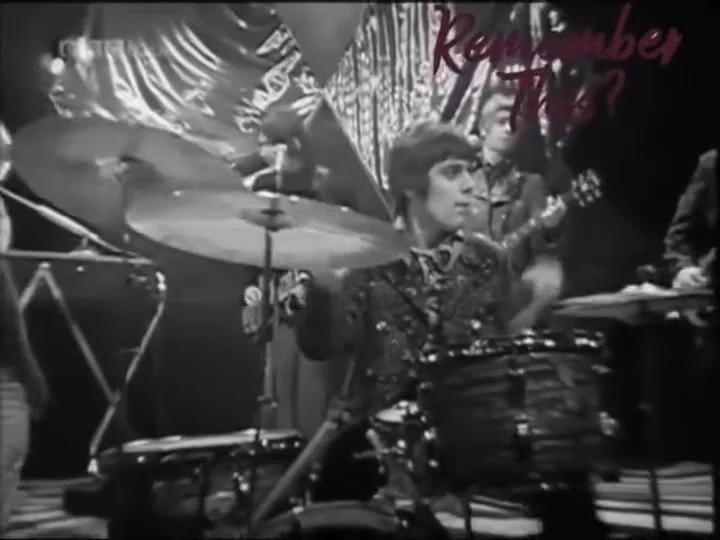
Stumbling upon a song that sounds like a hallucination is rare. Yet that is exactly what happened to countless listeners in early 1968 when a young band then called The Status Quo released a strange, stuttering single titled “Pictures Of Matchstick Men.” The track opens with a hypnotic four-note guitar phrase that acts as a sonic tether before a surprisingly light, bouncy beat kicks in. Drums sound dry and high, organs swirl in a hazy shimmer, and a flanging effect whooshes through the chorus like an airplane passing overhead. It is not the familiar boogie anthem of their later career. It is a shimmering, kaleidoscopic portal into a band caught between identities.
In the late 1960s, the group still carried the remnants of earlier incarnations—The Spectres and The Traffic Jam. They were hungry, experimenting, shedding old skins. Guitarist and frontman Francis Rossi wrote the song in an unlikely sanctuary: his bathroom. The lyrics were reportedly inspired by the matchstick-figure paintings of L.S. Lowry, and they conjured images of eyes turned a strange yellow and tiny figures dancing across the narrator’s sight. It was vague and evocative, perfectly in tune with the lysergic pop themes then dominating the airwaves.
Released on Pye Records in January 1968, the track was originally slated as the B-side to “Gentleman Joe’s Sidewalk Café.” But a savvy A&R instinct—or sheer luck—flipped it to the A-side. That decision reshaped music history. The song climbed to number seven in the United Kingdom and, remarkably, reached number twelve in the United States, a height the band would never again touch on American soil. It solidified “Pictures Of Matchstick Men” as their signature Stateside one-hit wonder. The success led to debut album Picturesque Matchstickable Messages from the Status Quo, released later that year.
Producer John Schroeder captured the zeitgeist expertly. The mono single mix and the stereo album version differ significantly. Aficionados often favor the mono mix for its sharper attack and a specific, prominent wah-wah guitar break that becomes less defined in the stereo counterpart. The arrangement owes a debt to studio techniques of the moment: liberal flanging, a clean electric guitar that anchors the track, and an organ line that adds a wash of color to the monochrome picture painted by the words. The bassline walks steady, anchoring the dizzying effects.
The genius of “Pictures Of Matchstick Men” is that it is a song about hallucination that sounds like one.
Yet this delicate, shimmering veneer was one the band would quickly shed. Within a few years, Status Quo abandoned the psychedelic pop for a relentless, bone-shaking boogie that filled stadiums and sold millions. Listening to “Pictures Of Matchstick Men” today reveals a delightful anomaly in their back catalogue. It is pop music dressed in the clothes of high-era psychedelia, a moment of youthful experimentation before they settled into the timeless sound that defined the next five decades.
We all have moments of trying on different versions of ourselves before finding our permanent form. For Status Quo, “Pictures Of Matchstick Men” is that moment captured on tape. It reminds us that even the most grounded, reliable acts have a past shaded in fantastic, swirling color.
For those seeking more tracks from that same peculiar landscape, consider Procol Harum’s “A Whiter Shade of Pale” for its blend of solemnity and psychedelic pop grandeur. The Move’s “I Can Hear The Grass Grow” offers crisp production and unexpected instrumental twists. Small Faces’ “Itchycoo Park” features prominent flanging and whimsical lyrics. The Kinks’ “Lazy Old Sun” captures a detached vocal and hazy arrangement. Vanilla Fudge’s “You Keep Me Hangin’ On” delivers heavy organ presence and slow dynamics. The Beatles’ “Strawberry Fields Forever” remains the pioneering use of studio techniques to create a perfect aural landscape for surreal lyrics.