
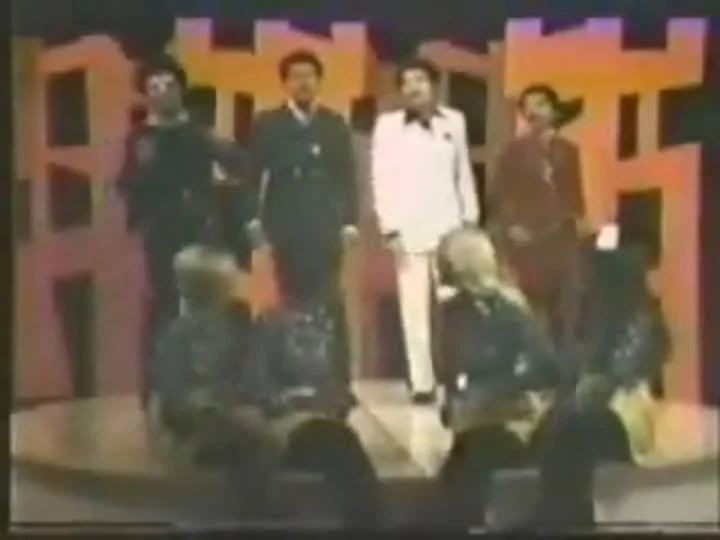
Late evening in Detroit the studio air hangs thick and still not with sadness but with the warmth of anticipation Four men gather around a single microphone their breaths almost visible in the dim light The carpet muffles every step the control room window glows like a distant moon This is the secret room where soul music becomes confession and no song captures that fragile intimacy better than The Originals 1969 masterpiece Baby I’m For Real
You are wondering if I’m for real a voice begins almost a whisper The rest of the harmony joins like a slow wave rising from the floorboards
The group that sang it had spent nearly a decade in Motown’s shadows Freddie Gorman Walter Gaines Henry Dixon and C P Spencer were the invisible backbone of Hitsville the harmony layer beneath Marvin Gaye and Stevie Wonder They were craftsmen not stars Until this song pulled them into the light
That light came from the very man they had once backed Marvin Gaye was drifting away from the assembly‑line pop that built Motown He wanted to make something deeper something that breathed He and his wife Anna Gordy Gaye wrote the song Gaye produced it alongside Richard Morris The result was a career rebirth for The Originals and a proof of concept for Gaye’s artistic freedom
The track hit number one on the US R&B chart and broke into the Pop Top 15 It was a victory for vulnerability a signal that the polished factory sound could give way to raw human emotion
The Sound of Space and Silence
What makes the song unforgettable is not the volume but the restraint The Funk Brothers play with a hushed discipline A lone piano chord rings out echo‑drenched then a deep electric bass pulse settles underneath The drums reportedly played by Gaye himself are brushed not thwacked the snare a quiet tension that never explodes The rhythm guitar is sparse a clean strum that fades quickly leaving room for the voices to fill every corner
The arrangement by Paul Riser is a slow climb of strings that never overwhelms the singers The orchestra cushions them lifts them at the emotional peaks then recedes like a held breath It is a sound that demands you stop moving sit still and listen closely
The Originals do something unusual with the lead vocal Instead of one frontman the verses rotate through Walter Gaines Henry Dixon and C P Spencer each man bringing a different timbre a different shade of doubt This makes the I in the song universal a chorus of hesitant masculine hearts
Their voices weave together like a tapestry of doubt and conviction that is where the song’s enduring power lives
A Confession That Still Feels Radical
Now imagine hearing this song today We live in a world of constant text messages and filtered photos yet profound emotional distance The raw analog sincerity of that single microphone feels like a radical act
Picture a couple mid‑argument tension thick enough to scrape off the walls One of them tired of the fight puts on this record The music does the talking You are wondering if I’m for real It gives voice to the panic of loving someone deeply but failing to say it clearly It offers a place where defenses can drop without shame
The song avoids melodrama because of its dynamics The opening is quiet the bass barely moving Then when the group sings the title line the whole track blooms a powerful but controlled catharsis You hear the full force of The Originals harmony an undeniable wave of sound It is a lesson for any singer or musician seeking deeper expression the voice remains the ultimate instrument
Gaye left space in the production room for the listener to breathe to hear a breath catch in a vocal line to feel the decay of a cymbal It is an aural masterclass in musical negative space
The Quiet Legacy
Baby I’m For Real is a bridge between Motown’s percussive early pop and the introspective orchestrated soul of the seventies It gave The Originals their moment and gave Marvin Gaye the confidence to make What’s Going On The song asks one simple question Do you believe me and delivers an answer so sincere so beautifully arranged that doubt feels impossible
Listen again Close your eyes Do not just hear the voices hear the space around them Hear the strings lift the piano Hear the desperate hope in every layered harmony That is the sound of The Originals finally undeniably for real
Further Listening
- The Originals – “The Bells” (1970) The immediate follow‑up with similar Marvin Gaye production and sweeping orchestrations
- The Temptations – “I Wish It Would Rain” (1967) A Motown ballad with deep emotional weight and a luxurious string arrangement
- The Four Tops – “Still Water (Love)” (1970) A shift toward softer reflective R&B
- Jerry Butler – “Only the Strong Survive” (1969) Stately Chicago soul built on a powerful baritone lead
- Marvin Gaye – “That’s the Way Love Is” (1969) Gaye’s own work with similar orchestral depth and restrained rhythm
- Smokey Robinson & The Miracles – “A Quiet Thing” (1968) An intimate late‑night ballad that shares the same acoustic mood