
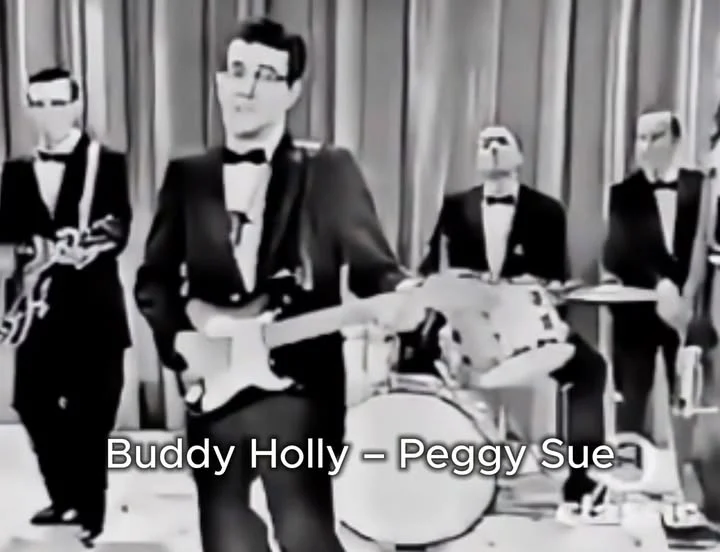

The roll of a drum, a hiccup in the voice, and a love story that almost wasn’t. That is the magic behind Peggy Sue, the 1957 anthem that would outlive its creator, Buddy Holly, by decades. But before the world fell in love with that infectious beat, there was a different name, a different girl, and a drummer desperate to win back his sweetheart.
When Buddy Holly and The Crickets walked into the studio, the song was called Cindy Lou, named after Holly’s niece. Then drummer Jerry Allison stepped in. He was on the outs with his girlfriend, Peggy Sue Gerron, and needed a grand gesture. Holly changed the title on the spot. A simple shift, but it turned a catchy tune into a personal plea. As the story goes, it worked. The song won her back, and rock and roll history was forever altered.
If you knew Peggy Sue, then you’d know why I feel blue.
Those opening lines are deceptively simple. The song uses only three chords, yet it creates a rhythm that is instantly recognizable. Holly’s signature vocal hiccup, where his voice drops off for a split second, gives the track a playful bounce. Behind it all, Allison’s drumming used a paradiddle pattern, a technique that was revolutionary at the time. That bouncy, hypnotic beat gave Peggy Sue a pulse that listeners couldn’t ignore.
In the mid 1950s, rock and roll was still finding its footing. Elvis Presley and Chuck Berry brought raw energy, but Buddy Holly offered something lighter, more melodic. His sound proved that rock could be tender without losing its edge. Peggy Sue became a bridge, drawing in teenagers and their parents alike. It showed that the genre had staying power, and labels took notice, investing heavily in the new sound.
The song’s ripple effect reached far beyond the 1950s. John Lennon and Paul McCartney both pointed to Buddy Holly as a primary influence. McCartney even purchased Holly’s publishing rights years later, a gesture of deep admiration. Without Peggy Sue, the landscape of pop music might look very different. The British Invasion itself owed a debt to the Crickets, and the song helped export American rock and roll to a global audience.
Decades later, the song refuses to fade. It found new life in films like Peggy Sue Got Married, which introduced it to a generation born long after Holly’s tragic plane crash in 1959. On streaming platforms, Peggy Sue continues to rack up plays, proving that classic rock still has currency. Advertisers and filmmakers frequently license the track, using its nostalgic power to sell everything from cars to soda. This commercial demand ensures that Holly’s estate still generates significant revenue, a testament to the song’s enduring market value.
Buddy Holly died at 22, on the day the music died, but his work remains vibrantly alive. Peggy Sue is more than a nostalgia piece. It is a snapshot of a moment when rock felt fresh and limitless. In an era of digital overload, its simplicity offers a lesson: sometimes three chords and a true story are all you need to create something timeless.