
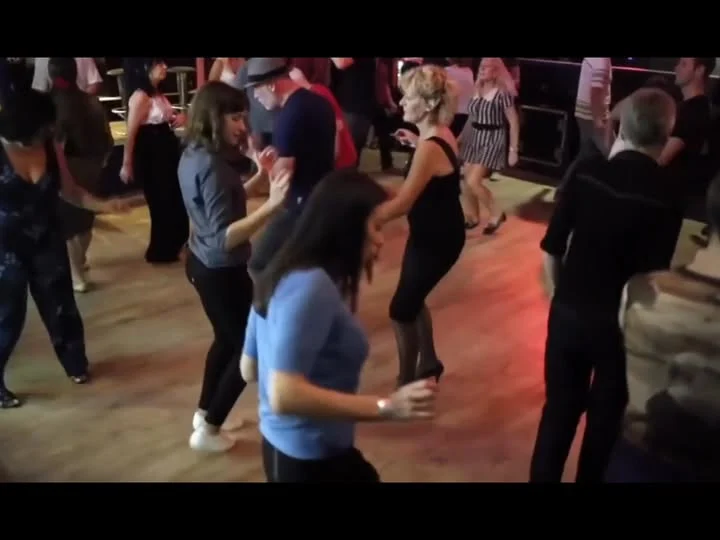
The Tams taught us something profound about heartbreak. Picture a dance floor in industrial England, 1970. Sweat droplets catch the light like scattered diamonds. The air is thick with talcum powder and teenage desperation. A needle drops onto worn vinyl, and within seconds, bodies begin to move as if possessed by something ancient and joyful. This is the moment when a forgotten American record becomes a lifeline.
The song that ignites this transformation is barely two minutes long. “Be Young, Be Foolish, Be Happy” by The Tams arrived in 1968, a product of Atlanta soul filtered through the Muscle Shoals sensibility of producer Joe South. Yet its true home would be found thousands of miles away, in the clandestine basement clubs of Wigan and Stoke, where Northern Soul devotees built a religion around obscure American R&B.
The track doesn’t simply tell you to be happy. It sonically mandates it, compelling every muscle to move in defiant unison.
Let us step back to understand the architecture of this small miracle. The recording begins with a bass line that walks with alarming purpose, each note pulling the listener forward into an accelerating rhythm. The drumming is relentless, a flurry of snare hits and hi-hat precision that builds tension from the very first bar. A rhythmic guitar chop functions less as melody and more as percussive texture, complementing the high-octane engine beneath.
The brass section enters with sharp, exuberant punctuation, trumpet and saxophone injecting bursts of almost militaristic energy. Even the piano serves the collective momentum, stabbing bright chords that emphasize every upbeat. This is not music built for contemplation. It is music built for ignition.
Joseph Pope delivers the lead vocal with earnest conviction, offset by the close-harmony backing vocals that give The Tams their signature porch-side sweetness. The group, named for their matching tam o’shanter hats, had already scored major hits earlier in the decade with songs like “What Kind of Fool (Do You Think I Am).” But this particular single carried something different in its DNA.
The emotional content is remarkable for its contradiction. Pope sings about a lover who has moved on, delivering what amounts to a kiss-off wrapped in radiant optimism. “Don’t let the rain get you down, it’s a waste of time,” he offers, but the underlying narrative reveals genuine hurt. The song does not dwell on pain. It weaponizes pain into defiant survival through movement. The prescription is simple and beautiful, slightly foolish, and utterly irresistible.
In the United States, the single reached a respectable No. 26 on the R&B chart and No. 61 on the Hot 100. Its cultural lifespan, however, was just beginning. A re-release in 1970 saw it peak at No. 32 in the United Kingdom, where it became a canonical Northern Soul record. Simultaneously, in the American South, it cemented its status as a vital part of Beach Music culture. A feel-good floor-filler that transcended coast and continent.
The enduring power of this recording lies in its ability to offer catharsis without demanding solemnity. For those studying rhythm and groove, it serves as an exemplary lesson in building intensity through repetition and precise dynamics. The production quality, even through basic home audio equipment, reveals a clarity of vision. Everything is bright, forward, and ready for the dance.
The Northern Soul scene was always about escape. It was about finding beauty and high drama in a two-minute slice of vinyl that the rest of the world had forgotten. The Tams, in their tam o’shanters, gave that scene an anthem that transcended geography and genre. They offered a joyful, frantic denial of sorrow, a piece of music designed not for introspection but for ignition.
Some songs remind us that the best soul music finds its power in the gap between the words being sung and the beat being played. This is that kind of song. It remains as potent today as it was in 1968, a two-minute-and-six-second philosophical injunction set to a beat that refuses to stop.
Essential listening for the curious
Dobie Gray – “Out On The Floor” shares the same relentlessly uptempo, snare-heavy Northern Soul energy.
The Chairmen of the Board – “Give Me Just A Little More Time” offers uplifting Southern Soul with tight harmonies and sophisticated brass arrangements.
The Tams – “What Kind of Fool (Do You Think I Am)” provides essential context from the band’s earlier catalog.
Frankie Valli – “You’re Ready Now” captures soaring vocals and urgent, driving rhythm.
Gloria Jones – “Tainted Love” possesses the furious tempo and high-drama vocal delivery that defined peak Northern Soul.
The Vibrations – “‘Cause You’re Mine” is a lesser-known gem with punchy brass and breathless vocal pace.