
There is a moment when a song from another era reaches across the decades and grabs you by the collar. It happens without warning, often in a dusty corner of the internet or a forgotten bin in a record shop. A young hand pulls out a faded 7-inch vinyl, the label worn, and drops the needle. What erupts is not the polite, polished pop of memory but a raw, breathless sprint of sound—“Hippy Hippy Shake” by The Swinging Blue Jeans. The teenager who heard it thought it was punk. The shopkeeper just smiled. That is the kind of energy that defies time.
This track, recorded in 1963, remains a sonic time capsule of a Liverpool on the verge of world domination. It is not a long song—barely over a minute and fifty seconds—but in that compressed span, it delivers everything rock and roll was meant to be: speed, sweat, and an almost dangerous urgency. The band, veterans of the Cavern Club circuit alongside The Beatles, had already released a promising debut single, “It’s Too Late Now,” on the HMV label. But it was their third single, a cover of an obscure 1959 rocker by Chan Romero, that detonated. It soared to number two in the UK charts and crossed the Atlantic as one of the earliest British Invasion hits in America.
“The sound of ‘Hippy Hippy Shake’ is a sonic signature of the Merseybeat era, proving that sometimes, the most sophisticated impact is achieved with the least amount of studio clutter.”
To understand the magic, you have to strip away the mythology and listen to the mechanics. The core lineup—Ray Ennis on rhythm guitar and lead vocals, Les Braid on bass, Ralph Ellis on lead guitar, Norman Kuhlke on drums—created a masterclass in economy. There are no orchestral swells, no reverb-heavy washes. The rhythm section is a close-miked throb: Braid’s bassline drives relentlessly, Kuhlke’s snare and high‑hat keep a machine‑gun pulse. That leaves the harmonic space for Ennis’s rhythm guitar, a clean sharp chop, and Ellis’s lead work—a short, bright solo that arrives quickly, delivers maximum punch, and vanishes. The vocal is a tight, slightly strained bark, the mic close and a little distorted, as if the whole thing was recorded in a small, sweat‑soaked room.
The band reportedly worked on the song at Abbey Road Studios, with EMI staff producer Walter Ridley overseeing the session. The result is the sound of restraint in the face of catharsis. They didn’t need a four‑minute runtime or a complex instrumental break. The power was in the sheer explosive density of a short span. They followed it with other strong tracks—“Good Golly Miss Molly,” “You’re No Good,” and an album titled Blue Jeans a’ Swinging (released in the US as Hippy Hippy Shake)—but this single remains the high watermark.
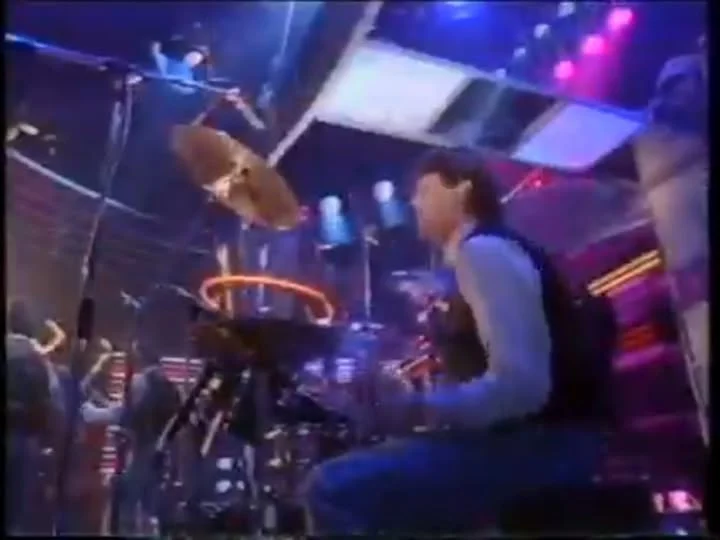
Two vignettes illustrate the song’s enduring life. Decades after its release, a teenager in a second‑hand record shop asked if the track was punk. The owner answered, “No, son. That’s what punk wished it could be.” The velocity and aggression still misfile it into later eras. In the present day, a young person saving for their first guitar lessons stumbles across a grainy black‑and‑white clip of the band playing on an old TV show. They see the simplicity of the power chords, the effortless confidence of the riff, and realize this is the language of rock and roll at its purest, most accessible form.
The song is a brilliant contrast between the glamour of its sudden global success and the undeniable grit of its arrangement. It was never meant to be a career‑defining track. After their second single failed to chart, the band went back to what they played night after night in the Cavern: high‑octane rockabilly and R&B. They didn’t reinvent the wheel; they just spun it faster than anyone else. And in doing so, they cemented their role not as followers in the wave, but as essential pioneers.
For those who want to follow the thread, here are five tracks that capture the same raw energy:
The Searchers – “Sweets for My Sweet” (1963): Urgent, high‑energy Merseybeat with tight harmonies and quick tempo.
The Beatles – “Twist and Shout” (1963): The raw, Cavern‑era energy and vocal strain of a classic cover for a demanding audience.
The Dave Clark Five – “Glad All Over” (1963): A powerful, driving rhythm that made both singles chart‑topping sensations in the same competitive window.
The Kinks – “You Really Got Me” (1964): That aggressive, simplistic guitar riff that acts as the track’s unrelenting hook.
Little Richard – “Slippin’ and Slidin’ (Peepin’ and Hidin’)” (1956): The original American rock and roll blueprint—fast, joyous, vocally wild—that the British bands drew from.