
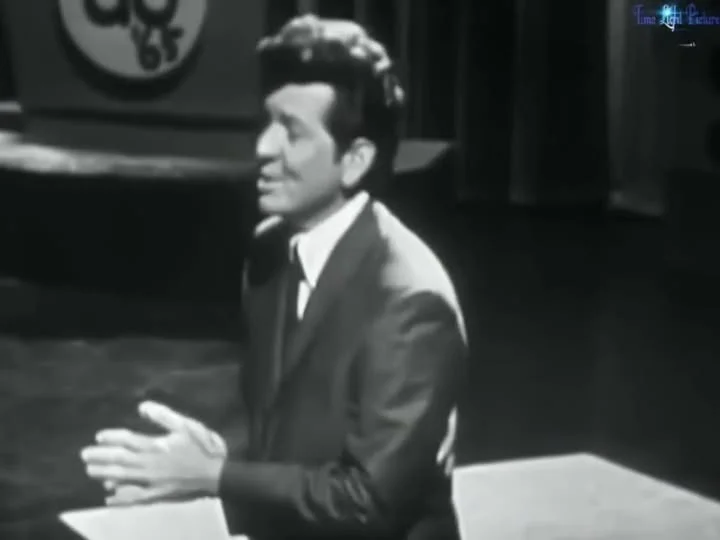
The opening fanfare of Jimmy Clanton’s 1962 hit “Venus in Blue Jeans” is a tiny explosion of brassy optimism, a sound that promises Technicolor romance even before the singer opens his mouth. It is a recording that feels suspended in amber, a perfect pop jewel from that brief window when rock and roll had been polished into a gleaming showroom model, just before the British Invasion kicked the doors in. To listen to it today is to step into a world of turquoise diners, letterman jackets, and a cultural tension between Hollywood glamour and teenage authenticity that the song captures better than any history book.
The story of the record itself has the sheen of a Hollywood script. Clanton, a swamp pop teen idol from Baton Rouge who had scored early hits like “Just a Dream” in 1958, had spent two years in the National Guard. When he returned, the pop landscape had shifted, and he needed a comeback. He found “Venus in Blue Jeans” in a pile of rejected demos, a song written by the Brill Building heavyweights Howard Greenfield and Jack Keller that other artists had passed over. The writers were skeptical, but Clanton heard something undeniable. He cut the track for Ace Records, and it soared high on the Billboard Hot 100, proving that a perfectly crafted three-minute single could still reset a career.
The magic of this song is that it promises the high-wattage glamour of the golden age of cinema while keeping its feet firmly planted in the everyday language of teenage desire.
The arrangement is a study in knowing restraint. Carole King is rumored to have contributed the string and brass charts, and the result is a baroque pop landscape that never overpowers the singer. The rhythm section shuffles along with a light, bouncing bass and a crisp snare on the two and four, while an acoustic guitar adds a touch of humility to the mix. The piano rings out cleanly, providing the melodic backbone that would make any student of 1960s pop harmony take notice. Clanton’s vocal is neither a howl nor a whisper; it is a smooth, earnest delivery that sells the fantasy without a hint of irony. Listening on a pair of modern studio headphones, the separation of the layered instruments becomes almost uncanny, revealing a production that was ahead of its time in its clarity.
The genius of the lyrics, however, lies in their central oxymoron. “Venus in Blue Jeans” marries the unattainable goddess of mythology with the everyday uniform of American youth. The protagonist sings, “I used to think that a girl should be dressed like a Queen / With a whole lotta diamonds and satin and lace”, only to realize that the true beauty wears denim. It is a tiny rebellion against the formality of the previous generation, a nod to a world where authenticity—or the appearance of it—was beginning to carry more weight than pearls and gloves. Yet the music dresses this casual goddess in orchestral splendor, the swelling strings and brassy fanfares validating her choice with a soundtrack worthy of a goddess. This tension between the everyday and the magnificent is what makes the record a cultural document of the early 1960s.
The legacy of “Venus in Blue Jeans” endures not as a revolutionary rock and roll anthem but as a masterclass in sophisticated pop craftsmanship. It demonstrated that a song built on a simple melodic hook, sharp writing, and an arrangement that understands both classical sweep and contemporary sparkle can capture the spirit of an era better than any protest song. It remains a testament to the power of the single format, a small, perfect argument that sometimes the most potent cultural commentary comes wrapped in a melody that makes you want to slow dance.