
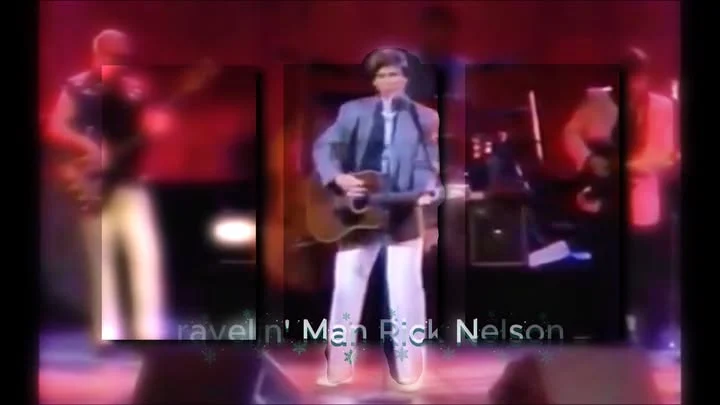
There was something almost magical about the way Rick Nelson could make you feel like you were right there beside him, catching the breeze as he traveled the world. In April 1961, he released a track that would define an era and capture a collective yearning for adventure. “Travelin’ Man” wasn’t just another song on the radio; it was a passport to a world of romance and discovery, a feeling that still resonates with listeners today long after the last note fades.
The story of this timeless hit begins not on a stage, but in a living room. Rick Nelson, born Eric Hilliard Nelson in 1940, was a star before he could even walk. His parents, Ozzie and Harriet Nelson, ran the beloved radio and television show The Adventures of Ozzie and Harriet, which featured their real family. Growing up on screen, Rick used this fame as a launchpad for a music career that would define a generation. By the time he recorded “Travelin’ Man,” he was already a heartthrob and a pioneer of rockabilly, blending rock ‘n’ roll, country, and pop with a natural ease that made him a household name.
The song itself almost didn’t find its home. **Jerry Fuller**, the gifted songwriter, originally offered it to pop legend **Sam Cooke**. When Cooke’s manager passed, the opportunity was presented to Nelson’s team—a decision that would ignite a chart-topping success. Nelson’s voice, cool and relaxed, glided over lyrics that spoke of fleeting romances in Mexico, Hong Kong, and Hawaii. The production was equally polished, with subtle guitar riffs and backing vocals from **James Burton** that gave the track a buoyant, easygoing feel. Burton’s guitar work was a masterclass in twangy rockabilly, making the song both radio-friendly and evocative of the early 1960s globetrotting spirit.
“Each verse takes the listener to a different part of the world, capturing a fascination with travel and the allure of exotic locales.”
“Travelin’ Man” became an anthem for a generation yearning to break free. It appealed to young audiences who saw Nelson as the epitome of cool, embodying the American dream of exploration and independence. The cinematic structure of the song allowed fans to imagine themselves on those same journeys, meeting fascinating characters and experiencing unforgettable moments. At a time when air travel was becoming more accessible, Nelson’s song painted a perfect picture of optimism and curiosity—a carefree world where every city was a new adventure.
What made “Travelin’ Man” more than just a hit single was its cultural impact. It became a touchstone that celebrated a world beginning to feel more connected. Nelson’s performance on The Adventures of Ozzie and Harriet elevated the song further; the show featured a segment where he performed against a backdrop of international locations, bringing the lyrics to life in a way that resonated deeply with viewers. This visual journey cemented the song as an integral part of his legacy, merging his on-screen persona with the timeless melody.
Even as rock music evolved and Nelson’s popularity waned in later years, “Travelin’ Man” endured. It remains one of his most beloved tracks, often cited as a defining moment in his career. For listeners today, it offers a nostalgic trip back to a bygone era when the world felt vast and possibilities were endless. The song’s themes of wanderlust and discovery are as relevant now as they were in 1961, a reminder that the joy of seeking new experiences never grows old.
Decades later, “Travelin’ Man” still carries that same thrill of the open road and the romance of travel. It captures the carefree, optimistic spirit of the early 1960s and offers a moment of escape in a world that often feels too connected. Rick Nelson didn’t just record a song; he created an invitation to dream, a reminder that the journey itself is always the ultimate adventure.