
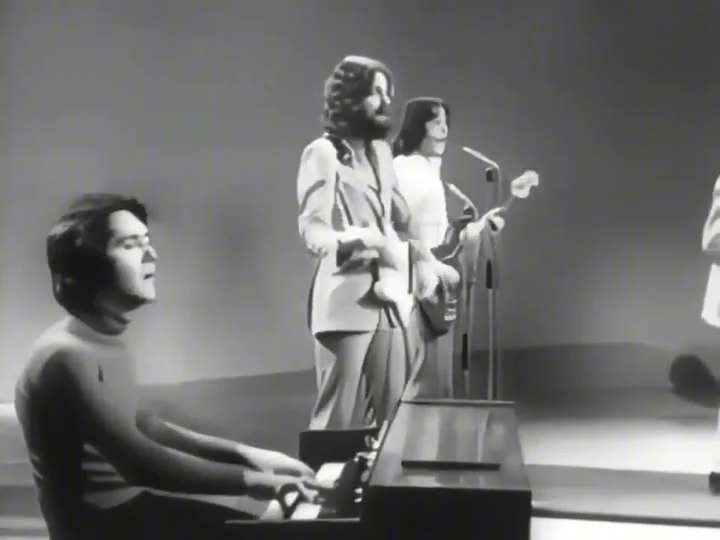
There are songs that do not simply arrive as fleeting pop hits but as fully formed emotional anchors woven into the fabric of memory. Marmalade’s Reflections Of My Life from late 1969 is precisely such a piece. It does not burst forth but unfurls like a sonic scroll painted in shades of autumnal gold and deep indigo introspection. For anyone who grew up with late night radio dials this song was the moment the world slowed down demanding shared vulnerability.
I remember a specific evening years before becoming a critic sitting in a friend’s beat up Ford idling beneath a neon sign. The air was thick with humid summer rain. The song came on the AM band stripped bare by the compressed signal yet Dean Ford’s vocal a crystalline tenor imbued with fragile melancholy cut through the hiss. That night the simple melody felt less like a radio staple and more like a private confession beamed across decades. This is the enduring magic of the track its capacity to feel intensely personal even as its production gestures toward the epic.
The arrangement of Reflections Of My Life is a masterclass in controlled dynamics balancing intimacy with grandeur. The song is rooted in a steady almost march like rhythm driven by bass and drums maintaining a somber unhurried pace. Over this foundation Pat Fairley’s acoustic guitar provides a delicate cyclical strumming pattern establishing the minor key mood. Junior Campbell’s work on electric guitar and piano is subtle yet structurally vital. The piano chords are spaced out ringing with depth suggesting a large reflective room.
The track’s most famous feature is the reverse tape guitar solo. This ghostly presence defies gravity sliding backward and upward into the mix. The technique involved recording the solo flipping the tape and recording against the reversed track then flipping it back. It creates an eerie psychedelic swirl a fleeting cinematic touch that elevates the track from simple ballad to art pop sophistication. The solo does not scream it sighs a sonic echo of the very reflections the lyrics speak of.
Complementing this band core is Keith Mansfield’s orchestration. The strings and brass are deployed with remarkable restraint. They do not overwhelm Ford’s voice but provide a velvet cushion swelling in the chorus with controlled intensity. The cellos lend profound depth echoing the weight of the song’s central lyric The world is a bad place a bad place a terrible place to live. The vocal harmonies performed by Ford Campbell and Graham Knight are tight almost hymn like giving a devotional quality that contrasts with the gloom of the lyrics suggesting a ray of distant hard won hope.
The context of this single is crucial to understanding its artistic audacity. Marmalade a Scottish pop rock outfit had just signed with Decca after a stint with CBS. They were famously the first Scottish band to top the UK chart with a cover of The Beatles Ob La Di Ob La Da. But that song was joyous almost novelty pop. Reflections Of My Life represented a profound artistic pivot. It was their first Decca release and the moment they took greater artistic control effectively producing the track themselves. The official writing credit goes to Dean Ford and guitarist Junior Campbell with Keith Mansfield providing the brilliant orchestral arrangement.
The decision to lean into a stately almost Baroque pop sound was a gamble that paid off worldwide. The single climbed high on charts globally reaching UK Top Five and US Top Ten. This was not merely a hit it was a career defining statement marking their true arrival as writers and arrangers.
The enduring legacy lies in its universal theme. It is not just about the late sixties but about the painful necessary act of looking backward. For generations of listeners this song has served as the perfect soundtrack for driving alone at 2 AM the road stretching empty headlights carving tunnels through the dark. It is a time for self inventory for wrestling with past decisions a moment of profound solitary contemplation amplified by soaring strings.
I often hear from younger music fans that they discovered this song after a difficult breakup or moment of career uncertainty. They recognize the crushing weight of the opening lines but are also drawn to the defiant counter statement But I don’t wanna die. It is a narrative of resilience disguised as a lament.
The song is a narrative of resilience disguised as a lament its sonic beauty acting as the gentle hand on the shoulder of a listener in distress.
The arrangement’s gradual ascent from delicate acoustic piano and guitar to full orchestral sweep is a careful dramatic build. The dynamics journey from intimacy to catharsis. This meticulous craftsmanship ensured its lasting impact long after its initial chart run faded.
The song is not merely a nostalgic echo it is a vital part of the DNA of melancholic pop. Its complex structure offers much for musicians to study a masterclass far beyond simple power chords. Anyone considering guitar lessons would be well served by analyzing Junior Campbell’s inventive yet emotionally restrained lead work. It is proof that sonic invention need not be abrasive it can be integrated into a deeply moving traditional structure.
Reflections Of My Life is a magnificent complicated sigh put to music. It is the sound of a generation looking in the rearview mirror as the bright lights of the sixties receded contemplating a world that was certainly a terrible place to live but nonetheless one they were determined to stay and fight in. Listen again and let the echoes of its genius wash over you.
For those seeking similar sonic landscapes consider The Moody Blues Nights in White Satin for its epic orchestral arrangement and melancholic mood. Procol Harum A Whiter Shade of Pale shares a stately quasi Baroque arrangement and soaring mournful vocal. Badfinger Day After Day features another lush arrangement with slide guitar contributing emotional weight. The Fortunes Here Comes That Rainy Day Feeling Again offers an adjacent mood of wistful downtempo pop rock. And Blue Mink Melting Pot provides a contrast with powerful vocal harmony driven pop sound of the same era.