
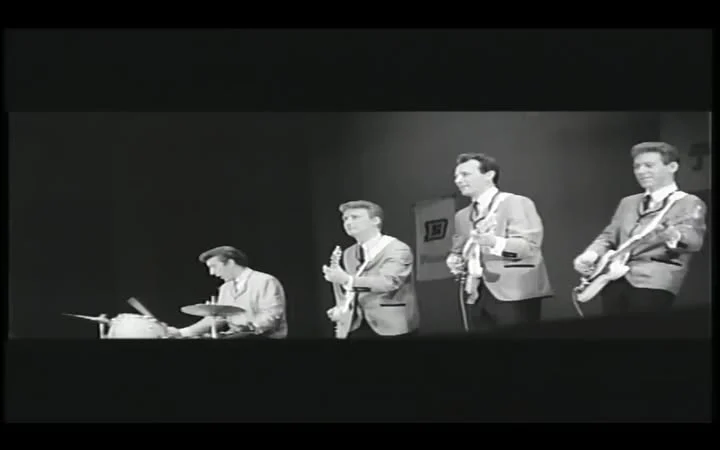
There is a moment in the middle of the track where everything goes silent except for a primal, sun-scorched shout. It is a sound that acts as a starting pistol. Then the drums erupt. The iconic solo, a controlled hurricane of toms and cymbals, crashes through the speakers like a wave hitting the shore. For millions of listeners, it remains the definitive sound of pure, unadulterated kinetic freedom. This is the heart of The Ventures interpretation of Wipeout.
To understand why this instrumental masterpiece became a global rite of passage, one must look past the original 1963 recording by The Surfaris. While that version provided the raw blueprint, the self-proclaimed Band That Launched a Thousand Bands stepped in to refine the gem. The Ventures took the novelty and sculpted it into a high-stakes concert showpiece. Released on their 1963 album Let’s Go! via the Dolton label, and helmed by producer Bob Reisdorff, their version did not just cover the song. It redefined its architecture.
By 1963, The Ventures were already rocketing through the stratosphere of instrumental music. Hits like Walk, Don’t Run had established them as masters of the clean, cutting-edge Fender sound. Their true genius, however, was not limited to writing songs. It lived in their ability to curate and reconstruct the most culturally potent instrumentals of the day, infusing them with a singular, impeccable precision. They treated every track like a blueprint for a new kind of sonic experience.
The magic of their arrangement lies in its engineering. This is not the garage-rock spontaneity of the original. This is a finely tuned machine built for maximum impact. The foundation is the bassline, a driving pulse that keeps the listener locked into the groove. Without an audible acoustic piano, the arrangement breathes through the metallic shimmer of the drums and the rich textures of the guitar.
The dual guitar voices, likely Bob Bogle and Nokie Edwards, create a conversation between brightness and grit. The lead line, dripping with wet spring reverb, cuts through the air like a freshly waxed surfboard slicing into a wave. Meanwhile, the rhythm guitar provides a chopped, palm-muted urgency. This interlocking attack created the standard for countless guitar lessons worldwide, as aspiring players sought to decode their singular clarity.
And then comes the drum break. It begins with that vocal cue, a simple, explosive word that acts as a detonator. Howie Johnson, and later the legendary Mel Taylor in iconic live performances like the 1965 Live In Japan album, approached the solo with a controlled fury. Every hit is audible, from the snap of the snare to the deep thud of the low toms and the shimmering rush of the crash cymbal. It is a moment of pure catharsis that never descends into chaos.
The Ventures did not just cover the song. They standardized the sound of instrumental rock for a global audience, turning a flash in the pan into a timeless standard.
The arrangement became a cultural touchstone, especially for musicians. The band were pioneers in music education, releasing the Play Guitar with The Ventures series. The distinct, repeatable sections of Wipeout made it an immediate target for high school bands and garage ensembles globally. It was an exercise in tension and release, a narrative arc told entirely through melody and rhythm.
Listening to the track through high-quality studio headphones reveals the masterful production. Bob Reisdorff and the band captured a clarity that was rare for the era. The stereo separation, the bright high-end, and the distinct voice of each instrument elevate the piece beyond simple surf rock. It is a direct line from the raw energy of early rock to the sophisticated sonic landscapes that followed.
Without a vocal narrative, the listener provides their own story. It could be a first car, a drive-in movie, the reckless energy of youth, or the universal feeling of a momentary loss of control. The Ventures gave the track a structural integrity that allowed it to exist outside of time. It demands a physical reaction, a quickening of the pulse, and a profound respect for the power of the amplified electric guitar.
Decades later, the track remains a churning, relentless force. It is a challenge issued by a generation of musicians who believed that the electric guitar could speak louder than words. The Ventures did not just play music. They built monuments of sound. With their version of Wipeout, they created a monument that continues to crash against the shores of popular culture, timeless and unstoppable.
For further exploration of the instrumental universe
Dick Dale and the Del-Tones – Misirlou The essential high-speed, tremolo-picked foundational surf guitar sound
Duane Eddy – Rebel Rouser Instrumental cool and heavy, reverberant guitar tone with a twangy rock and roll lean
The Shadows – Apache Clean, melodic precision with a European flair
Booker T and the MG’s – Green Onions Tight, wordless, and charismatic instrumental arrangement driven by the Hammond organ
The Marketts – Out of Limits Simple, memorable melodic hooks over a driving beat from the same monumental era