
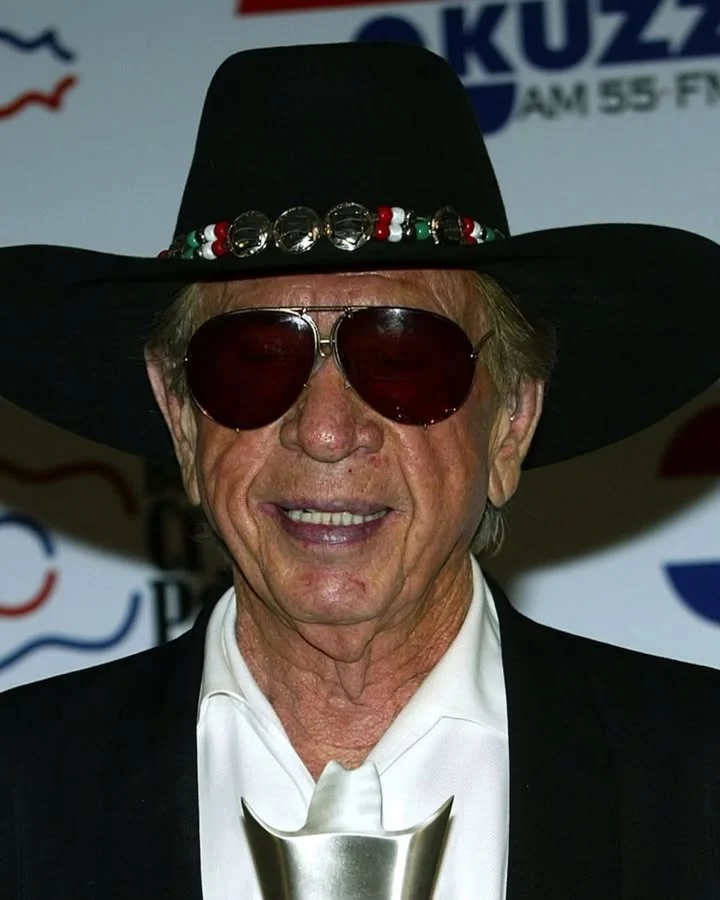
The air in Buck Owens’s Reno dressing room thickened as the two Capitol Records men sat down. They came expecting a signature. They left with a lesson in leverage. Buck Owens did not simply renew his contract that night. He laid claim to the music he had already made, the tapes that held ‘Act Naturally,’ ‘Together Again,’ and the sound that defined the Bakersfield movement.
At that time, master recordings belonged to the record company. Artists rarely questioned the arrangement. Owens, however, had grown up poor in a sharecropping family. He knew that money earned once must be protected. He had watched musicians play night after night for a single paycheck.
He built Blue Book Music to own his songs. He invested in radio stations. He created a booking agency. The Buckaroos’ clear, hard-driving sound was his controlled creation. But the tapes remained under Capitol’s lock and key.
Columbia Records had offered a reported $500,000 signing bonus. Owens was not sure he wanted to leave, but he wanted Capitol to understand the stakes. He told his attorney to make the threat clear. The men from Capitol had come to renew a contract. They ended up negotiating with the future owner of the tapes.
Owens agreed to stay with Capitol for several more years. The contract stated that after the label’s manufacturing period ended around 1980, all his Capitol masters from 1957 to 1975 would return to him. Those tape boxes contained ‘I’ve Got a Tiger by the Tail’ and the records that had carried the Bakersfield Sound far beyond California.
Don Rich died in 1974. The tapes returned carrying the sound of a band that could not be reassembled. Owens owned not just hits but history. He also retained the masters of The Buck Owens Ranch Show, preserving performances by Waylon Jennings, Roy Clark and others.
He understood that affection for music and ownership of music were separate matters. He had read the contract and acted before the applause faded.
Later generations would debate master ownership in public, often discovering how little control even successful performers possessed. Owens confronted the problem while his records were still selling. The men from Capitol came to Reno hoping to keep their star. Buck Owens sent them back with an agreement that eventually returned the recorded years themselves.