
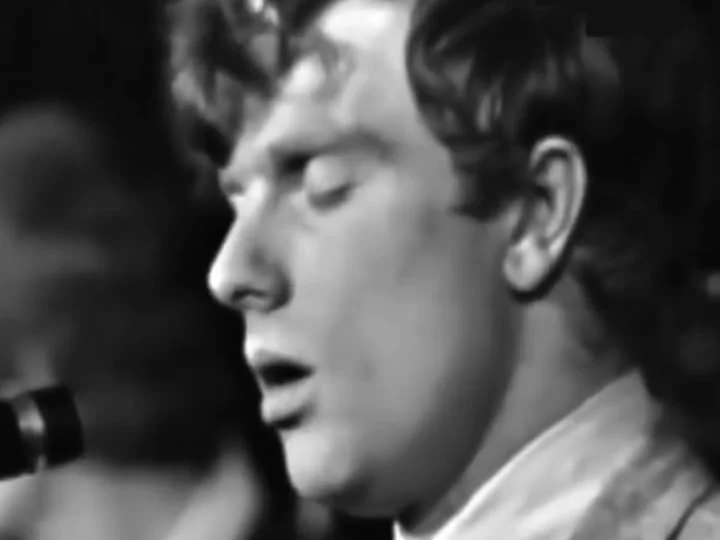
The three chords hit like a punch to the chest. E, D, A. Simple enough for any teenager with a beat-up guitar and a cheap amplifier. But in the hands of a brooding young man from Belfast named Van Morrison, those three chords became a declaration of war. “Gloria” is not merely a song. It is a blueprint for rebellion, a three-minute explosion that taught generations of musicians that you do not need virtuosity to change the world. You only need attitude.
That grinding riff, that drawled spelling of a girl’s name, that sudden cut-off ending. It is rock and roll stripped to its nerve endings.
The story begins in a place that could not be further from the polished studios of London. The Maritime Hotel in Belfast, 1964. The air thick with sweat and stale beer. A single bare bulb swinging above a stage where a barely formed band called Them played with a ferocity that terrified and thrilled in equal measure. This was not music meant for radio. It was music meant for the back of a smoky room, for bodies pressed against the stage, for that dangerous hour before last call. That raw, visceral energy is what eventually made its way onto vinyl, reluctantly captured by engineers who probably did not understand what they had recorded.
When Decca Records released the track in November 1964, it arrived as a B-side. The A-side was a respectful cover of Big Joe Williams’ “Baby, Please Don’t Go” — the expected nod to tradition from a British Invasion band trying to prove its blues credentials. The B-side was the Trojan horse. An original composition that smuggled teenage lust and barely contained aggression into the mainstream under the guise of a three-chord riff. It later appeared on Them’s debut album The Angry Young Them in 1965, but its real life had already begun in the clubs and garages where young musicians were learning that rock did not need permission.
The music itself is an exercise in controlled brutality. Producer Dick Rowe oversaw the session, but the recording sounds less like a studio production and more like a wild animal that wandered into the building and refused to leave. The rhythm section operates with hypnotic simplicity, the bass laying down a pulse that never wavers, never hesitates. The guitar work is pure rhythm and power, no soaring solos, no showing off. Just that relentless, overdriven strumming that hammers the chords into the listener’s skull. On a decent set of speakers, you can hear the room vibrating around the drum kit. This is the sound of a garage band that happened to be recorded in a proper studio.
Van Morrison does not sing the lyrics. He declaims them. That famous drawn-out spelling of G-L-O-R-I-A is not a gimmick. It is a slow burn, building anticipation, turning a mundane name into something mythic. He sounds less like a singer and more like a street preacher who has found religion in the back alley of a bar. The entire track builds toward a catharsis that never fully arrives. It just stops. Cuts off. Leaves you hanging, wanting more, needing to hit replay.
The true genius of “Gloria” lies in its democracy. Any kid with a cheap guitar and a slightly broken amplifier could master those three chords. This was music that did not require professional arrangers or expensive pianos. It required only the willingness to sound dangerous. The song became a syllabus for aspiring musicians across the world, offering a way to sound cool and rebellious without years of formal training. It found particular success in Los Angeles long before the rest of America caught up, and when The Shadows of Knight released their cleaner cover in 1966, it finally climbed the Billboard Hot 100. But the original remained the gold standard, the raw artifact that proved rock and roll could be distilled to its essential elements.
That simplicity forced other artists to build their own stories inside its framework. The Doors turned it into a lengthy psychedelic jam during live performances, with Jim Morrison using the riff as a launchpad for extended improvisation. Patti Smith transformed it entirely, using the same core structure to deliver her iconic opening line about Jesus dying for somebody else’s sins. She understood that the song was not a finished painting but a canvas, open for reinterpretation. The Velvet Underground and the Ramones would later carry its spirit into punk, proving that minimalism could be a weapon.
The history of rock is filled with songs that changed the game. But few arrived with such ferocious economy. “Gloria” is a document of the moment when rock stopped asking for permission and started demanding attention. It carries the weight of that Belfast club. The intensity of a crowd pressed against the stage. The electric promise of a late-night rendezvous. It remains vital not despite its simplicity but because of it. Crank the volume. Feel the history. Those three chords are still waiting.
For those who want to trace the song’s influence, a few essential recordings capture its spirit. The Shadows of Knight version from 1966 offers a slightly cleaner American gateway. The Doors live take from 1983 demonstrates how the song could stretch into psychedelic territories. Patti Smith 1975 transformation reimagines it as feminist punk poetry. The Animals track “Boom Boom” from 1964 shares the same raw R&B garage dynamic. The Troggs “Wild Thing” from 1966 stands as another masterpiece of minimal rock. And The Kinks “You Really Got Me” from the same year defined the loud guitar-driven sound that garage and hard rock would embrace for decades.