
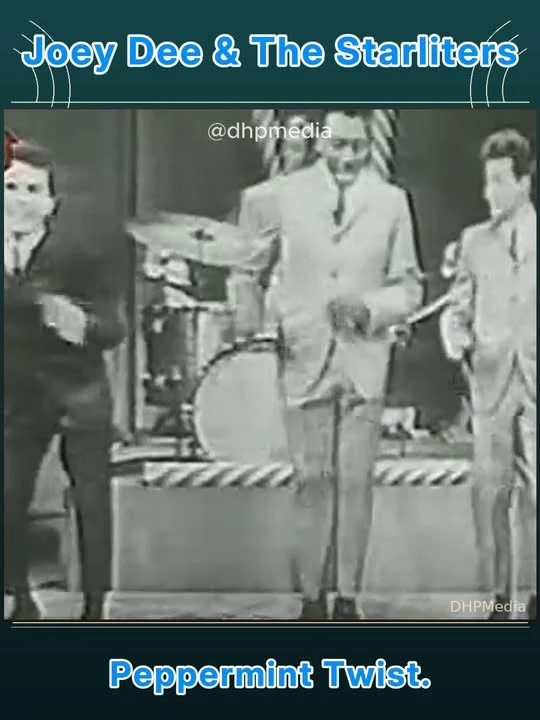
The smoke curled upward like a ghost in the dim light. Cheap perfume mingled with sweat as the crowd pressed closer to the stage. At the Peppermint Lounge on West 45th Street, a modest New York supper club, something extraordinary was unfolding. The year was 1961 and the dance floor had become a pressure cooker of pure joy. Movie stars, European royalty, even First Lady Jackie Kennedy queued outside the nondescript door. They all wanted the same thing to learn a simple hip swivel that had taken over the world. That dance was the twist and the house band fueling the frenzy was Joey Dee and the Starliters. Their anthem Peppermint Twist captured that electric sweaty moment in a burst of saxophone and rhythm that still feels urgent today
The song does not just recall an era. It throws you onto the dance floor and dares you to stand still
The story begins far from the spotlights. Joey Dee born Joseph DiNicola had been performing with a rotating lineup of Starliters in New Jersey when they landed a temporary gig at the Peppermint Lounge in 1960. What was meant to be a short engagement stretched into a marathon residency lasting over a year. The club became the epicenter of a global craze and the band became its soundtrack. Before this breakthrough the group had released a handful of forgettable singles on small labels struggling to find their place in the late doo wop world. Everything changed on that cramped stage where raw energy and spontaneous chaos created something new
The song itself was a direct tribute to the venue. Dee co wrote it with producer Henry Glover, a veteran of R and B and rock and roll whose touch gave the track both polish and punch. Roulette Records rushed the single out in late 1961 to capitalize on the moment following a live album titled Doin the Twist at the Peppermint Lounge. A common mistake is to think the hit was recorded live. In reality it was a focused studio recording split into two parts on a 45 rpm vinyl because of its length. The gamble paid off spectacularly. Peppermint Twist Part 1 shot up the charts and in early 1962 it knocked Chubby Checkers version of The Twist from the number one spot. It became an international smash sealing the bands fame even if they could never quite repeat that lightning strike
From the very first drum fill the recording announces itself as pure adrenaline. A tight almost military burst gives way to a relentless medium fast shuffle. The sound is dry and immediate lacking the cavernous echo that would soon dominate pop production. You feel trapped on that dance floor with the band sweating just inches away. The arrangement is brutally simple. Drums bass and a muted rhythm guitar lock into the groove while a bright honky tonk piano stabs high register chords adding percussive spark and a hint of joyful chaos. The electric guitar weaves a crisp clean riff through the verses offering counter rhythm rather than melody
The lead vocal reportedly handled by David Brigati brother of Eddie who later co founded the Rascals brims with unburdened youth. The backing vocals sound less like a polished chorus and more like the entire crowd shouting along. But the true engine of the track is the saxophone. Dee himself an accomplished sax player unleashes a powerful honking solo that channels the grit of R and B. It is loud raw and dominant cutting through the mix like a spotlight on the most frenzied dancer. This solo forms the heart of Part 2 but even in the radio friendly Part 1 its presence is central tying the track to the live instrumental heavy performances that made the band legendary. For anyone who listens through premium audio equipment the stripped down mix jumps out with startling clarity an unfiltered blast of early sixties dance music before the Brill Building orchestrations took over
The legacy of Peppermint Twist lies in its complete lack of pretension. It does exactly what it sets out to do celebrate a dance. In doing so it turned the Peppermint Lounge into a legendary cultural institution a brief but vital intersection where high society and raw rock and roll met. Decades later the song remains an exhilarating rush a reminder that pure undiluted joy can be captured in a two minute groove. Its structure may seem rudimentary compared to modern sheet music complexities but its cultural impact was enormous. It bridged the simpler rock and roll of the late fifties into the dance craze economy of the early sixties shifting focus from the singer to the movement itself
Spin this track late on a Friday night. Turn the volume past comfortable and let the driving rhythm take hold. Forget the historical context. Forget everything. Just move. The frantic beat and exuberant saxophone remain an invitation impossible to decline a timeless dose of rock and roll adrenaline that still whispers from that smoky room on West 45th Street