
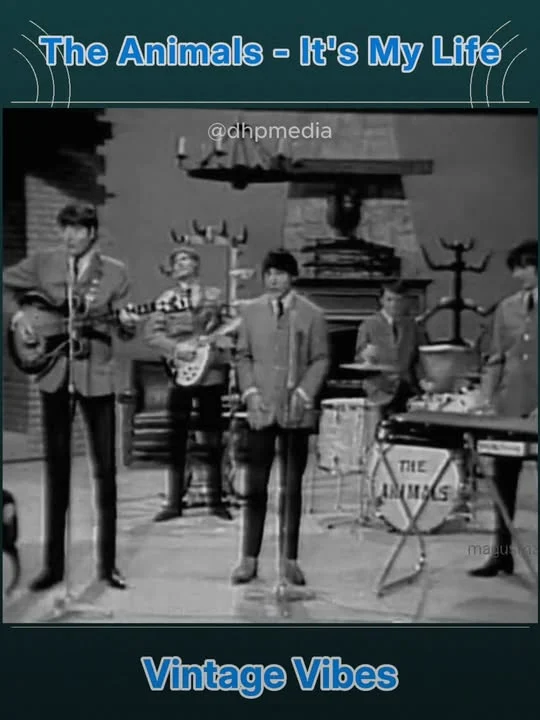
The first chord hits like a jolt of electricity. That razor sharp guitar riff cuts through the silence with a declaration so bold it could only belong to the rebellious heart of the 1960s. Then comes Eric Burdon’s voice, gritty and unstoppable, snarling the words that would turn a simple rock song into a generational battle cry. “It’s My Life” by The Animals is not just a track on a playlist. It is a moment in time where music stopped being mere entertainment and became a statement of self-ownership.
When the song arrived in 1965 as a standalone single, it carried the raw, blues-soaked energy that had already made The Animals a formidable force in British rock. The song did not belong to any studio album at first, but its power was undeniable. It eventually found a permanent home on retrospective collections like The Best of The Animals and The Complete Animals, a placement that speaks to its lasting cultural weight. These compilations treat the track not as a forgotten artifact but as an essential chapter in rock history.
“It’s My Life” captures the pulse of a generation that refused to conform.
The creative forces behind the song were deeply rooted in the changing musical landscape of the era. Producer Tom Wilson shaped the record with a keen ear for tension and release, while Brill Building songwriters Roger Atkins and Carl D’Errico crafted lyrics that embodied the era’s growing appetite for independence. The result was a track that felt both personal and universal, a soundtrack for anyone who dared to challenge expectations.
A Band That Refused to Be Boxed In
The Animals were never content to simply follow trends. They carved their own path by merging the raw emotional depth of American blues with the restless energy of British rock. Eric Burdon led the charge with a voice that could shift from tender to thunderous within a single line. The rest of the band matched his intensity with a precision that made every performance feel electric. Their signature sound, built on foundation of blues, rock, and folk, is on full display in “It’s My Life,” making it an essential listen for anyone exploring classic rock.
The Anatomy of a Classic Sound
What makes “It’s My Life” so unforgettable is the way its instruments come together to create a feeling of controlled chaos. Every note feels placed with intention, mirroring the defiance written into the lyrics. The song opens with a guitar riff that is both sharp and jangling, a call to arms that repeats as a unifying thread throughout the track. It is assertive, a little gritty, and completely infectious.
Chas Chandler lays down a bassline that gives the song its steady heartbeat. The pulse is unrelenting, driving the music forward while keeping the high energy grounded. It works perfectly alongside the drums, played with precise yet expressive touch by John Steel. His patterns shift from a driving beat during the verses to a more syncopated push in the choruses, capturing the emotional peaks and valleys of the song.
The keyboard work adds another layer of depth. The organ, a staple of The Animals’ sound, brings a warm and resonant texture that contrasts beautifully with the edgy guitar. This interplay creates a dynamic push and pull, while subtle piano notes occasionally cut through to enrich the harmonic complexity. Together, these elements build a sonic world that feels alive with tension, passion, and release.
More Than a Song
Lyrically, “It’s My Life” is an anthem of self-determination. The narrator refuses to be controlled, and Burdon delivers those sentiments with an urgency that makes every word land like a truth. The shifting between minor and major chords mirrors the internal struggle, moving from darkness to light and back again. It is a deeply personal statement, yet it speaks to something universal, a desire to live freely and authentically.
The song remains a powerful reminder that music can be both a mirror and a megaphone.
The influence of “It’s My Life” extends far beyond its initial release. Its innovative arrangement and bold message served as a blueprint for rock bands that followed. Artists from The Rolling Stones to The Doors explored similar themes of individuality and rebellion, and The Animals’ approach undoubtedly left its mark. Decades later, the song continues to inspire new generations of musicians, and its popularity has led to countless covers across genres. That lasting relevance proves the track is more than just a product of its time. It is timeless.
Songs That Carry the Same Fire
For listeners drawn to the energy of “It’s My Life,” several other tracks capture a similar spirit of rebellion and raw musicality. “House of the Rising Sun” by The Animals offers another iconic moment with its haunting organ melody and Burdon’s soulful delivery. “Paint It Black” by The Rolling Stones delivers a dark and brooding atmosphere with mesmerizing guitar work. “Break On Through (To the Other Side)” by The Doors pulses with psychedelic drive and poetic intensity. “Fortunate Son” by Creedence Clearwater Revival channels fiery social commentary, while “For What It’s Worth” by Buffalo Springfield captures the unease of a changing world with a folk rock groove. Each of these songs carries a piece of the same defiant spirit that makes “It’s My Life” a classic.
A Legacy Worth Revisiting
“It’s My Life” by The Animals stands as a testament to the power of music to speak truth and challenge the status quo. From the unforgettable guitar riff to the commanding presence of Burdon’s vocals, every detail works in service of a larger message. It is a song that has aged gracefully, retaining its ability to move listeners across generations. For anyone curious about the roots of rock and roll, or simply looking for music with passion and purpose, this track belongs on their radar.
So let the volume rise, let that iconic riff carry you back to a time when rock music was bold and unapologetic. The message of “It’s My Life” still rings true today, a clarion call for anyone ready to claim their own path. It is more than a song. It is a moment of pure musical freedom.