
A father and his grown daughter swayed in the middle of a crowded reception hall. The record had a little age on it, a gentle scratch that only added warmth, and the room seemed to lean in as the chorus rose. The father’s smile carried a mixture of pride and quiet regret, and the daughter laughed the way she probably had when she was six years old. That moment finally made sense of a song I had known since childhood.
The first time I heard “Happy Birthday Sweet Sixteen” came long before that wedding. It surfaced from a stack of worn 45s in my grandfather’s study, a glossy black circle on the RCA Victor label. In one corner of the room sat a magnificent mahogany piano, always closed, but the real magic lived in those records. I placed the single on the turntable, waited through a moment of tape hiss, and listened as a meticulously tailored burst of teenage nostalgia filled the room.
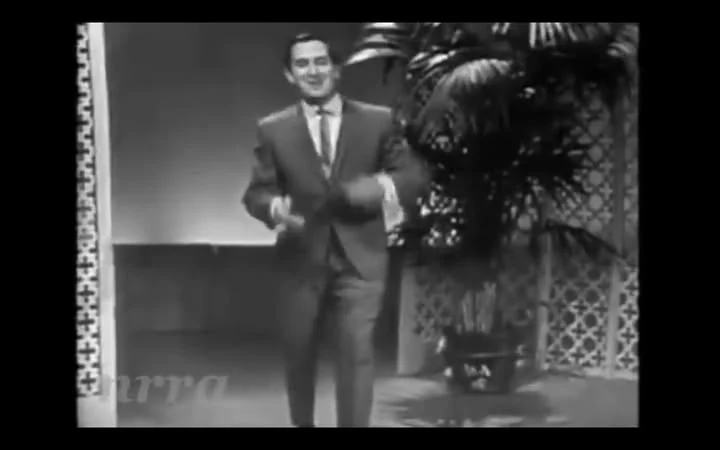
The voice belonged to Neil Sedaka, a prodigious classical piano student from Juilliard who had traded the concert hall for the Brill Building. He wrote the song with Howard Greenfield, and the two had become the first songwriters signed to Aldon Music, the publishing house built by Al Nevins and Don Kirshner. Released in November 1961, the single arrived after a streak of hits that included “Oh! Carol,” “Calendar Girl,” and “Little Devil.” It was not tied to an album. It stood alone, a perfect artifact of its moment.
What made the record more than just another pop song was the arrangement from Al Lorber. Working under the production banner of Nevins-Kirshner Associates, Lorber gave the track an orchestral sweep that felt almost cinematic. A crisp drum pattern opened the door. A simple bass line settled in underneath. Then came the strings, not as decoration but as a dramatic chorus, swelling and releasing around Sedaka’s phrasing. The violin tones were bright and just slightly brittle, captured with the close-miked clarity of New York studios. The result was warm and spacious, built to fill a living room and brighten an ordinary evening.
Sedaka’s tenor was clear, technically clean, and full of earnest emotion. A noticeable vocal echo made his delivery shimmer, as though the song were a memory forming in real time. His piano playing, despite his classical background, stayed mostly in the background, supplying a solid harmonic foundation rather than competing with the voice. The electric guitar was equally restrained, a clean, chiming presence that offered small fills and subtle counter-rhythms instead of distortion. Brass accents arrived just when they were needed. The dynamics moved in a constant, gentle push and pull, holding back any rock-and-roll catharsis and keeping the mood polished, almost polite.
It is music engineered to preserve a moment, freezing a sentimental image in amber.
Part of the song’s magic lives in its words. Greenfield did not write a typical love song. The narrator watches a childhood friend cross the line from girlhood to young womanhood, a girl with scraped knees and messy hair who suddenly seems ready to hold hands with someone else. The sheet music may show a simple chord pattern, but the emotional mathematics are complicated. There is pride, wonder, and a touch of loss, all folded into the idea of a sixteenth birthday as a threshold to independence.
The last chorus is a different kind of goodbye. It arrives with the full band and the strings and the brass all together, a glorious rush of energy that turns farewell into celebration. That is the sound that carried the record to number six on the American Billboard Hot 100 and number three on the UK Singles Chart. It is also the sound that followed my grandfather’s old 45 into my life and eventually into that wedding hall, where a father held his daughter and let go at the same time.
The record remains a masterclass in concise pop. In two minutes and forty seconds, Sedaka, Greenfield, and Lorber built a complete world, complete with characters, a setting, and an emotional resolution. Pop music at its best is an art of concision, and this song is proof. Young players chasing guitar lessons might be tempted to skip the old Brill Building catalog, but the architecture here still has plenty to teach anyone who wants to understand how a melody can hold a lifetime of feeling.
For listeners who want to follow the trail further, several other tracks live in the same neighborhood. Connie Francis took the same songwriting team into “Stupid Cupid” with bright, playful energy. Bobby Vee turned “Take Good Care of My Baby,” written by Carole King and Gerry Goffin, into a sentimental classic with a similar structure. The Chiffons offered “One Fine Day,” a bright harmony gem with a comparable chord progression. Gene Pitney explored the dramatic orchestral side of the era with “Only Love Can Break a Heart.” And Frankie Valli and the Four Seasons captured the same clean production and soaring vocal style in “Sherry.” The original recording of “Happy Birthday Sweet Sixteen” can be found on a hits compilation on YouTube, ready to bring its golden glow to the next listener.